Start from your dog
The short answer
Each breed page names the coat type that breed actually has, the routine that keeps it out of trouble, the specific tools it needs, and the one mistake owners of that breed make most. Then it hands you to the right tool pages.
Breed is the wrong way to organize grooming tools — the coat is what matters, and two unrelated breeds with the same coat need the same kit. But breed is absolutely the right way for an owner to find their starting point, because you know what your dog is and you may not yet know what its coat is. These eighteen pages bridge that gap: they start from the dog you own and hand you to the coat type and the tools.
The eighteen, grouped by coat
Doodle and continuously-growing coats — Goldendoodle, Labradoodle, Bernedoodle, Sheepadoodle, Poodle, Bichon Frise. These mat rather than shed and need brushing to the skin every day or two plus a clipper. See doodle coat.
Silky and long single coats — Shih Tzu, Yorkshire Terrier, Maltese, Pomeranian, Cocker Spaniel. These tangle rather than felt, which is a gentler problem that still needs constant attention. See silky coat.
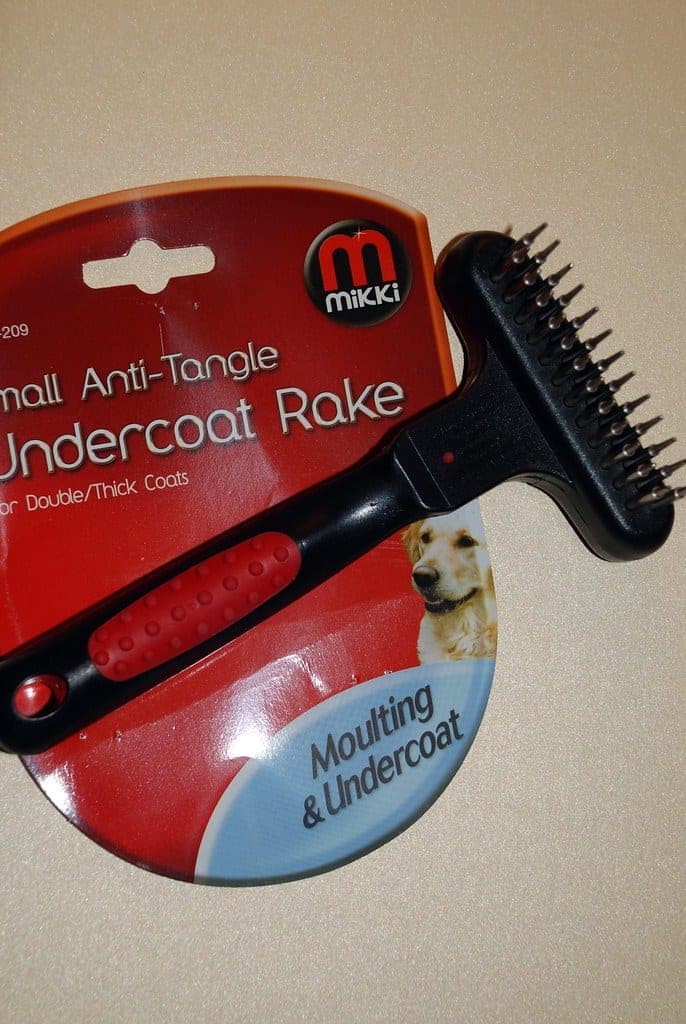
Double coats — Golden Retriever, German Shepherd, Siberian Husky, Samoyed, Great Pyrenees, Bernese Mountain Dog. These shed in volume and must not be shaved. Rake, bathe and blow out. See double coat.
Wire coats — Miniature Schnauzer. A harsh jacket that wants stripping, not clipping, if you want to keep the texture and the color. See wire coat.
What a breed page does and does not do
Each page gives you the coat identification, a realistic routine with frequencies, the tools that routine requires, and the failure mode specific to that breed — the Husky owner who shaves in July, the doodle owner whose puppy coat turned into an adult coat overnight, the Schnauzer owner who clipped a wire coat and lost the color. It does not duplicate the product analysis: the actual picks live on the tool pages, so eighteen breed pages are not eighteen copies of the same roundup.
If your breed is not here, find the nearest coat match on the coat-type pages — that is the information the tool choice depends on, and it transfers across breeds cleanly. Mixed-breed dogs are best handled the same way: identify the coat, ignore the pedigree.