Find your dog’s coat in three checks
The short answer
Your dog’s coat type, not its breed or its size, decides which grooming tools you need. Three checks identify it: does the coat keep growing or stop at a length; is there a soft dense layer underneath the outer hair; and does it feel harsh and crisp or soft and fine.
Almost every grooming-tool page on the internet is organized by breed, which is the wrong axis. A Goldendoodle and a Bichon have completely different breed histories and nearly identical grooming requirements. A Golden Retriever and a Poodle are both “medium-sized family dogs” and need entirely different equipment. The thing they differ on is the coat, so that is what this site is organized around. Work out which of the five below you own and most of your buying decision is already made.
What each coat needs
Doodle coat grows continuously and does not shed, so the dead hair stays in the coat and felts into mats against the skin. It needs daily brushing to the skin, a clipper with real torque, and — the part people miss — a dryer, because a curly coat that air-dries curls up tight and traps the tangles inside it.
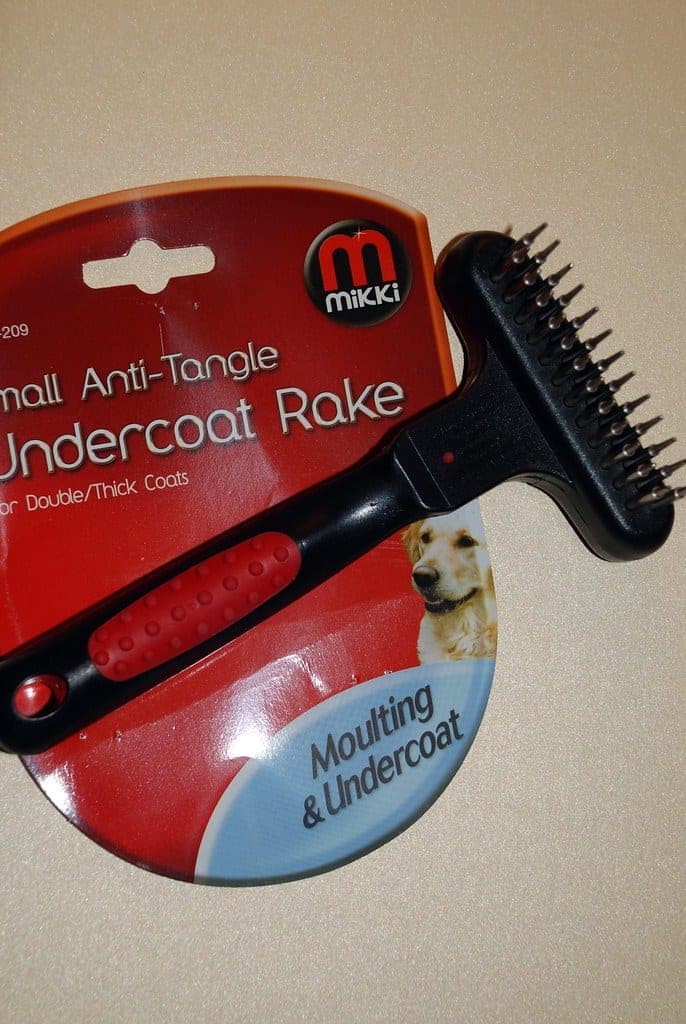
Double coat has harsh guard hairs over a dense soft undercoat and sheds in sheets twice a year. It needs an undercoat rake and a high-velocity dryer, and it must never be shaved. Clipping a double coat is nearly always the wrong answer and the double coat page explains what to do instead.
Wire coat is the harsh crisp jacket of a terrier or a schnauzer. It wants stripping — pulling the dead outer hairs out — not clipping. Clip a wire coat and the harsh texture and the color both soften permanently. That is the single most important thing to know about this coat type, and it is why the stripping knife page exists.
Silky coat is long, fine, single-layered hair — a Yorkie, a Maltese, a Shih Tzu in a long coat. It tangles rather than mats, which is a gentler problem, but it tangles constantly. A good slicker, a fine comb and a light hand matter more than any power tool.
Short coat is smooth and genuinely low-maintenance, but it still sheds and still needs nails done. The honest advice for a short-coated dog is to spend nothing on clippers and everything on nail care and a decent deshedding tool.
If your dog is a mix
Plenty of dogs sit between categories, and mixed-breed coats are the common case rather than the exception. When in doubt, go by the two checks that matter most: if there is a dense undercoat, treat it as a double coat; if the coat keeps growing and has to be cut, treat it as a doodle coat regardless of what the dog looks like. Those two facts drive almost every tool decision. Our eighteen breed pages name the coat type each breed actually has, which is often the fastest way to settle it.