The highest-stakes page on this site. A wrong decision here causes permanent coat damage, and the honest advice is often not to buy the clipper at all.
Scores are our own editorial assessment, not a product rating from reviews or testing. We do not print prices — every button goes to the current one on Amazon. #ad
Should you shave a double coated dog?
The short answer
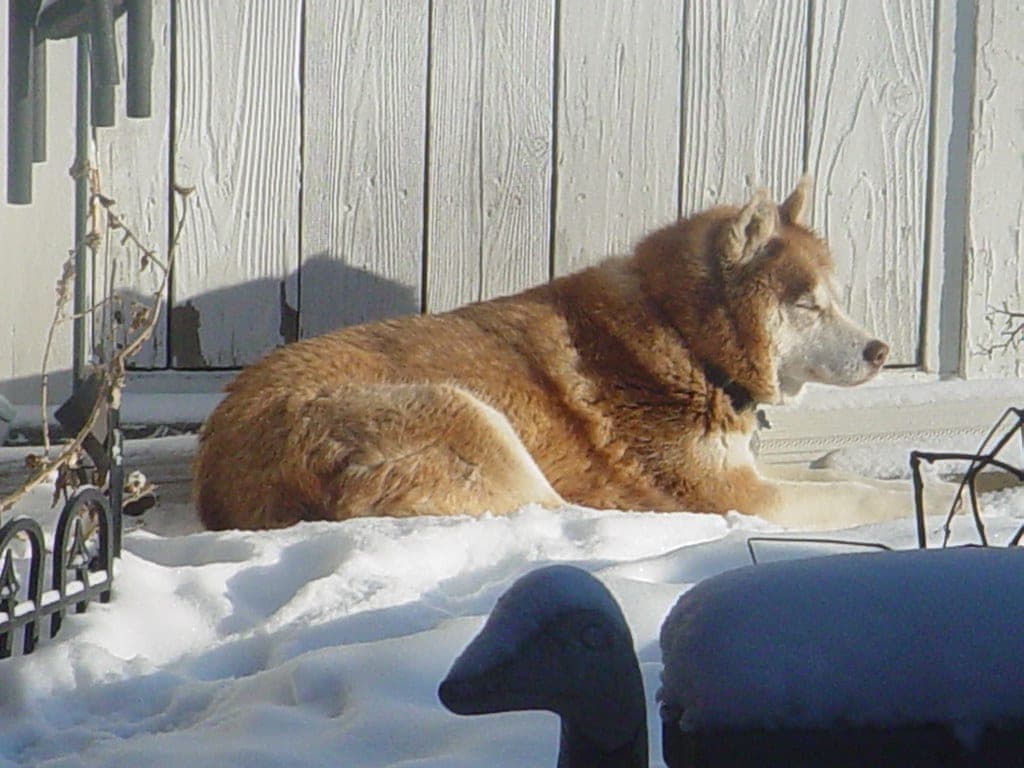
No. The undercoat insulates against heat as well as cold, and the guard coat blocks sun and repels water. Shaving removes both. The guard hairs frequently grow back soft, patchy or a different color, or do not return at all — and the dog is left less protected from heat, not more.
How to tell if your dog has a single or double coat
01
Part the coat with your fingers and look at the base
A double coat shows two distinct textures: longer, coarser guard hairs on top and a dense, soft, often paler layer underneath. A single coat is one texture all the way down.
02
Run your hand against the direction of growth
A double coat resists and springs back because the undercoat is holding the guard hairs up. A single coat lies back down.
03
Look at what comes out when you brush
A double coat produces soft fluff in volume, seasonally. A single coat produces a few long hairs, or almost nothing in the case of a doodle.
Two layers, two textures. The soft pale layer is the undercoat you remove; the coarse top layer is the guard coat you protect.
The guard coat may not come back correctly. Regrowth can be soft, woolly, paler or patchy. In older dogs and some breeds it is permanent.
Sunburn risk rises. The guard coat is the sun barrier. Exposed undercoat and skin burn.
The dog is not cooler. The undercoat insulates in both directions; removing it removes the dog’s defense against ambient heat.
The new woolly coat mats. Soft regrowth felts in a way the original coat never did, which creates a new ongoing problem.
So what do you do instead?
Remove the dead undercoat. That is the thing people are actually trying to achieve when they ask about shaving: less hair, a cooler dog, less mess. A rake and a force dryer do all three, and they do them without damaging anything. A properly raked-out double coat is lighter, airier and genuinely cooler than a shaved one.
What you want
Do this
Not this
Less shedding in the house
Rake weekly; bathe and blow out twice a year
Clip
A cooler dog
Rake out dead undercoat, shade, water
Clip
Less matting
Rake plus slicker on the feathering
Clip
Hygiene
Clip paw pads and sanitary area only
Clip the body
A felted mat at the skin
Clip under the mat, longest blade possible
Scissors
The twice-yearly coat blow
Most double-coated dogs release their undercoat over two to four weeks, twice a year. The efficient sequence is: rake dry, bathe, blow out against the grain, rake again while damp, finish dry, rake once more. Three sessions like that over a fortnight ends a shed that would otherwise drag on for six weeks. Full method: how to blow out a double coat and how to deshed a dog.
If your dog has already been shaved
Do not shave it again. Keep it out of direct sun while the coat is short. Brush gently as it grows back so the returning guard hairs do not trap loose undercoat and start matting. Expect an awkward six to eighteen months, and accept that the final texture may not match what it was. Most dogs recover a usable coat; some do not fully.
What to remember
→Two layers: harsh guard coat you protect, soft undercoat you remove.
→Shaving does not cool the dog and can permanently damage the guard coat.
→The tools are a rake and a dryer, not a clipper.
→A clipper on a double coat is for paw pads and sanitary areas only.
→A felted mat at the skin is the one exception, and then you clip underneath it.
→Already shaved? Do not repeat it, protect from sun, and brush as it returns.
The picks in full
Every pick, in order
01
The one tool this coat genuinely needs
FURminator dog grooming rake
Rotating tines that reach the undercoat and physically cannot cut the guard coat.
Rotating-tine undercoat rake
Tines
Rotating, long
Works on
Thick and double coats, longer hair
Action
Lifts dead undercoat without cutting the guard coat
On a double coat the whole job is removing dead undercoat while leaving the guard coat intact, and a rake with no cutting edge does exactly that. Long rotating tines reach through the guard layer to where the dead hair sits and slide rather than drag, which matters because these sessions are long. If you buy one tool for a double-coated dog, buy this.
Removes dead undercoat9.0
Protects the guard coat10.0
Comfort for the dog9.0
Works during a coat blow8.5
Value9.0
Overall9.1 / 10
What it gets right
+Rotating tines slide through dense undercoat instead of ripping it, so the dog tolerates longer sessions
+Reaches deeper into a double coat than any slicker
+Does not cut, so you cannot thin the guard coat with it
What it gets wrong
−Slower than a bladed deshedder on short coats
−Tines can catch on a genuine mat and need working loose
−Does not finish — you still need a slicker and comb afterwards
Who should skip itSkip it on a short-coated dog — a bladed deshedder does that job far faster.
No brush can break undercoat free from the skin the way moving air can. At 2,800 FPM the air parts the guard layer and drives the loose undercoat out, turning a six-week shed into two or three sessions. It also dries the coat properly, which matters because damp undercoat held against skin is how hot spots start. Loud and bulky.
Removes dead undercoat10.0
Protects the guard coat10.0
Comfort for the dog5.5
Works during a coat blow10.0
Value8.5
Overall8.8 / 10
What it gets right
+Real force-dryer output, which is what blows a double coat open instead of merely warming it
+Enough air to push water out of a Samoyed or Pyrenees in one session
+The most airflow per dollar in this set
What it gets wrong
−Loud. All force dryers are, and this is not the quiet one
−Bulky to store between grooms
−No heating element, so your bathroom temperature becomes the dog's comfort
Who should skip itSkip it if you have a small, short-coated dog — a towel and ten minutes do the same job.
Double coats do not pack evenly. The trousers, the ruff and behind the ears carry far denser undercoat than the back, and those areas go from dense to felted without much warning. A coarse 9-tooth side cuts into that and opens it; the 17-tooth side thins what is left so it does not immediately re-pack. Both sides cut, so keep it to the problem areas.
Removes dead undercoat8.5
Protects the guard coat6.0
Comfort for the dog7.0
Works during a coat blow8.5
Value9.5
Overall7.9 / 10
What it gets right
+Two tools in one, and the two sides are genuinely for different jobs rather than marketing
+The 9-tooth side opens a real mat without you reaching for scissors
+Lightweight enough for a long coat-blow session without hand fatigue
What it gets wrong
−Both sides cut, so pressure control is on you
−Teeth are long enough to catch skin on a thin-coated dog
−Not a finishing tool
Who should skip itSkip it if your dog never mats — you only need the deshedding side, so buy that instead.
#adHow we earn · We never print a price we cannot verify
04
The only clipping a double coat should get
Wahl Arco SE
Paw pads, sanitary areas and hygiene trims. Nothing on the body, ever.
Cordless adjustable-blade clipper
Power
Cordless, rechargeable
Blade
Adjustable 5-in-1 blade
Weight
Light enough for detail work one-handed
Best use
Faces, feet, sanitary trims, small dogs
Reframe what a clipper is for on this coat: it is a hygiene tool, not a haircut tool. Paw pads need clearing, the sanitary area needs keeping short, and occasionally a belly needs tidying — and those areas have little or no guard coat to damage. A small quiet cordless 5-in-1 is the right tool, light enough to use one-handed while the other steadies the dog.
Removes dead undercoat2.0
Protects the guard coat8.5
Comfort for the dog9.5
Works during a coat blow1.5
Value8.0
Overall6.9 / 10
What it gets right
+Small and light in the hand, which is exactly what you want around a face or between toes
+Cordless and quiet — the two things that decide whether a dog stands still
+5-in-1 blade covers the usual tidy-up lengths without blade changes
What it gets wrong
−Not enough motor for a full dense-coat body clip
−Short battery runtime relative to a full-body groom
−Replacement 5-in-1 blades are not cheap
Who should skip itSkip it as your only clipper if you own a large double-coated dog — it will stall on the body.
Five minutes a day beats an hour a week, and rounded pins mean anyone can use it.
Double-row pin undercoat rake
Rows
Two rows of rounded pins
Pins
Rounded ends, not blades
Handle
Gripsoft non-slip
Coat blow is a volume problem and volume responds to frequency. A cheap pin rake that lives somewhere convenient gets picked up daily, and daily removal is what keeps a shed under control. Rounded pins with no cutting edge mean a family member can use it without being briefed on pressure. Small head, so slow on a giant breed.
Removes dead undercoat7.0
Protects the guard coat10.0
Comfort for the dog9.5
Works during a coat blow7.0
Value9.5
Overall8.3 / 10
What it gets right
+Rounded pins, not blades — you cannot cut the coat with it, which makes it the safe default
+Double row doubles the undercoat it lifts per stroke
+Cheap enough to be nobody's agonizing decision
What it gets wrong
−Slower than a bladed tool on a heavy shed
−Pins will not open a set mat
−Handle is comfortable but the head is small for a giant breed
Who should skip itSkip it if you need to clear a felted mat — pins ride over it; you need a dematter.
Because the undercoat is insulation in both directions and the guard coat is the sun and water barrier. Removing both leaves the dog hotter in direct sun and unprotected from burn, and the guard hairs often grow back wrong or not at all.
+−Should you shave a double coated dog in the summer?
No — summer is when the guard coat matters most, because it blocks sun. Rake the dead undercoat out instead; that is what actually makes the dog cooler.
+−What to do if you shave a double coated dog?
Keep it out of direct sun, do not repeat it, brush gently as it regrows so loose undercoat is not trapped by returning guard hairs, and expect six to eighteen months of awkward coat. The texture may not fully return.
+−How long does blowing coat last?
Two to four weeks of heavy shedding, usually twice a year, though indoor dogs under artificial light often shed moderately year-round instead. Active rake-and-dryer sessions shorten the heavy phase considerably.
+−How to tell if your dog has a single or double coat?
Part the coat and look at the base. Two distinct textures — coarse on top, dense and soft beneath — is a double coat. One texture all the way down is single.
+−Is a Labrador double coated?
Yes. Short does not mean single. A Labrador has a harsh water-repellent outer coat over a dense undercoat, which is why they shed so much, and it should not be clipped.
+−Can I ever clip a double coated dog?
Three cases: a mat that cannot be brushed out, a medical reason on veterinary advice, and hygiene areas such as paw pads and the sanitary trim. Full detail on clippers for double coats.
How this page was put together
We define the coat problem the tool has to solve, shortlist products currently sold, compare the manufacturers’ documented specifications against what that coat actually needs, and cross-check against published findings from named sources. We do not test these tools on our own dogs under controlled conditions, and we will not say we do. Where a figure comes from a manufacturer, we name them; where it comes from someone else’s testing, we cite them. We print no prices — a stale number is worse than none. Read the full method.