Scores are our own editorial assessment, not a product rating from reviews or testing. We do not print prices — every button goes to the current one on Amazon. #ad
Which coat are you dealing with?
The short answer
A Siberian husky needs very little grooming for most of the year and a great deal twice a year, when it drops its entire undercoat over two to four weeks. Rake weekly year-round; during a coat blow, bathe, blow out and rake every second day. Never shave a husky.
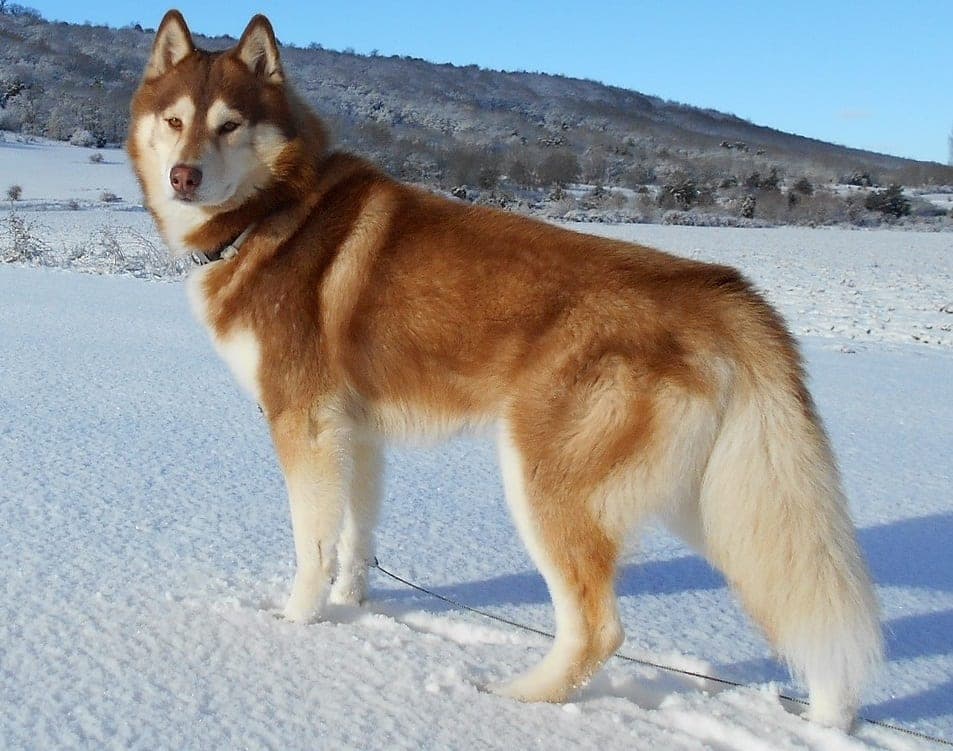
A Siberian Husky has a double coat — harsh guard hairs over soft undercoat; sheds in sheets, never shave it. Everything below follows from that, and the full set of rules for this coat type, including what will damage it, is on grooming a double coat.
Husky coat is a true northern double coat: harsh, straight guard hairs standing off a very dense woolly undercoat. It is self-cleaning to a remarkable degree, needs bathing rarely, and does not mat in normal use. Huskies are genuinely low-maintenance dogs ten months of the year.
Then the coat blows. Twice a year the undercoat releases and comes out in sheets and clumps rather than individual hairs, over roughly two to four weeks. Indoor dogs under artificial light often shed moderately all year instead of in two clean phases.
There is no trimming or clipping in a correct husky routine. Paw pads get cleared, nails get done, and that is the extent of the cutting. The coat is left entirely alone.
Siberian Husky: Harsh guard hairs over soft undercoat; sheds in sheets, never shave it.
The breed-specific thing to watch
Shaving a husky is one of the clearest mistakes in dog grooming
The undercoat insulates in both directions — it keeps heat out as well as in — and the harsh guard coat blocks sun and repels water. Shaving removes both, so the dog is hotter in direct sun and exposed to burn, and northern breeds are among the most likely to have guard coat grow back incorrectly or not at all.
A husky that is too hot needs its dead undercoat raked out, shade and water. That genuinely cools the dog. Clipping does the opposite of what the owner intends.
The routine
Task
How often
Notes
Rake
Weekly outside a shed, every 2 days during one
Pin or rotating-tine rake; no bladed tools
Bathe
2-3x a year, or when actually dirty
Husky coat is self-cleaning; over-bathing is worse
Blow out
At each bath, and during a coat blow
This is where the sheets come away
Open packed areas
As needed
Coarse rake side, ruff and trousers only
Trim paw pads
Monthly
Clear fur between the pads; nothing else cut
Nails
Every 2-3 weeks
Thick nails; a torquey grinder or a sharp clipper
Ears and teeth
Weekly / daily if possible
Erect ears are well ventilated
Body clipping
Never
Not for heat, not for shedding, not for tidiness
Where it goes wrong on this breed
The ruff around the neck and chest — the densest coat on the dog
The trousers on the hind legs
Behind the ears
Under a harness, where friction packs the coat
The tail, where guard hairs are long and easily damaged
Time and effort, honestly
Outside a coat blow: ten minutes a week with a rake, and that is genuinely all. During a coat blow: three sessions of bath, blow-out and rake over a fortnight, each 90 minutes to two hours, plus daily quick rakes.
The coat page is the one to read in full: grooming a double coat. From there the tool roundups cover each purchase in detail, and how to groom a dog at home walks a full session end to end. Other breeds with the same coat are listed on the breed index.
The picks in full
Every pick, in order
01
The one tool a husky needs
FURminator dog grooming rake
Rotating tines reach the undercoat and physically cannot cut the guard coat.
Rotating-tine undercoat rake
Tines
Rotating, long
Works on
Thick and double coats, longer hair
Action
Lifts dead undercoat without cutting the guard coat
The husky guard coat is the thing you must not damage, so the right tool has no cutting edge anywhere on it. Long rotating tines reach through to the dead undercoat and slide rather than rip, which matters because coat-blow sessions are long and the dog has to tolerate them. Ninety percent of husky grooming is this tool.
Undercoat removed9.0
Guard-coat safety10.0
Tolerable for long sessions9.0
Value9.0
Overall9.4 / 10
What it gets right
+Rotating tines slide through dense undercoat instead of ripping it, so the dog tolerates longer sessions
+Reaches deeper into a double coat than any slicker
+Does not cut, so you cannot thin the guard coat with it
What it gets wrong
−Slower than a bladed deshedder on short coats
−Tines can catch on a genuine mat and need working loose
−Does not finish — you still need a slicker and comb afterwards
Who should skip itSkip it on a short-coated dog — a bladed deshedder does that job far faster.
This is the purchase husky owners resist and then recommend to everyone. Moving air breaks the dead undercoat free from the skin, which a brush can only do once it is already loose, turning a six-week shed into two or three sessions. Loud, bulky, and the single most effective thing you can own for a northern breed.
Undercoat removed10.0
Time saved during a blow10.0
Noise5.0
Value8.5
Overall8.8 / 10
What it gets right
+Real force-dryer output, which is what blows a double coat open instead of merely warming it
+Enough air to push water out of a Samoyed or Pyrenees in one session
+The most airflow per dollar in this set
What it gets wrong
−Loud. All force dryers are, and this is not the quiet one
−Bulky to store between grooms
−No heating element, so your bathroom temperature becomes the dog's comfort
Who should skip itSkip it if you have a small, short-coated dog — a towel and ten minutes do the same job.
Five minutes a day during a blow beats an hour once a week.
Double-row pin undercoat rake
Rows
Two rows of rounded pins
Pins
Rounded ends, not blades
Handle
Gripsoft non-slip
Coat blow is a volume problem and volume responds to frequency. A cheap pin rake that lives somewhere convenient gets picked up daily, and rounded pins mean any family member can use it without being briefed on pressure. Small head, so it is the supplement rather than the main tool.
Undercoat removed7.0
Guard-coat safety10.0
Gets picked up10.0
Value9.5
Overall9.0 / 10
What it gets right
+Rounded pins, not blades — you cannot cut the coat with it, which makes it the safe default
+Double row doubles the undercoat it lifts per stroke
+Cheap enough to be nobody's agonizing decision
What it gets wrong
−Slower than a bladed tool on a heavy shed
−Pins will not open a set mat
−Handle is comfortable but the head is small for a giant breed
Who should skip itSkip it if you need to clear a felted mat — pins ride over it; you need a dematter.
Rake the loose top layer dry, bathe, blow the coat out against the grain, rake again while damp, spot-treat the ruff and trousers, then finish drying and rake once more. Three sessions like that over a fortnight ends a coat blow.
+−How long does a husky coat blow last?
Two to four weeks of heavy shedding, usually twice a year. Indoor dogs often shed moderately all year instead. Active rake-and-dryer sessions shorten the heavy phase considerably.
+−Can I shave my husky in summer?
No. The undercoat insulates against heat and the guard coat blocks sun, so shaving makes the dog hotter and exposed to burn, and the guard coat often does not grow back correctly.
+−How often should a husky be bathed?
Two or three times a year, or when the dog is genuinely dirty. The coat is largely self-cleaning and over-bathing strips the oils that make it work.
How this page was put together
We define the coat problem the tool has to solve, shortlist products currently sold, compare the manufacturers’ documented specifications against what that coat actually needs, and cross-check against published findings from named sources. We do not test these tools on our own dogs under controlled conditions, and we will not say we do. Where a figure comes from a manufacturer, we name them; where it comes from someone else’s testing, we cite them. We print no prices — a stale number is worse than none. Read the full method.