Skip to content
Clip & Coat

Guides

How to Groom a Dog at Home

The whole job in the order a groomer does it. Most home grooms go wrong because the steps were done in the wrong sequence, not because the technique was bad.

By Brijon M.
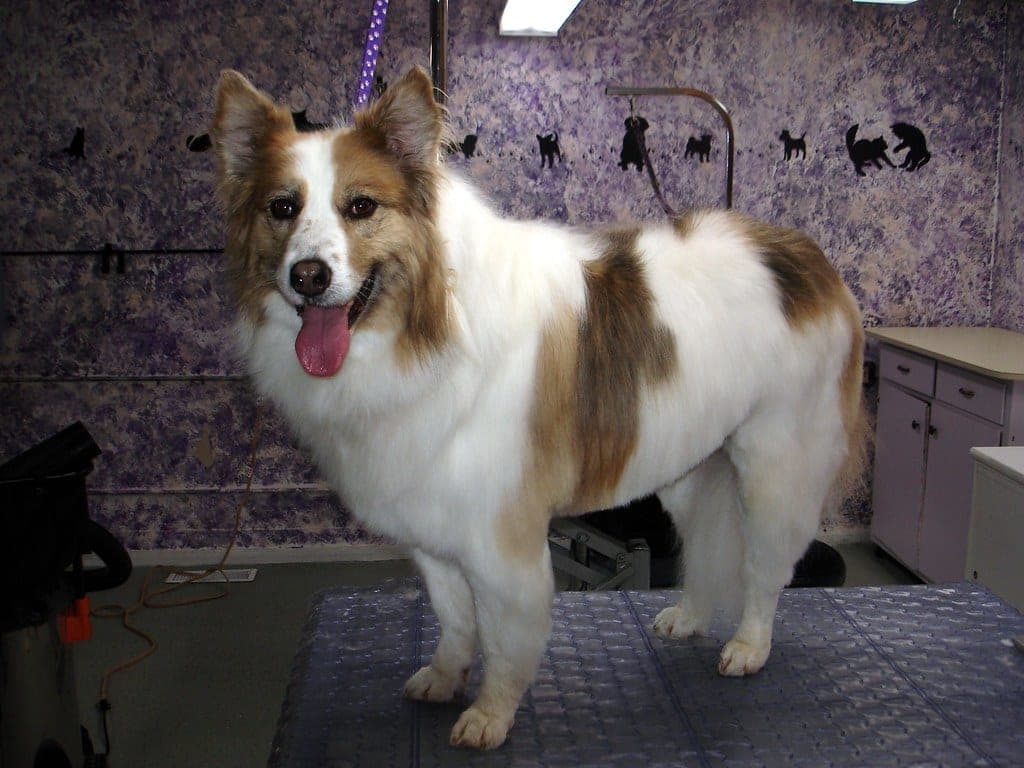
A dog standing calmly on a grooming table mid-groom

Quick picks

The shortlist

Quick picks

Tap any row to jump to that pick’s full write-up. The price column goes straight to Amazon.

#ProductBest forScorePrice
1
A slicker brush with fine bent pins

Chris Christensen Big G slicker brush

The brush that gets a coat genuinely tangle-free before water touches it.
The step that decides the whole groom8.7
2
A forced-air dryer nozzle directed at a damp coat

XPOWER B-55

Genuine high-velocity airflow at the sensible entry point, and it fits in a cupboard.

Drying to the skin, which towels cannot do7.9
3
A dog standing on a grooming table

Master Equipment grooming table with arm

A non-slip top at working height with an arm - the single biggest improvement for a home groomer.

Making a two-hour job possible at all8.5

Scores are our own editorial assessment, not a product rating from reviews or testing. We do not print prices — every button goes to the current one on Amazon. #ad

The order, and why it is the order

The short answer

Brush, nails, sanitary and pads, bathe, dry, brush again, clip, face and feet, final check. Each step exists where it does for a reason: brushing before the bath because water sets tangles into mats, nails on a dry dog because you can see and hold them, clipping after drying because a damp coat will not cut cleanly.

Almost every bad home groom is a sequencing error rather than a technique failure. Bathing a tangled dog, clipping a damp dog, doing nails last when the dog has run out of patience — each of those makes the rest of the job harder, and they compound. Get the order right and the individual techniques are much more forgiving than they look.

This page is for you if

You want to do the whole job yourself, at home, on a dog whose coat you are willing to learn.

You are on the wrong page if

You want a breed-standard show trim. That is a professional skill measured in years, and this page is about a clean, comfortable, tidy pet dog.

What changes by coat type

CoatBrushingClippingDrying
Doodle / poodleLine brush to the skin, every day or twoYes — #4F or #5F body, every 6–10 weeksForce dry while brushing; essential
Double coatRake weekly, daily in a seasonal blowNo — never shave a double coatForce dry; it doubles as deshedding
Wire coatCard and strip rather than brushOnly if you accept losing the textureAir-dry or low airflow; dries fast
Silky long coatComb daily; tangles rather than matsOptional trim to lengthLow airflow while combing
Short smooth coatWeekly mitt or light deshedderNo — it does not need itTowel, or a cool hair dryer

If you are not sure which coat you own, the three checks on the coat-type pages settle it in about a minute.

Note the two rows where the clipping column says no. A double coat should not be clipped at all, and a short coat does not need it — which means for a lot of dogs the expensive part of this kit is simply unnecessary, and the money belongs in nail care and a dryer instead.

The full procedure

  1. 01

    Brush and comb the dry coat out

    Line brush to the skin; the comb must pass skin to tip everywhere. Water turns a tangle into a mat, so this is before the bath.

  2. 02

    Nails, on a dry dog

    Easier to see and hold. Styptic powder on the table first. Rotate round the paw rather than finishing one nail.

  3. 03

    Sanitary area and paw pads

    Small-tool jobs, easier before the dog is wet. Pads level with the sole; sanitary hair short, blade flat and moving.

  4. 04

    Bathe and rinse until the water runs clear

    Residue in a dense coat irritates skin and brings the smell back within a day. Rinse longer than feels necessary.

  5. 05

    Dry to the skin

    Blot with the towel, do not rub. Then force dry in sections. A damp coat will not clip or brush, and damp skin is where hot spots begin.

  6. 06

    Brush again

    Drying lifts the coat and exposes what the first pass missed.

  7. 07

    Clip the body, if the coat needs it

    #4F or #5F, with the lie of the coat, blade flat, overlapping passes. Check blade temperature on your own forearm every few minutes.

  8. 08

    Face, feet and blend

    Blunt-tipped scissors and a trimmer. Eyes first, then muzzle, then blend. Tidy the foot outlines.

  9. 09

    Final comb-through and check

    Comb the whole dog, check ears are clean and dry, look over the skin you have exposed. Then stop.

A dog being rinsed thoroughly in a bath
Rinse until the water runs clear. Residue in a dense coat is the reason the smell comes back a day later.

How long it takes, and how to split it

Two to three hours for a medium doodle the first few times, including bath and drying. That is a lot to ask of a dog that has never done it, so split it: nails and feet one evening, bath and dry the next, clip the day after. A coat that has been properly brushed and dried will wait a day perfectly happily, and three short sessions produce a better result than one long one with a fed-up dog at the end.

The frequency of each part differs too. Brushing is daily or weekly depending on coat; nails every two to four weeks; sanitary every two or three weeks; a full bath-and-clip every six to ten weeks. The schedule guide lays it out per coat.

A coat matted to the skin. If a comb will not pass between a mat and the dog, the mat has to come off underneath, against skin you cannot see. Groomers do it routinely; first-timers cut dogs doing it.

A dog that is panicking rather than objecting. Stop. A frightened dog near a blade is how both of you get hurt, and every bad session makes the next one harder.

Anything involving blood, broken skin, a hot spot or a smell. That is a vet visit, not a grooming decision, and nothing on this site is veterinary advice.

What to remember

  • Brush, nails, sanitary, bathe, dry, brush, clip, face and feet, check.
  • Brush before the bath — water sets tangles into mats.
  • Nails on a dry dog, early, while patience lasts.
  • Dry to the skin or the clip and the brush-out both fail.
  • Double coats and short coats are not clipped at all.
  • Split the job across evenings rather than asking for three hours at once.

The picks in full

Every pick, in order

01

The step that decides the whole groom

Chris Christensen Big G slicker brush

The brush that gets a coat genuinely tangle-free before water touches it.

A slicker brush with fine bent pins

Professional slicker brush

Pin density
About 30% more pins than a typical slicker
Sizes
Three
Best for
Doodles, poodles and long-coated breeds

Specs: Chris Christensen — Big G vs Big K slicker brushes

Three of the nine steps here are brushing, and step one is the one everything else depends on - a tangle that goes into the bath comes out as a mat. A slicker with flexible, well-finished pins reaches the skin without scratching, which keeps the dog willing to stand for the rest of it. Pair it with a steel comb, which is how you verify the brushing actually worked.

Reach to the skin9.0
Comfort for the dog9.0
Tangle removal9.0
Build quality8.5
Value7.0
Overall8.7 / 10

What it gets right

  • Pin density is the whole product: more pins means fewer passes through a curly coat
  • The pins are long enough to reach skin on a doodle, which is where matting starts
  • This is the brush that makes line brushing a doodle actually feasible

What it gets wrong

  • Expensive for a brush, by a wide margin
  • Dense pin bed is harder to clean out than a self-cleaning slicker
  • Overkill on a short coat

Who should skip itSkip it if your dog has a short or smooth coat — you will never use the pin density you paid for.

Check price on Amazon

#ad How we earn · We never print a price we cannot verify

02

Drying to the skin, which towels cannot do

XPOWER B-55

Genuine high-velocity airflow at the sensible entry point, and it fits in a cupboard.

A forced-air dryer nozzle directed at a damp coat

Single-motor high-velocity dryer

Motor
Single
Positioning
Best single-motor value in high-velocity dryers
Controls
Variable speed

Specs: Pawster — Best High Velocity Dog Dryers

Step five is the one most home groomers skip and it gates both of the steps after it: a damp coat will not clip cleanly and will not brush out. Real airflow is the only thing that dries a dense coat at skin level, and variable speed is what lets you introduce the machine to a dog that has never met one. Storable, which is why it actually gets used.

Airflow7.5
Noise6.5
Build and hose7.0
Storage footprint8.5
Value9.0
Overall7.9 / 10

What it gets right

  • The sensible first force dryer: real airflow at a price that is not a professional outlay
  • Variable speed lets you start low on a dog that has never met a force dryer
  • Compact enough to store in a cupboard

What it gets wrong

  • Single motor, so a soaked giant breed takes noticeably longer
  • Hose and nozzle set is basic
  • Still loud — quieter than a twin-motor, not quiet

Who should skip itSkip it if you are drying a Great Pyrenees weekly — buy the airflow, not the price.

Check price on Amazon

#ad How we earn · We never print a price we cannot verify

03

Making a two-hour job possible at all

Master Equipment grooming table with arm

A non-slip top at working height with an arm - the single biggest improvement for a home groomer.

A dog standing on a grooming table

Foldable grooming table

Sizes
Several tabletop sizes
Folding
Folds flat for storage
Included
Grooming arm
Surface
Ribbed non-slip rubber

Specs: Dogster — Best Dog Grooming Tables

Nine steps on a dog that can wander away is how people give up halfway and how they nick ears. A table puts the dog at your waist height, the ribbed top stops it sliding, and the arm removes its option to leave. It changes the result more than any clipper upgrade does, and it is the piece of equipment home groomers most often buy last.

Stability9.0
Top size and grip9.0
Weight rating9.0
Storage6.5
Value8.0
Overall8.5 / 10

What it gets right

  • Arm included, which is the part people forget to budget for and then need immediately
  • Folds, so it does not permanently occupy a room in a house
  • Multiple sizes means you can match the table to the dog rather than the other way round

What it gets wrong

  • Folding legs are the weak point on any folding table over years of use
  • You still have to lift the dog onto it
  • Rubber top holds hair and needs real cleaning

Who should skip itSkip it if your dog is over about 70 lb and you cannot lift — you want a low-entry or electric table.

Check price on Amazon

#ad How we earn · We never print a price we cannot verify

FAQ

Questions people actually ask

Should I bathe before or after clipping?

Before, with a full dry in between. A clean dry coat cuts cleanly, a dirty one destroys blades within a groom, and a damp one clogs them and finishes ragged. The only exception is a badly matted coat, where the mats come off first because water tightens them.

How often does a dog need a full groom?

A growing coat every six to ten weeks. A double coat does not need clipping at all, but benefits from a bath and full blow-out every month or two and much more often during a seasonal blow. A short coat needs little more than nails and a weekly once-over.

What should I buy first if I am starting from nothing?

A slicker and a steel comb, then a nail grinder or clipper, then a dryer, then a table, then the clipper and blades last — and only if the coat actually needs clipping. The reasoning is on the starter kit guide.

Can I use human shampoo?

Better not to. Dog skin has a different pH from human skin and human shampoo tends to dry it out, which on a dog that already has a dense coat trapping moisture is the wrong direction. Dog shampoo is inexpensive and is the right tool.

How this page was put together

We define the coat problem the tool has to solve, shortlist products currently sold, compare the manufacturers’ documented specifications against what that coat actually needs, and cross-check against published findings from named sources. We do not test these tools on our own dogs under controlled conditions, and we will not say we do. Where a figure comes from a manufacturer, we name them; where it comes from someone else’s testing, we cite them. We print no prices — a stale number is worse than none. Read the full method.

Sources

  1. 01GroomBoard — clippers professional groomers use
  2. 02Dogster — best dog grooming tables