Skip to content
Clip & Coat

Guides

Dog Grooming for Beginners

Not a tool list and not a technique manual - a four-week plan for getting from never having done this to doing it comfortably.

By Brijon M.
A calm dog being handled during a short grooming session

Quick picks

The shortlist

Quick picks

Tap any row to jump to that pick’s full write-up. The price column goes straight to Amazon.

#ProductBest forScorePrice
1
A slicker brush with fine bent pins

Hertzko self-cleaning slicker brush

An inexpensive slicker with a retract button - enough tool to learn the technique that matters most.

Week one, on almost any budget8.0
2
A cordless rotary tool of the kind used to grind dog nails

Oster Gentle Paws nail grinder

A quiet, light grinder with a slow setting - the gentlest introduction to the job owners dread.

Week three, if nails are the fear8.1
3
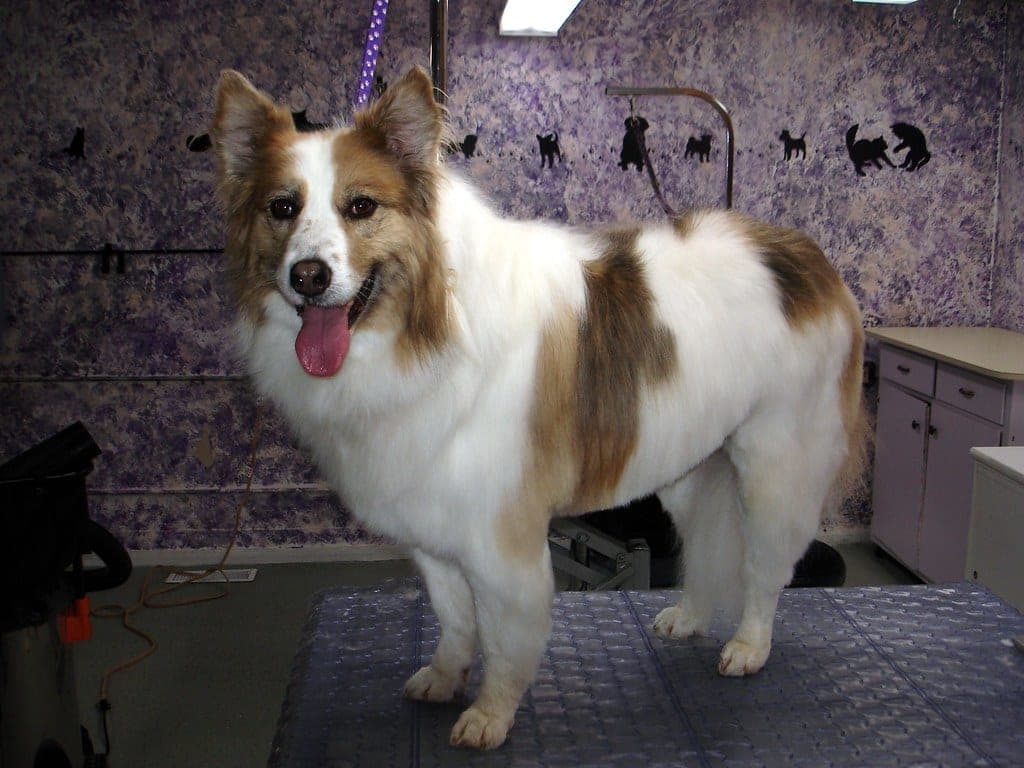
A dog standing on a grooming table

Go Pet Club grooming table

An affordable folding table with a non-slip top - the point at which the job gets easier.

Week four, when you start doing full grooms8.1

Scores are our own editorial assessment, not a product rating from reviews or testing. We do not print prices — every button goes to the current one on Amazon. #ad

Start with the dog, not the tools

The short answer

Before buying anything, do two things: identify your dog’s coat type, which decides every later purchase; and spend a week building handling tolerance with no tools at all. Beginners who skip the second step find that their problem is never technique — it is a dog that will not stand still.

Week one: identify the coat and start brushing

Three checks identify any dog’s coat. Does it keep growing, or stop at a length? Part it — is there a soft dense layer underneath? Does the outer coat feel harsh and crisp, or soft and fine? Those answers put your dog into one of five groups, and the groups need entirely different equipment. The coat-type pages walk through it.

Then start brushing, properly, with whatever brush you have. The technique to learn is line brushing — parting the coat and working from the skin outwards, verifying with a comb. It is the single highest-value skill in home grooming and it costs nothing to practice. Ten minutes a day.

Week two: handling, with no tools

This is the week most beginners skip and it is the week that determines how the next ten years go. Several times a day, for a few seconds each:

  1. 01

    Hold a paw

    Three seconds, something good, release. Each paw. Feet are the most defended part of most dogs.

  2. 02

    Hold the muzzle gently

    Two seconds, reward, release. This is what makes face work possible later.

  3. 03

    Lift an ear and look inside

    A second, reward. Ears need checking for the rest of the dog's life.

  4. 04

    Run a hand down each leg and round the belly

    The places a clipper will eventually go, handled first without one.

  5. 05

    Lift the tail

    Briefly. Sanitary trims happen here and they go much better on a dog that expects it.

The aim is for all of this to become boring. A dog that finds having its paw held unremarkable will let you do its nails; a dog that has only ever had its paw grabbed when something unpleasant was about to happen will not.

Week three: add nails

Nails are the job with the biggest payoff and the biggest fear attached, so do them early while you are being careful. Introduce the tool before you use it: running in another room, then in the room, then touching a shoulder, then one nail for a second. Then do two nails and stop.

Two nails done calmly is a successful session. Sixteen nails and a frightened dog is a failure even if the nails look right. Trimming nails at home has the full procedure, and styptic powder goes on the table before you start, every time.

Week four: a bath, a dry, and a plan

By now the coat is tangle-free, the dog tolerates handling and nails are under control — which is most of the real value of home grooming already achieved, without a clipper. Add a bath and a proper dry (drying after a bath), and then decide whether your dog’s coat needs clipping at all.

For a double coat or a short coat, the answer is no and you are done — your routine is brushing, nails and the occasional bath, plus a seasonal blow-out if the dog sheds. For a growing coat, this is the point to read using clippers for beginners and buy properly.

One: stop before the dog wants to. Every session should end while things are still going well. A dog that learns grooming ends badly fights it next time, and that is a very hard thing to undo.

Two: never clip or scissor near a mat. A mat pulls skin up into itself, so scissors near one cut skin. If a comb will not pass between a mat and the dog, it is a professional’s job.

Three: anything involving blood, broken skin or a dog in distress is a vet question. Not a grooming question, and nothing on this site is veterinary advice.

What to remember

  • Identify the coat type first — it decides every purchase afterwards.
  • Spend a week on handling with no tools. This is the step that decides everything.
  • Learn line brushing before you buy anything expensive. It is free and it prevents mats.
  • Nails in week three: introduce the tool, then do two nails and stop.
  • Many dogs never need a clipper. Decide that deliberately before buying one.
  • Always end a session while it is still going well.
The picks in full

Every pick, in order

01

Week one, on almost any budget

Hertzko self-cleaning slicker brush

An inexpensive slicker with a retract button - enough tool to learn the technique that matters most.

A slicker brush with fine bent pins

Self-cleaning slicker brush

Feature
Retracting pin bed for one-press cleaning
Pins
Fine, angled, less dense than a pro slicker
Best for
Shedding control and loosening undercoat debris

Specs: DogNotebook — Best Slicker Brushes for Dogs

Week one is brushing, and brushing is where the technique matters far more than the tool. This costs little, and the retract mechanism clears a hair-filled brush in one press, which is the thing that makes people give up on line brushing. Use a lighter hand than you would with a premium brush; the pins are less refined.

Beginner suitability8.5
Tangle removal8.0
Comfort for the dog7.0
Build quality6.5
Value9.5
Overall8.0 / 10

What it gets right

  • The retract button means the brush actually gets emptied, which is why it keeps getting used
  • Cheap enough to own two and keep one in the car
  • Fine for routine shedding control on most coats

What it gets wrong

  • Pin bed is not dense enough for serious doodle work
  • Retract mechanism is the part that eventually fails
  • Pins bend over time and stop reaching the skin

Who should skip itSkip it if you own a doodle that mats — buy pin density instead of a cleaning button.

Check price on Amazon

#ad How we earn · We never print a price we cannot verify

02

Week three, if nails are the fear

Oster Gentle Paws nail grinder

A quiet, light grinder with a slow setting - the gentlest introduction to the job owners dread.

A cordless rotary tool of the kind used to grind dog nails

Two-speed nail grinder

Speeds
Two
Positioning
Versatile grinder for mixed households
Guard
Protective cover supplied

Specs: Dogster — Best Dog Nail Grinders

Nail work fails for beginners because the dog refuses the tool, not because the technique is hard. A quieter grinder with a genuinely slow low speed is how you avoid teaching your dog to fear it in the first session. On a small or medium dog the lower torque costs nothing; on a large breed with thick nails you will want more.

Beginner suitability9.0
Noise and vibration8.5
Control near the quick8.5
Thick-nail capability5.5
Value8.5
Overall8.1 / 10

What it gets right

  • Two speeds covers the real-world choice: slow for nervous, fast for horn-thick nails
  • Low noise relative to a full rotary tool
  • Simple enough that it gets used, which is the thing that actually keeps nails short

What it gets wrong

  • Less torque than the Dremel units
  • Narrow guard opening limits it on very large nails
  • Battery life is modest

Who should skip itSkip it if you have a giant breed with thick nails — buy torque instead.

Check price on Amazon

#ad How we earn · We never print a price we cannot verify

03

Week four, when you start doing full grooms

Go Pet Club grooming table

An affordable folding table with a non-slip top - the point at which the job gets easier.

A dog standing on a grooming table

Budget adjustable grooming table

Height
Adjustable
Positioning
Best-value grooming table
Top
Non-slip surface

Specs: Dogster — Best Dog Grooming Tables

The table is the upgrade beginners most often postpone and most benefit from: a dog at waist height on a ribbed top, unable to wander, is a different animal to work on. A folding table at the affordable end answers the storage objection, and the non-slip surface is most of what you are paying for. Check the weight rating against your dog.

Beginner suitability8.5
Stability7.0
Top size and grip7.5
Storage8.5
Value9.0
Overall8.1 / 10

What it gets right

  • The cheapest table that is still a table rather than a folding card table with a mat on it
  • Adjustable height, which most budget tables skip
  • Enough for a small or medium dog groomed monthly

What it gets wrong

  • Frame flexes under a big dog that decides to move
  • Arm often sold separately
  • Finish and hardware quality reflect the price

Who should skip itSkip it for a large or anxious dog — flex in a table makes a dog less willing to stand still, not more.

Check price on Amazon

#ad How we earn · We never print a price we cannot verify

FAQ

Questions people actually ask

How long before I can do a full groom myself?

A month to be comfortable with brushing, handling, nails and bathing — which covers most of the actual benefit. Clipping competently takes several grooms beyond that, and a tidy result rather than a functional one takes a few months of practice.

What if my dog is already matted when I start?

Deal with that first and separately. If a comb will not pass between the mat and the skin, book a groomer for the clip-out and start your routine on the fresh coat — it is far easier to maintain a good coat than to rescue a bad one. See clipping matted hair.

Is it too late to start with an older dog?

No, though expect the handling phase to take longer with a dog that has formed opinions. Go slower, keep sessions very short, and consider doing the first few nail trims at a groomer while you work on handling at home.

Should I watch videos or read guides?

Both, and do the handling work regardless. Technique is easy to learn from watching; the reason beginners struggle is almost always the dog’s tolerance rather than the hand movements, and no video fixes that for you.

How this page was put together

We define the coat problem the tool has to solve, shortlist products currently sold, compare the manufacturers’ documented specifications against what that coat actually needs, and cross-check against published findings from named sources. We do not test these tools on our own dogs under controlled conditions, and we will not say we do. Where a figure comes from a manufacturer, we name them; where it comes from someone else’s testing, we cite them. We print no prices — a stale number is worse than none. Read the full method.

Sources

  1. 01Dogster — best dog clippers
  2. 02Dog Notebook — best slicker brushes for dogs