The short answer
The short answer
A mat is clipped underneath, never through: a short blade is worked flat between the mat and the skin so the whole mat lifts away. Cutting into a mat with scissors or a long blade is how dogs get cut, because the skin is pulled up into the mat and you cannot see it.
First: is this a home job at all?
Try to slide a steel comb between the mat and the skin. If it passes, you have tangles and you can work on them. If it will not pass anywhere across a large area — the coat moves as one sheet when you lift it, or it is tight against the body — stop. That coat has to come off underneath, against skin you cannot see, and skin under a long-standing mat is often already inflamed or broken.
A groomer does this routinely and quickly. A first-timer with scissors is the most common cause of a serious home-grooming injury. There is no shame in the phone call and it is much cheaper than the vet visit.
Why scissors are the wrong tool
A mat does not sit on top of the coat; it pulls the skin up into itself as it tightens. So when you lift a mat to cut it, you are frequently lifting a tent of skin with it — and scissor points going into that tent is precisely how dogs end up with lacerations that need stitching. The injury happens in a fraction of a second and it is invisible until you see blood.
A clipper blade cannot do that. It cuts in a plane, parallel to the skin, with a guard tooth between the cutting edge and the dog. That geometry is the entire reason this job is a clipper job.
The technique
- 01
Assess with a comb, not your eyes
Work over the whole dog with a steel comb, finding where it will and will not pass to the skin. Mats hide in armpits, behind ears, on the tail base, between toes and in the groin.
- 02
Do not bathe first
Water tightens a mat. If the coat is matted, the mat comes off before the bath, which is the reverse of a normal groom.
- 03
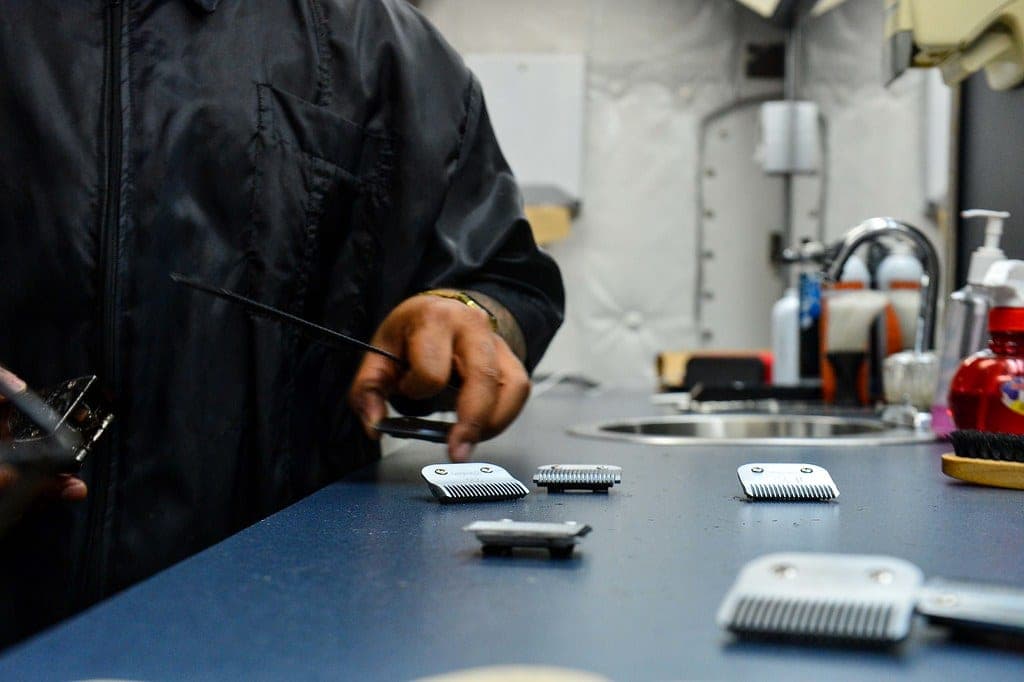
Fit a sharp #10
Short and sharp. A dull blade drags the mat and that is what hurts the dog.
- 04
Slide the blade flat between mat and skin
Blade flat, teeth leading, working from an edge of the mat inwards. The whole mat lifts away as a sheet rather than being cut up.
- 05
Use your free hand to hold skin flat
Flatten and stretch the skin ahead of the blade, especially in armpits, flanks and groin where skin folds.
- 06
Work small, and keep checking the blade temperature
Mat removal loads a blade hard, so it heats fast. Touch it to your forearm every couple of minutes; swap to a second blade rather than pushing on.
- 07
Inspect the skin as it is exposed
Redness, sores, damp patches or a smell mean the skin is already compromised. Stop and see a vet before continuing.
- 08
Then bathe, dry and tidy
Once the mats are off, groom normally: bathe, dry to the skin, and even up the length with a longer blade if you want to.
What the dog will look like afterwards
Shorter than you wanted, and patchy. That is unavoidable: if a mat sat against the skin, the coat under it has to come off at skin length, and a shave-down is the honest outcome of a coat that got away from its owner. It grows back. What matters more is that the dog is comfortable, the skin can be seen and treated, and the next cycle is managed.
Expect the skin underneath to look worse than the coat suggested. Mats trap moisture and heat and prevent air reaching skin, so sores, hot spots and irritation are common findings rather than surprises. Anything beyond mild redness is a veterinary matter.
Preventing the next one
Matting on a growing coat is a maintenance problem with a known solution: brushing to the skin every day or two, with a slicker and a comb, using line brushing rather than surface strokes. The single most common failure is a coat that looks well brushed on top and is felted at skin level, which is why the comb check matters more than how the coat looks.
The other common trigger is a puppy coat turning into an adult coat somewhere between nine and fifteen months. Owners who got away with brushing twice a week suddenly cannot, and the first they know of it is a mat. If your doodle is around that age, step the routine up before you have to. The doodle coat page covers the transition.
What to remember
- →Comb test first: if a comb will not pass between mat and skin, consider a groomer.
- →Clip underneath the mat, never through it. Scissors near a mat cut skin.
- →Do not bathe a matted coat — water tightens mats.
- →A sharp #10 is the blade. A dull one drags and hurts.
- →Hold skin flat ahead of the blade, especially in armpits and groin.
- →Expect the skin underneath to look worse than you hoped. Anything beyond mild redness is a vet visit.
How this page was put together
We define the coat problem the tool has to solve, shortlist products currently sold, compare the manufacturers’ documented specifications against what that coat actually needs, and cross-check against published findings from named sources. We do not test these tools on our own dogs under controlled conditions, and we will not say we do. Where a figure comes from a manufacturer, we name them; where it comes from someone else’s testing, we cite them. We print no prices — a stale number is worse than none. Read the full method.