Skip to content
Clip & Coat

By tool

Deshedding, Brushes and Dematting Tools

Four tool categories that look interchangeable and are not. Pick by what the coat does, not by what the box says.

7 pages in this section

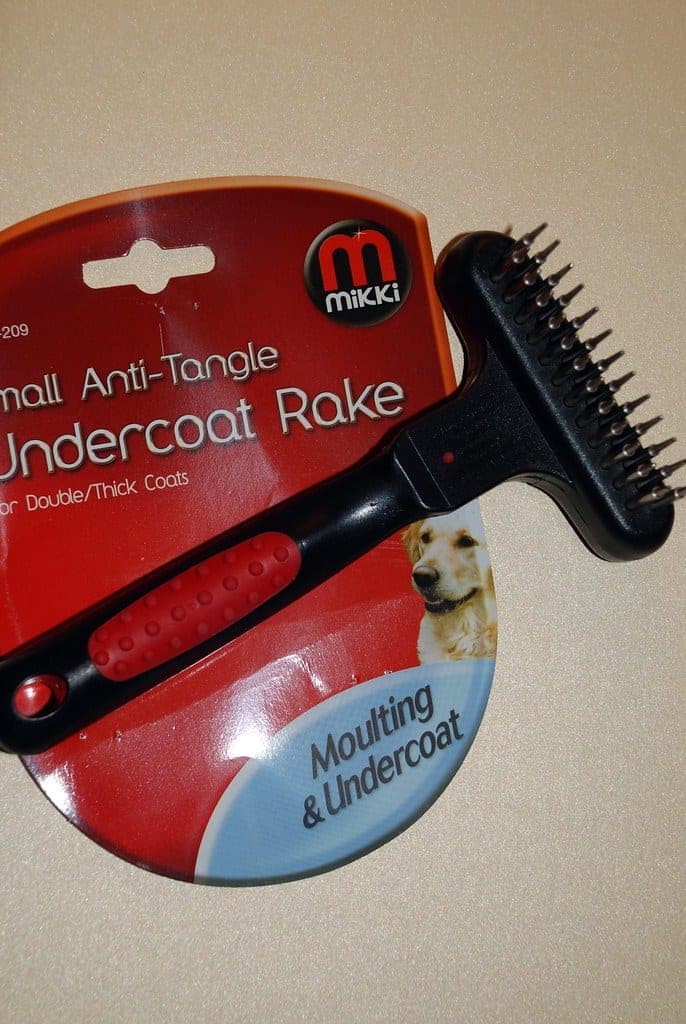
An undercoat rake pulling loose undercoat from a dense coat

Four tools, four different jobs

The short answer

An undercoat rake pulls dead undercoat out of a double coat. A deshedding blade cuts and lifts loose hair at the surface. A slicker brush removes tangles and surface debris from any coat. A dematter cuts through a mat that is already formed. They are not interchangeable, and using the wrong one is how coats get damaged.

This is the category where buyers go wrong most often, because the tools look similar on a shelf and the packaging describes all of them as “deshedding”. They work on completely different parts of the coat. Matching the tool to what your dog’s coat actually does is the entire skill here, and it takes about a minute to work out.

ToolWhat it doesRight forWrong for
Undercoat rakeLong widely-spaced teeth reach through the guard coat and pull out dead undercoatDouble coats — Husky, GSD, Golden, Samoyed, PyrSingle-coated or curly dogs; there is no undercoat to rake
Deshedding bladeA fine toothed edge that cuts and lifts loose hair near the surfaceShort and medium shedding coatsHeavy use on any coat — it cuts guard hairs if you lean on it
Slicker brushFine bent wires that lift tangles and debris from the coatEverything, especially doodles and silky coatsPressing hard on bare skin — it scratches
DematterHooked blades that cut through a formed matMats you cannot brush outRoutine brushing — it removes coat permanently

Shedding versus matting: pick your problem

A double-coated dog sheds. Twice a year it drops its undercoat in volume, and the job is to get the dead hair out of the coat before it works its way onto your furniture. That is rake work, ideally combined with a high-velocity dryer, which blows loose undercoat out faster than any brush. Start at undercoat rakes, or go straight to the breed-specific pages for Huskies, German Shepherds and Golden Retrievers.

A doodle or a poodle does not shed meaningfully — it mats. The coat keeps growing and the shed hair stays in it, felting against the skin. Nothing in the deshedding family helps with that; what helps is a good slicker brush, a comb to check your work, and line brushing all the way to the skin. If it has gone past brushing, dematting tools is the page you want.

What decides the price

Blade and tooth quality, and the handle. On a rake, tooth spacing and rounded tooth tips are the difference between pulling undercoat and scratching skin. On a slicker, pin flexibility and whether the pins are properly finished decide whether it is comfortable; cheap slickers have sharp pin ends that make dogs flinch. Handles matter more than they sound: deshedding a Samoyed in spring is forty minutes of repetitive motion, and a handle that cramps your hand means the job does not get finished.

The mistake almost everyone makes

A deshedding blade has a cutting edge. Used lightly and occasionally it lifts loose hair; used as a daily brush, or with pressure, it cuts guard hairs and thins the coat permanently. On a double coat the guard layer is the dog’s insulation and sun protection, and it does not grow back the way the undercoat does.

The companion mistake is brushing only the top of the coat. A double coat can look perfectly groomed while holding a solid felt mat at skin level. Part the coat in lines and work from the skin outwards — if the comb will not pass through to the skin, that section is not done.
Buying guides and picks

Picks by tool type and breed

FAQ

Deshedding & Dematting: common questions

Should I shave my double-coated dog in summer?

No. The double coat insulates against heat as well as cold, and shaving it removes the dog’s sun protection and can permanently change how the coat regrows. The right summer strategy is to get the dead undercoat out — rake, bathe, and blow the coat out — so air can move through it. There is a full explanation on our double coat page.

How often should I deshed?

During a seasonal coat blow, every day or two for a couple of weeks makes the difference between a manageable job and a losing battle. Outside those periods, once a week for most double coats. Doodles and other continuously-growing coats need brushing every day or two year-round, which is a different job entirely.

Is a FURminator bad for my dog?

Not inherently, but it is a cutting tool and it is widely used as if it were a brush. Light passes on a shedding coat are fine; heavy repeated use thins the guard coat. If your dog has a true double coat, a rake does the same job with none of that risk, which is why we usually recommend one first.