The short answer
The short answer
Trim nails so they do not touch the floor when the dog stands square on a hard surface. Take small amounts often rather than a lot occasionally. On pale nails, stop a few millimeters before the pink quick; on black nails, take tiny amounts and stop when a gray dot appears in the center of the cut face.
What you are avoiding, and why it matters
The quick is the blood vessel and nerve running down the center of the nail. Cut into it and there is bleeding and pain, and the dog remembers — which is why one bad nail trim often ends home nail care for years. That avoidance is the real problem: nails left long change the angle of the toes and load the toe joints wrongly over time, so this is a welfare issue rather than a cosmetic one.
The good news is that frequency solves most of it. A nail trimmed every two weeks needs a millimeter taken off; a nail trimmed twice a year needs a decision. Short, frequent, boring sessions are both safer and easier than occasional big ones.
How short is right
The procedure
- 01
Styptic powder on the table first
Before anything else. Bleeding happens to careful people; having the stop-bleed in another room is what turns it into a drama.
- 02
Good light, comfortable position
You need to see the nail's cross-section. A lamp aimed at the paw beats any tool upgrade.
- 03
Isolate one toe
Support the paw from underneath, press gently to extend the nail, push the hair back so the whole nail is visible.
- 04
Find the quick
Pale nail: the pink triangle inside. Stop several millimeters short. Black nail: take tiny amounts and watch for a gray or black dot in the center of the cut face.
- 05
Take a small amount
Grinder: a one- to two-second burst. Clipper: one deliberate cut at about 45 degrees, following the nail's natural line.
- 06
Rotate around the paw
Do not finish one nail before moving on. With a grinder this prevents heat building; with a clipper it prevents over-committing.
- 07
Do the dew claws
Higher up on the inside of the leg. They never touch the ground, never wear down, and are the most forgotten nails on the dog.
- 08
Stop early if the dog is losing patience
Two nails done calmly beats sixteen done badly. Finish tomorrow.
If you hit the quick
Press styptic powder (or a styptic pencil, or cornstarch as a stopgap) firmly onto the nail tip for two or three minutes without peeking — lifting to check restarts it. Then keep the dog quiet for half an hour so the clot holds. It will stop.
If bleeding has not stopped after about fifteen minutes of genuine pressure, call a vet. And do not carry on with the other nails afterwards: end the session, give the dog something good, and come back another day. Pushing on after a quick is how a dog learns to fear the tool.
Grinding or clipping?
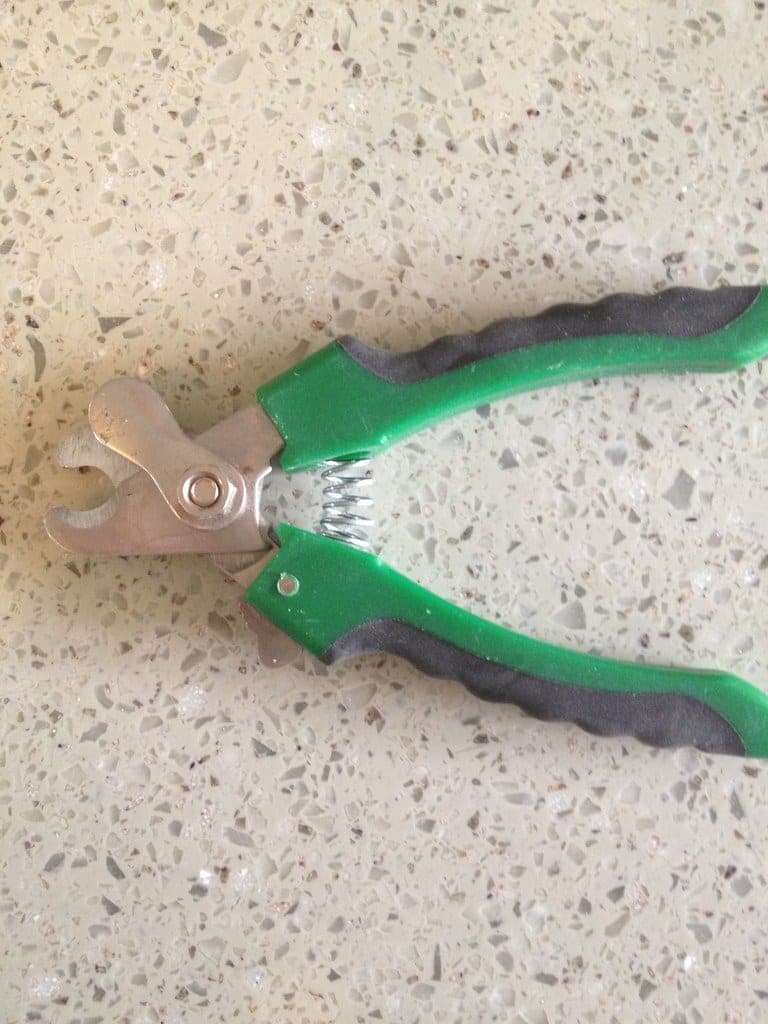
A grinder is safer about the quick because it removes material gradually, which makes it the right choice for thick or black nails. A clipper is faster, silent and completely still, which makes it the right choice for thin pale nails and for dogs that will not tolerate vibration. The full comparison is on grinder versus clipper, and plenty of owners use both — clip for speed, then round the edges with a grinder so nothing snags.
A grinder’s own risk is friction heat: hold the drum on one nail too long and the nail conducts heat to the quick, which hurts with no bleeding to warn you. Short bursts, rotating round the paw, and keep long coat away from the spinning drum — hair wraps and pulls hard.
Getting a reluctant dog to accept it
Separate the handling from the trimming. Spend a week doing nothing but holding a paw for three seconds and giving something good. Then introduce the tool switched off. Then running, across the room. Then touching one nail for a second. The whole process takes a couple of weeks and it permanently changes how the rest of your dog’s life goes, which makes it the best-value time investment in home grooming.
What to remember
- →Styptic powder on the table before you start. Every time.
- →Short, frequent sessions are safer and easier than occasional long ones.
- →Pale nails: stop before the pink. Black nails: stop at the gray dot in the cut face.
- →Rotate around the paw rather than finishing one nail at a time.
- →Always do the dew claws — they never wear down.
- →Hit the quick: firm pressure with styptic for three minutes, then end the session.
How this page was put together
We define the coat problem the tool has to solve, shortlist products currently sold, compare the manufacturers’ documented specifications against what that coat actually needs, and cross-check against published findings from named sources. We do not test these tools on our own dogs under controlled conditions, and we will not say we do. Where a figure comes from a manufacturer, we name them; where it comes from someone else’s testing, we cite them. We print no prices — a stale number is worse than none. Read the full method.