It is rarely the noise and never stubbornness. A clipper squeezes a nail that is attached to a nerve, and a dog that has been quicked once has learned something it will not unlearn by being held tighter.
Scores are our own editorial assessment, not a product rating from reviews or testing. We do not print prices — every button goes to the current one on Amazon. #ad
The short answer
The short answer
Because a clipper squeezes a nail that is attached to a nerve, because most dogs have been quicked at least once and remember it, and because being held still is itself the part many dogs object to. Switching to a grinder and rebuilding the handling fixes most cases.
This page is for you if
Your dog pulls its paw away, hides, growls or panics at the sight of nail clippers, and you are tired of a two-person wrestling match every three weeks.
It helps to be precise about this, because the usual explanations — the dog is stubborn, the dog is dramatic, the dog hates the noise — lead to the wrong fixes. There are four causes and they are all addressable.
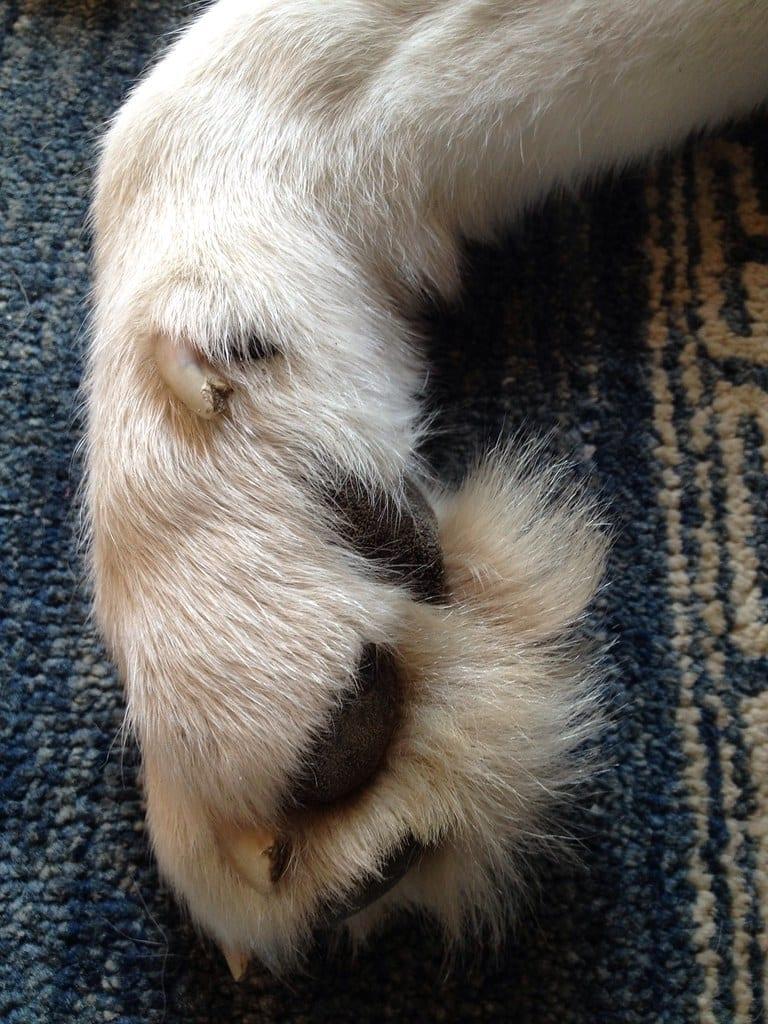
1. Pressure on the nail bed. A dog’s nail is not an inert shell. It contains the quick: a core of blood vessels and nerve running most of the way down. A clipper works by squeezing from both sides, and that squeeze transmits straight into the nail bed even when the cut is nowhere near the quick. Some dogs find that unpleasant on its own, before anyone has hurt them.
2. One bad cut, remembered. Quicking a nail bleeds and genuinely hurts, and it is a single-trial lesson — a dog needs one experience of it to associate the tool with pain permanently. Most dogs that fight nail trims were quicked once, often years ago, usually by someone who was trying to be efficient.
3. Paw handling, not the tool. Paws are a sensitive, defensive area for dogs, and many have never been handled there outside of nail trims. If the only time anyone holds your dog’s foot is immediately before something uncomfortable, the handling itself becomes the warning signal.
4. The restraint. Plenty of dogs do not mind the clipper and do mind being pinned, leaned on or held between someone’s knees. Being physically unable to move is frightening in a way the trim is not.
What actually fixes it
Cause
Fix that works
What does not work
Pressure on the nail bed
Switch to a grinder — it removes nail without squeezing it
A stronger clipper, or cutting faster to get it over with
Remembered quicking
Take less nail than you need to, every time, for months
Pushing through it. One more quicking resets all progress
Paw sensitivity
Handle paws daily outside grooming, for seconds, with a treat
Only touching the paws when you intend to cut something
Restraint
A grooming table with a loop, so the dog is supported, not held
A second person holding the dog down
Blunt tool crushing the nail
Replace the clipper. A sharp blade severs, a dull one crushes
Squeezing harder
Causes and remedies are this site's own, drawn from the handling guidance in the nail-care sources cited below.
Supported rather than restrained: the dog stands and can shift its weight, instead of being held down.
The rehabilitation plan
This takes two to three weeks and it works on most dogs, including ones that currently leave the room when you open the drawer. Do one step per day and do not skip ahead because it is going well.
01
Days 1 to 3: handle paws for nothing
Sit with the dog, touch a paw for two seconds, give a treat, let go. Repeat four or five times. No tool in sight, no nails cut. You are breaking the link between paw handling and discomfort.
02
Days 4 to 5: introduce the tool switched off
Put the clipper or grinder on the floor, let the dog sniff it, treat. Then hold a paw and touch the tool to a nail with nothing happening. Treat. Stop.
03
Day 6: turn it on, away from the dog
If you are moving to a grinder, run it on its lowest setting across the room while the dog eats something good. Bring it closer over several repetitions, never to the paw.
04
Day 7: one nail, then stop
Take the very tip off one nail — a fraction of a millimetre — then stop, treat heavily, and walk away. One nail is a complete, successful session. Resist doing a second.
05
Days 8 to 14: build to one paw
Add a nail per session. If the dog pulls away, you have gone one nail too far; end there and do the same number tomorrow rather than fewer.
06
Ongoing: trim little and often
Every two weeks, taking only the tip. Short frequent trims keep the quick receding, which means the margin for error grows over time instead of shrinking.
One quicking undoes a month of work
While you are rebuilding trust, take less nail than you think you safely can — the goal is a long run of boring, painless sessions, not progress on nail length. Keep styptic powder in the room so a mistake is handled in thirty seconds rather than becoming a chase through the house. On dark nails, where you cannot see the quick, read the black-nail method before you start.
Is a grinder really better?
For a dog that fears clippers, usually yes — not because grinding is painless but because it is incremental. You remove a fraction at a time and you can see the nail changing as you approach the quick, so the session ends with a nail slightly too long rather than a nail bleeding. That is the whole difference, and it is why professionals often finish with a grinder even when they clip first.
The trade-offs are real. A grinder is noisy and it vibrates, which some dogs mind more than a squeeze. It generates heat if you hold it on one nail too long, so you work in two-second passes. And long ear or leg hair can catch in the head, which is what the guard is for. The grinding procedure covers the technique, and grinder versus clipper compares them properly.
What to remember
What to remember
→It is pressure and memory, not stubbornness. Treating it as defiance makes it worse.
→Handle paws daily for nothing. The handling is half the problem.
→One nail is a complete session. Stop while it is still going well.
→A grinder changes the failure mode from pain to a nail left slightly long.
→Support the dog on a table with a loop instead of having someone hold it down.
→Every two weeks, tips only. The quick recedes, and your margin grows.
The reason a grinder rehabilitates a clipper-phobic dog is that it changes what can go wrong. A clipper is one committed squeeze that is either correct or painful; a grinder takes a fraction of a millimetre at a time and lets you stop the moment the nail darkens near the quick. Four speeds matter here specifically: you start on the lowest setting, which is slow enough to introduce without a reaction, and work up as the dog relaxes. The paw guard keeps long leg hair out of the head.
Fixes clipper fear9.5
Control9.0
Speed range9.0
Noise6.5
Value8.5
Overall8.8 / 10
What it gets right
+It is a Dremel rotary tool, so it has torque a pet-branded grinder does not — thick nails do not stall it
+The speed range means you can start slow on a dog that hates the noise
+Grinds rather than crushes, so there is no split-nail risk
What it gets wrong
−At 25,000 RPM it generates heat fast; you must pulse, not dwell
−Louder and more vibration than a low-RPM pet grinder
−Guard attachment is fiddly and most people stop using it
Who should skip itSkip it for a tiny, noise-phobic dog — the RPM and vibration are more than the job needs.
If the objection is noise and vibration rather than pain, a smaller two-speed unit is the better first purchase: it is quieter, lighter in the hand, and the low setting is gentle enough to hold against a paw for a few seconds while the dog works out that nothing bad happens. You give up the top-end speed, which matters on a large dog with thick nails and does not matter at all on the small and medium dogs that most often refuse clippers.
Fixes clipper fear8.5
Control8.5
Speed range6.5
Noise8.0
Value9.0
Overall8.3 / 10
What it gets right
+Two speeds covers the real-world choice: slow for nervous, fast for horn-thick nails
+Low noise relative to a full rotary tool
+Simple enough that it gets used, which is the thing that actually keeps nails short
What it gets wrong
−Less torque than the Dremel units
−Narrow guard opening limits it on very large nails
−Battery life is modest
Who should skip itSkip it if you have a giant breed with thick nails — buy torque instead.
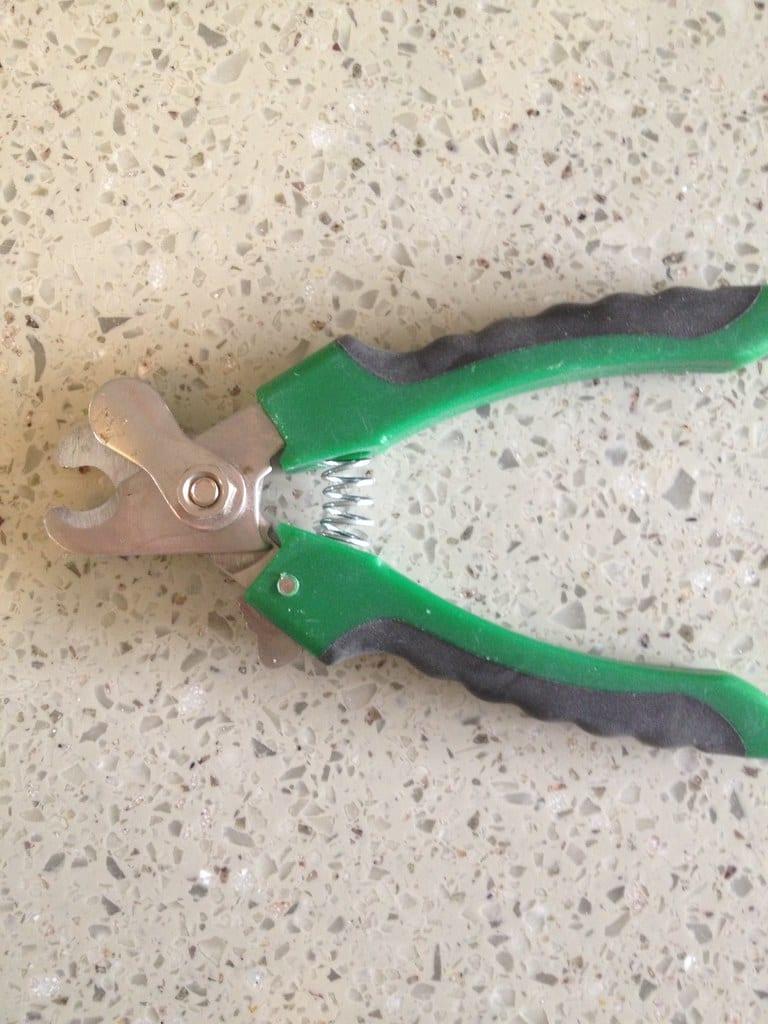
Some dogs are fine with clippers and only became difficult after one bad cut, and for those the fix is a clipper you cannot over-cut with rather than a different tool entirely. The safety stop sets a physical floor on how much nail one squeeze can take, which means the first few sessions remove tips only. Sharp, well-aligned blades are the other half: a blunt clipper crushes before it cuts, and crushing is what taught your dog to hate this in the first place.
Fixes clipper fear7.5
Control8.5
Clean cut8.5
Noise9.5
Value8.5
Overall8.4 / 10
What it gets right
+The safety stop is the single most useful feature for a first-timer worried about the quick
+The tension spring makes the cut more accurate rather than just easier
+Double blade shears from both sides, so the nail does not crush
What it gets wrong
−The safety stop limits how much you can take off a badly overgrown nail
−Spring tension is firm for small hands
−Not as sharp out of the box as a Millers Forge
Who should skip itSkip it if you are confident with the quick — the stop will slow you down.
#adHow we earn · We never print a price we cannot verify
FAQ
Questions people actually ask
+−Why does my dog hate getting its nails cut?
Most often because a clipper squeezes the nail bed, because the dog has been quicked at least once and remembers it, or because being held still is the part it objects to. Paw sensitivity compounds all three when the only time anyone handles the feet is immediately before a trim.
+−How do I calm my dog for nail trims?
Rebuild it in small pieces: handle paws daily with treats and no tool for several days, then introduce the tool switched off, then take the tip off one nail and stop. Two to three weeks of that beats any amount of restraint, and a grooming table with a loop supports the dog instead of pinning it.
+−Is a nail grinder better than clippers for a scared dog?
Usually, because grinding removes nail a fraction at a time so the worst outcome is a nail left slightly long rather than a quicked nail. The trade-off is noise and vibration, which a minority of dogs dislike more than the squeeze. Introduce it on the lowest speed, away from the dog first.
+−Should I sedate my dog for nail trims?
That is a conversation for your vet, not a grooming decision, and it is worth having only after the handling work has genuinely been tried. For the large majority of dogs, two to three weeks of short painless sessions removes the need.
How this page was put together
We define the coat problem the tool has to solve, shortlist products currently sold, compare the manufacturers’ documented specifications against what that coat actually needs, and cross-check against published findings from named sources. We do not test these tools on our own dogs under controlled conditions, and we will not say we do. Where a figure comes from a manufacturer, we name them; where it comes from someone else’s testing, we cite them. We print no prices — a stale number is worse than none. Read the full method.