The table
The short answer
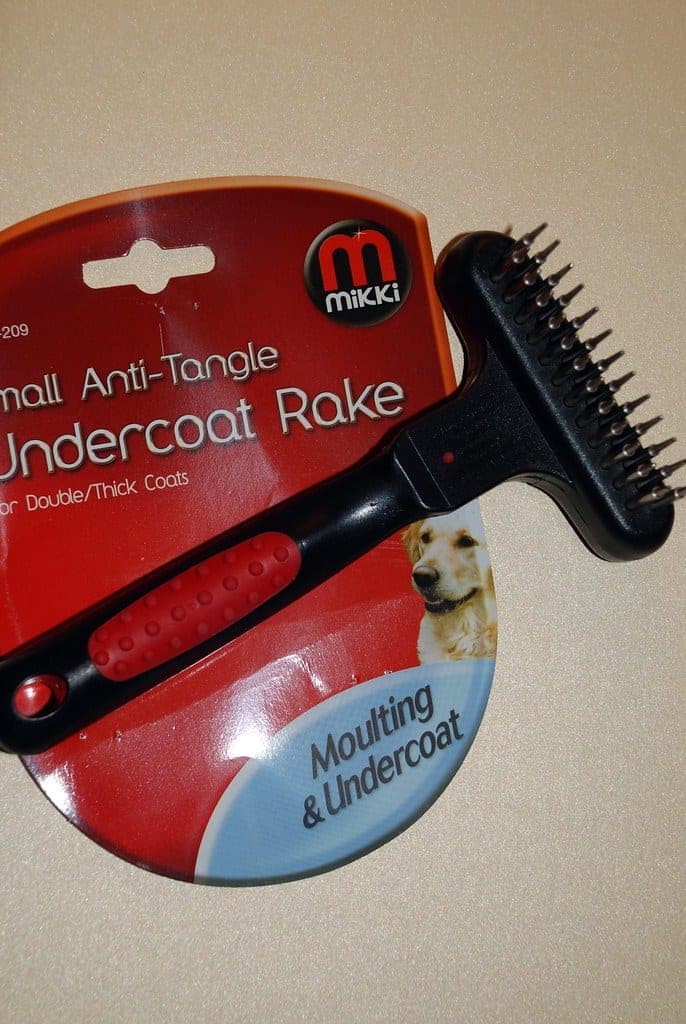
Brushing frequency is set by the coat; nails are every two to four weeks for every dog. Growing coats need brushing every day or two and clipping every six to ten weeks. Double coats need weekly raking and no clipping. Short coats need nails and a weekly once-over and nothing else.
Not sure which row you are on? The three checks on the coat-type pages settle it in about a minute.
The jobs that are not in the table
Two things need doing more often than a full groom and are easy to forget between them:
- Sanitary trim: every 2–3 weeks on any long-coated dog. A ten-minute job that affects comfort and hygiene more than anything else on this page. How to do it.
- Paw pads: every 3–4 weeks, or more in winter if your dog picks up ice balls. Hair over the pads makes dogs slip on hard floors.
- Face and eyes: every 2–3 weeks on a doodle, even if the full face trim is every six. Hair in the eyes causes chronic irritation. How to do it.
- Ear check: weekly. Look, do not probe. Redness, smell or discharge is a vet question.
What changes seasonally
Spring and autumn, double coats. The seasonal blow lasts two to four weeks and changes everything: rake daily or every other day and do a full blow-out every week or two. Staying on top of it during those weeks is the difference between a manageable season and a losing battle.
Summer. Shorter body clips on growing coats, if you like — but not shorter than a #7F, which still leaves sun protection. And emphatically no shaving of double coats: the coat insulates against heat and shades the skin.
Winter. Keep paw-pad hair shorter if your dog picks up ice or grit between the toes, and leave slightly more body coat on if you have a thin-coated dog. Drying matters more — a damp dog in a cold house is uncomfortable, and a dryer that warms the airstream with motor heat is pleasant in an unheated garage.
The interval that matters most is the brushing one
Every other line in this table can slip a week with no consequence. The brushing interval on a growing coat cannot: tangles become mats in days, and a mat is not an inconvenience but a clip-off. If you are going to be inconsistent about something, be inconsistent about the bath.
Making it stick
Two things make a grooming schedule survive contact with real life. First, attach jobs to days rather than intervals — “nails on the first Sunday” is kept far more reliably than “every three weeks”. Second, split the big jobs: one area of the coat per evening rather than a whole dog on Saturday. A rotating schedule keeps every part of the coat within a few days of being done, which is all that is actually required.
What to remember
- →Nails are every two to four weeks for every dog, whatever its coat.
- →Growing coats: brush every day or two, clip every six to ten weeks.
- →Double coats: rake weekly, blow out monthly, never clip.
- →Short coats: nails and a weekly mitt. That is the whole schedule.
- →Sanitary and face trims are fortnightly jobs, not full-groom jobs.
- →Brushing is the one interval that cannot slip. Let the bath slip instead.
How this page was put together
We define the coat problem the tool has to solve, shortlist products currently sold, compare the manufacturers’ documented specifications against what that coat actually needs, and cross-check against published findings from named sources. We do not test these tools on our own dogs under controlled conditions, and we will not say we do. Where a figure comes from a manufacturer, we name them; where it comes from someone else’s testing, we cite them. We print no prices — a stale number is worse than none. Read the full method.