Skip to content
Clip & Coat

Guides

How to Trim a Doodle Face

The part of a doodle groom that shows most and goes wrong most. The order matters, and almost all of it is scissors and a trimmer, not a clipper.

By Brijon M.
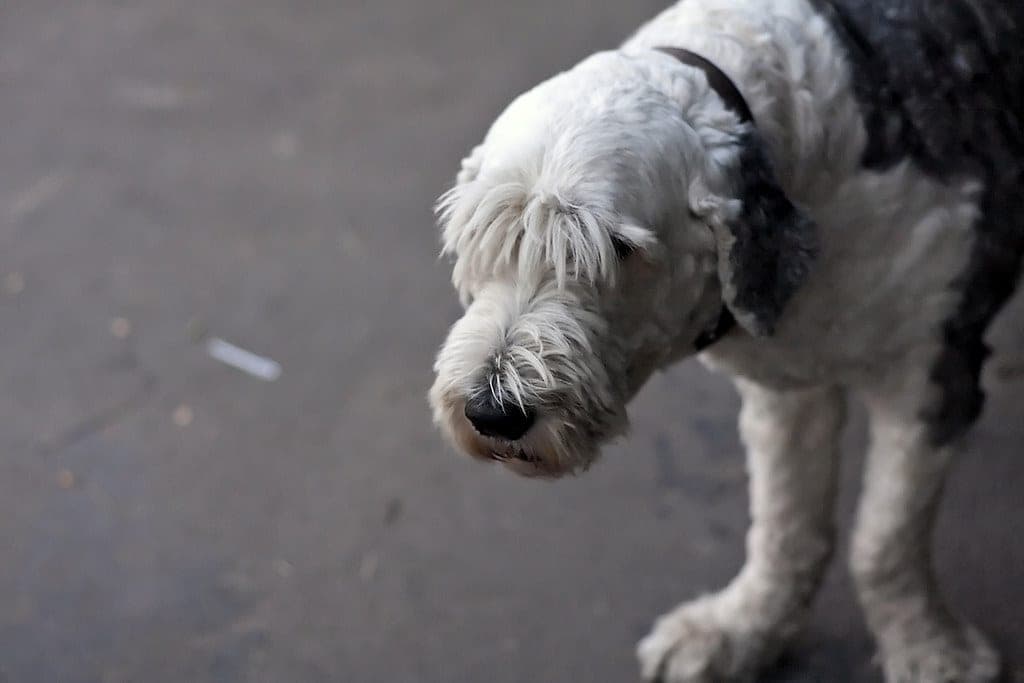
A doodle's face being tidied with grooming scissors

Quick picks

The shortlist

Quick picks

Tap any row to jump to that pick’s full write-up. The price column goes straight to Amazon.

#ProductBest forScorePrice
1
A detachable-blade animal clipper resting on a work surface

Wahl Arco SE

A light cordless trimmer with a narrow adjustable blade - the right machine for a face.
The small areas scissors cannot reach safely8.8
2
Grooming shears laid flat on a bench

Kenchii Show Gear curved ball-tip shears

Curved shears, which is how a round muzzle is cut rather than approximated.

The rounded shape the face actually needs8.5
3
A slicker brush with fine bent pins

Chris Christensen 27 mm oval pin brush

A gentle brush for a face, because a slicker near an eye is the wrong tool.

Combing the face out before and during8.3

Scores are our own editorial assessment, not a product rating from reviews or testing. We do not print prices — every button goes to the current one on Amazon. #ad

The short answer

The short answer

Work eyes first, then muzzle, then blend into the head. Use blunt-tipped scissors and a small trimmer, never a body clipper. Comb the hair forward before every cut so you can see the real length, and check the dog head-on frequently — asymmetry is invisible up close.

This page is for you if

You have a doodle, poodle, Bichon or similar and the face has grown over the eyes or the beard has lost its shape.

You are on the wrong page if

You want a breed-standard poodle trim or a show finish. That is a professional skill and this page is about a tidy, comfortable pet face.

Why eyes come first

Two reasons. The practical one: hair over the eyes is the thing actually bothering the dog, and if you run out of patience halfway through a face you want the useful half done. The aesthetic one: the eyes set the proportions of everything else. Shape a beard first and you will find yourself cutting it again to match where the eye line ended up.

Hair in the eyes is not just cosmetic — it causes chronic irritation and tear staining, and hair at the inner corner holds moisture against the skin. Clearing it is the most valuable thing this whole job achieves.

Tool rules near a face

Part of the faceToolNever
Above and around the eyesBlunt-tipped scissors, points angled awayPointed scissors; any clipper
Inner eye cornersScissor tips, very small cutsA trimmer blade this close to an eye
Beard and mustacheCurved shears from underneathA clipper, which flattens the shape
Bridge of the noseSmall trimmer or scissorsA wide body blade
Cheeks and blendShears, or thinning shearsA hard clipper line
Inside the ear leatherScissors, minimalA clipper, which catches thin ear skin

A dog moves its head unpredictably and an eye has no protection. Blunt-tipped (ball-tipped) grooming scissors exist precisely because the consequence of a pointed tip plus a head movement is an injury that cannot be undone. Hold scissors parallel to the face with the points directed away from the eye, rest your hand against the dog’s head so your hand and the dog move together, and cut only as much as you can see.

If the dog will not hold still for this at all, trim what you safely can and leave the rest to a groomer. Nobody’s tidy face is worth an eye.

The procedure

  1. 01

    Comb the face out

    Comb the beard, mustache and the hair over the eyes forward so actual lengths are visible. A tangled face trims unevenly.

  2. 02

    Clear the eyes

    Blunt-tipped scissors parallel to the face, points away from the eye. Take hair above the eye back in small cuts until the eye is visible, combing between cuts.

  3. 03

    Tidy the inner corners

    Remove the hair collecting at the inner corner of each eye, tips angled away. This is where irritation and tear staining start.

  4. 04

    Shape the muzzle

    Comb the beard forward and scissor it round, working from underneath. Check the dog head-on often to keep both sides matched.

  5. 05

    Shorten the bridge

    A small trimmer or scissors slightly shortens the nose bridge. This is what makes a face read as rounded rather than flat.

  6. 06

    Blend into the head

    Soften the transition from muzzle to cheek to skull so there is no step. Thinning shears make this much easier.

  7. 07

    Assess from the front and both sides

    Stand back two feet. Asymmetry you cannot see while working close is immediately obvious from there.

A doodle's muzzle being shaped with curved grooming shears
Curved shears follow a muzzle's shape. Straight shears make a round face a fight.

Keeping it tidy between grooms

A doodle beard collects food and water and felts quickly, and that happens faster than the rest of the coat. Comb the face every day or two with a fine steel comb — it takes under a minute and it is what stops a matted beard becoming a clip-off job. Keeping the hair clear of the eyes also means you catch eye problems early rather than discovering them under hair.

Face work is also the first thing to let go when a groom runs long. Doing the eyes every two weeks and the full face every six is a perfectly reasonable rhythm, and the schedule guide puts it in context with the rest of the routine.

What to remember

  • Eyes first, then muzzle, then blend. The eye line sets the proportions.
  • Blunt-tipped scissors near eyes, always, with the points angled away.
  • A trimmer for small areas; a body clipper never goes near a face.
  • Comb the hair forward before every cut so you can see real lengths.
  • Check head-on from two feet away — asymmetry is invisible up close.
  • Comb the beard every day or two; it felts faster than the body coat.

The picks in full

Every pick, in order

01

The small areas scissors cannot reach safely

Wahl Arco SE

A light cordless trimmer with a narrow adjustable blade - the right machine for a face.

A detachable-blade animal clipper resting on a work surface

Cordless adjustable-blade clipper

Power
Cordless, rechargeable
Blade
Adjustable 5-in-1 blade
Weight
Light enough for detail work one-handed
Best use
Faces, feet, sanitary trims, small dogs

A face needs a narrow blade, low weight, quiet running and no cord to manage near a dog's head. This is what a trimmer is for, and trying to do the same work with a full-size body clipper is how ears get nicked. The adjustable blade covers the few lengths face work needs without changing anything.

Detail control9.5
Noise9.0
Weight9.0
Blade range7.5
Value8.0
Overall8.8 / 10

What it gets right

  • Small and light in the hand, which is exactly what you want around a face or between toes
  • Cordless and quiet — the two things that decide whether a dog stands still
  • 5-in-1 blade covers the usual tidy-up lengths without blade changes

What it gets wrong

  • Not enough motor for a full dense-coat body clip
  • Short battery runtime relative to a full-body groom
  • Replacement 5-in-1 blades are not cheap

Who should skip itSkip it as your only clipper if you own a large double-coated dog — it will stall on the body.

Check price on Amazon

#ad How we earn · We never print a price we cannot verify

Read the full Wahl Arco SE review

02

The rounded shape the face actually needs

Kenchii Show Gear curved ball-tip shears

Curved shears, which is how a round muzzle is cut rather than approximated.

Grooming shears laid flat on a bench

Curved grooming shears

Blade
Curved, stainless steel
Tips
Ball tips
Best for
Rounding legs, feet, faces and topknots

A teddy-bear face is a series of curves and straight shears fight you on every one of them. Curved blades follow the shape of a muzzle and a cheek naturally, which makes a symmetrical result far easier to achieve. Sharpness matters as much as curvature: blunt shears fold hair over instead of cutting it, which is where a chewed-looking edge comes from.

Shape control9.5
Sharpness9.0
Comfort in hand8.5
Safety near eyes7.5
Value7.0
Overall8.5 / 10

What it gets right

  • The curve does the shaping for you on legs and heads — a straight shear fights the shape
  • Ball tips are the single biggest safety upgrade you can make around a face or paw
  • Holds an edge far longer than a budget shear

What it gets wrong

  • A curved shear is the wrong tool for a straight line, so it is not your only shear
  • Needs proper storage and oiling or the pivot loosens
  • Costs several times a budget set

Who should skip itSkip it if you only ever tidy paw pads — a small straight shear is cheaper and better at that.

Check price on Amazon

#ad How we earn · We never print a price we cannot verify

03

Combing the face out before and during

Chris Christensen 27 mm oval pin brush

A gentle brush for a face, because a slicker near an eye is the wrong tool.

A slicker brush with fine bent pins

Long-pin brush

Pin length
27 mm
Pad
Oval cushioned
Best for
Finishing and maintaining long, straight coats

Specs: Chris Christensen — Brush Guide: Pin Brushes

Every step of this job depends on being able to comb the face hair forward and see the real lengths, and the face is the one place a stiff slicker is uncomfortable and risky. A soft pin brush plus a fine steel comb does the job near eyes and inside the ears without scratching. It is also what you use between grooms to keep the beard from felting.

Comfort for the dog9.5
Face suitability9.0
Tangle removal6.5
Build quality8.5
Value7.0
Overall8.3 / 10

What it gets right

  • Long pins pass through a long silky coat without the drag a slicker creates
  • The correct finishing tool on a Maltese, Yorkie or show-coat Shih Tzu
  • Professional-grade pin seating — the pins stay put

What it gets wrong

  • A pin brush will not remove undercoat and should not be sold as if it does
  • Does nothing for a mat
  • Expensive for a brush with one job

Who should skip itSkip it on a double or curly coat — the pins skate over the surface and do nothing useful.

Check price on Amazon

#ad How we earn · We never print a price we cannot verify

FAQ

Questions people actually ask

Can I use a clipper on my doodle's face?

A small trimmer, yes, on the bridge of the nose and for tidying. A full-size body clipper, no — the blade is too wide to control near eyes and ears, and it flattens the rounded shape that makes a doodle face look right.

How do I stop the face looking lopsided?

Check head-on, frequently, from about two feet away, and cut less than you think each time. Most asymmetry comes from finishing one side completely and then trying to match it — alternate sides instead, a little at a time.

What length should the beard be?

Whatever you like, as long as it is combable and clear of the mouth. Shorter beards mat less and hold less food and water; longer beards look more characteristic and need daily combing. There is no correct answer for a pet coat.

My dog hates having its face touched. Any options?

Build the handling separately from the trimming: hold the muzzle gently for a second, reward, let go, over many short sessions. Only introduce scissors once the handling itself is boring. If the dog is genuinely frightened rather than wriggly, leave the face to a groomer — this is the one area where a bad moment has permanent consequences.

How this page was put together

We define the coat problem the tool has to solve, shortlist products currently sold, compare the manufacturers’ documented specifications against what that coat actually needs, and cross-check against published findings from named sources. We do not test these tools on our own dogs under controlled conditions, and we will not say we do. Where a figure comes from a manufacturer, we name them; where it comes from someone else’s testing, we cite them. We print no prices — a stale number is worse than none. Read the full method.

Sources

  1. 01Dogster — best dog grooming scissors
  2. 02GroomBoard — best dog clippers for doodles