Skip to content
Clip & Coat

Guides

How to Trim Paws and Sanitary Areas

The least glamorous parts of a groom and the ones that most affect how comfortable your dog actually is. Both are small-tool jobs, done slowly.

By Brijon M.
A dog's paw being tidied with a small trimmer

Quick picks

The shortlist

Quick picks

Tap any row to jump to that pick’s full write-up. The price column goes straight to Amazon.

#ProductBest forScorePrice
1
A detachable-blade animal clipper resting on a work surface

Wahl Arco SE

A narrow adjustable blade in a light, quiet cordless body - the right machine for feet and sanitary work.

Both jobs, with one tool8.8
2
Close-up of clipper blade teeth

Andis UltraEdge detachable blades

The short blade sanitary trims need, sharp enough to cut rather than pull thin-skinned areas.

The #10 for sanitary work on a full-size clipper8.9
3
Grooming shears laid flat on a bench

Purple Dragon grooming shear set

Blunt-tipped shears for the parts of a foot a blade cannot safely reach.

The scissor work between and around the toes8.3

Scores are our own editorial assessment, not a product rating from reviews or testing. We do not print prices — every button goes to the current one on Amazon. #ad

Why these jobs matter more than the body clip

The short answer

Hair between the pads makes a dog slip on hard floors and collects grit, ice and burrs. Overgrown sanitary hair holds waste against the skin. Both cause daily discomfort, and both are quick jobs with a small tool — which makes them the highest-value-per-minute part of a home groom.

A long body coat is mostly a cosmetic issue until it mats. Pad hair and sanitary hair are a comfort and hygiene issue immediately, and they are the two things a groomer will tell you most owners leave too long between visits. They are also easy to do on their own, between full grooms, which is the right way to think about them.

Paw pads and between the toes

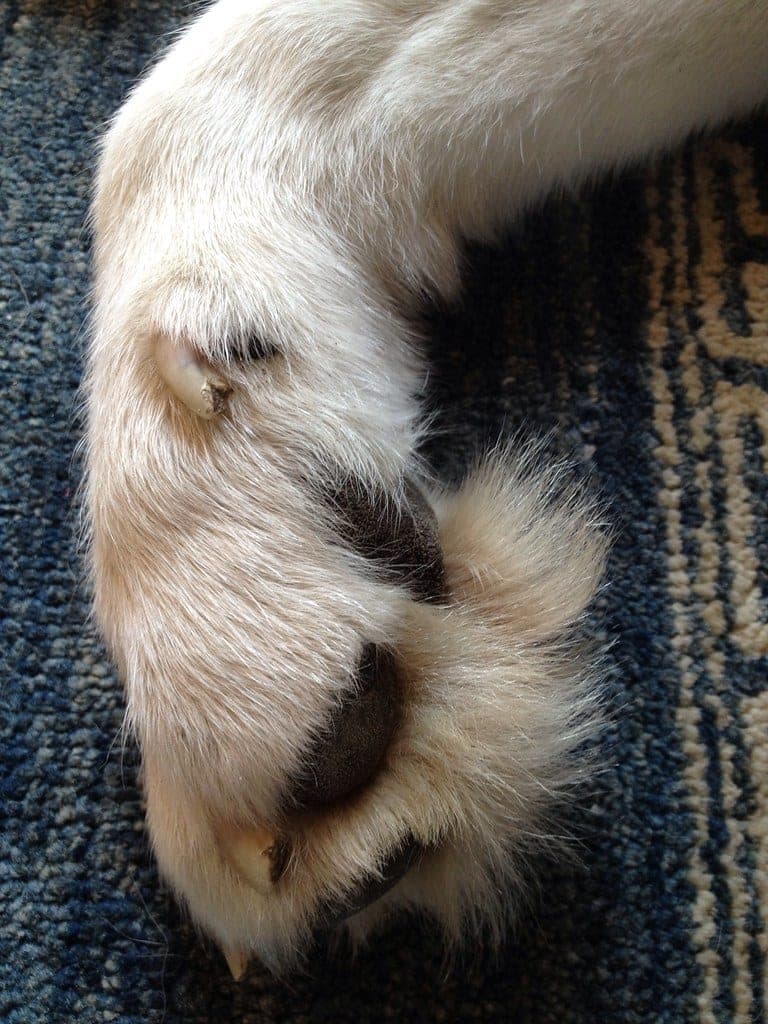
There are two separate jobs on a foot. Underneath, hair grows between and over the pads: take it level with the pad surface with a small trimmer run flat across the sole, having spread the toes gently with your fingers. The aim is a flat sole with the pads making contact, not a hollowed-out foot — do not dig the blade down between the pads, where the skin is soft and the blade can catch.

On top, hair grows up between the toes and makes the foot look like a slipper. Comb it upwards and scissor it level with the surrounding foot using blunt-tipped shears, in small cuts, combing between each one. Then tidy the outline of the foot to a round, following the shape rather than cutting into it.

Problem you have noticedWhat it meansFix
Dog slipping on tile or woodPad hair is covering the padsTrim the sole level with the pads
Ice balls or burrs in winterLong hair between the toesTrim between toes shorter in winter
Licking or chewing one footPossible grit, grass seed or a mat between toesCheck carefully; a vet if there is redness
Foot looks like a slipperHair growing up between the toesComb up and scissor level

A dog that will happily be clipped all over may snatch its foot away every time, and forcing it is how both of you get hurt. Do the handling separately from the tool: hold and flex each paw for a few seconds, reward, release, many times over several days, until it is boring. Only then introduce the trimmer, switched off, then running, then touching.

Grass seeds, grit and small mats between the toes are also common and genuinely painful. If a dog objects to one specific foot, look at that foot properly before assuming it is a behavior problem.

The sanitary trim

A sanitary trim is taking the hair short around the genitals and under the tail so that waste does not catch in it. It is a #10 blade job (or a trimmer), and the rules are simple: keep the blade flat, keep it moving, and hold loose skin flat ahead of it with your free hand. This is the thinnest skin on the dog and the area most prone to clipper burn, because a fine blade heats fast and this is exactly where people slow down to be careful.

How short is a matter of practicality rather than fashion: short enough to stay clean, not so short that the skin is bare and exposed. On long-coated dogs this is the one trim worth doing every two or three weeks regardless of when the full groom happens.

The procedure

  1. 01

    Handle the feet first, with no tool

    Hold and flex each paw for a few seconds. The handling has to be boring before the trimmer appears.

  2. 02

    Clear the pads from underneath

    Spread the toes gently, run a small trimmer flat across the sole, level with the pad surface. Do not dig between the pads.

  3. 03

    Tidy between the toes on top

    Comb the hair up and scissor level with blunt-tipped shears. Small cuts, comb between each.

  4. 04

    Shape the outline

    Scissor round the edge of the foot, following its natural shape.

  5. 05

    Move to the sanitary area

    A #10 blade or trimmer, taking hair short around the genitals and under the tail. Blade flat.

  6. 06

    Stretch the skin and keep moving

    Free hand flattening loose skin ahead of the blade. Never hold a running blade still here.

  7. 07

    Test the blade temperature

    Every minute or two on your own forearm. A #10 heats fast and this is the thinnest skin on the dog.

What to remember

  • Pad and sanitary hair affect comfort immediately; body coat mostly does not.
  • Underneath the foot: trim level with the pads. Do not dig between them.
  • On top: comb hair up between the toes and scissor level, with blunt tips.
  • Sanitary work is a #10 or a trimmer, blade flat, always moving.
  • Hold loose skin flat with your free hand — this is the thinnest skin on the dog.
  • Do the paw handling as a separate exercise, days before the tool appears.

The picks in full

Every pick, in order

01

Both jobs, with one tool

Wahl Arco SE

A narrow adjustable blade in a light, quiet cordless body - the right machine for feet and sanitary work.

A detachable-blade animal clipper resting on a work surface

Cordless adjustable-blade clipper

Power
Cordless, rechargeable
Blade
Adjustable 5-in-1 blade
Weight
Light enough for detail work one-handed
Best use
Faces, feet, sanitary trims, small dogs

Both of these jobs happen in small spaces close to thin skin, which means a narrow blade, low weight and no cord near a dog's back end. A quiet motor matters here more than anywhere: a dog that objects to its feet being handled will object far more to a loud machine near them. This covers pads, between toes and sanitary trims without a blade change.

Detail control9.5
Noise9.0
Weight9.0
Blade range7.5
Value8.0
Overall8.8 / 10

What it gets right

  • Small and light in the hand, which is exactly what you want around a face or between toes
  • Cordless and quiet — the two things that decide whether a dog stands still
  • 5-in-1 blade covers the usual tidy-up lengths without blade changes

What it gets wrong

  • Not enough motor for a full dense-coat body clip
  • Short battery runtime relative to a full-body groom
  • Replacement 5-in-1 blades are not cheap

Who should skip itSkip it as your only clipper if you own a large double-coated dog — it will stall on the body.

Check price on Amazon

#ad How we earn · We never print a price we cannot verify

Read the full Wahl Arco SE review

02

The #10 for sanitary work on a full-size clipper

Andis UltraEdge detachable blades

The short blade sanitary trims need, sharp enough to cut rather than pull thin-skinned areas.

Close-up of clipper blade teeth

Detachable A5 blades

#10
1/16 in
#7FC
1/8 in
#5FC
1/4 in
#4FC
3/8 in
#3-3/4FC
1/2 in
#5/8HT
5/8 in
#3/4HT
3/4 in

Specs: Andis UltraEdge / CeramicEdge clipper blade chart

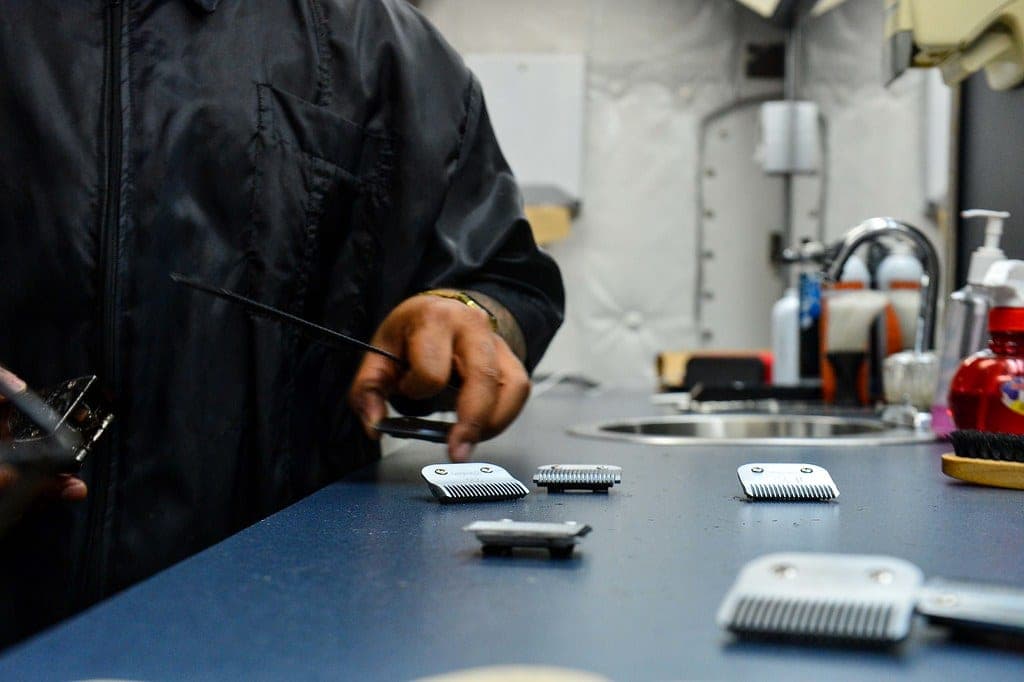
If you already own a detachable-blade clipper, a #10 is the sanitary blade and sharpness is the specification that matters. A dull blade in this area pulls hair on the most sensitive skin on the dog, which is how a dog learns to object to being touched there. Keep this one sharp and keep it for this job.

Suitability for the job9.0
Cut quality9.5
Durability9.0
Cross-brand fit9.5
Value7.5
Overall8.9 / 10

What it gets right

  • The blade range is the whole reason to own a detachable-blade clipper — any length, bought one at a time
  • Fits Andis, Oster A5 and Wahl KM bodies interchangeably
  • Finish-cut (FC) and skip-tooth variants of the same number let you choose bite versus smoothness

What it gets wrong

  • Each blade is a separate purchase and they add up fast
  • Blades dull and need sharpening or replacing — a running cost, not a one-off
  • Blade numbers are counter-intuitive: the bigger the number, the shorter the cut

Who should skip itSkip these if your clipper takes a 5-in-1 adjustable blade — they will not fit it.

Check price on Amazon

#ad How we earn · We never print a price we cannot verify

03

The scissor work between and around the toes

Purple Dragon grooming shear set

Blunt-tipped shears for the parts of a foot a blade cannot safely reach.

Grooming shears laid flat on a bench

Budget grooming shear set

Contents
Straight, curved and thinning shears plus comb
Steel
Japanese stainless steel
Positioning
Cost-effective entry set

Tidying between the toes and shaping the outline of a foot is scissor work, and it happens on a part of the dog that moves. Ball-tipped shears are the reason a flinch does not become an injury, and sharpness is what prevents the chewed-looking edge that comes from blades folding hair rather than cutting it.

Safety near skin9.0
Sharpness8.0
Comfort in hand8.0
Shape control8.0
Value8.5
Overall8.3 / 10

What it gets right

  • The cheapest way to find out whether you actually enjoy scissoring your own dog
  • Includes a thinner, which most budget sets omit and which you will need
  • Sharp out of the box

What it gets wrong

  • Edges dull faster than a Kenchii or Chris Christensen shear
  • Tension screws need checking — they loosen
  • Finish quality varies between units

Who should skip itSkip it if you groom a show coat or a standard poodle regularly — you will want a better edge within months.

Check price on Amazon

#ad How we earn · We never print a price we cannot verify

FAQ

Questions people actually ask

How short should the sanitary area be?

Short enough that waste does not catch in the hair, not so short that skin is bare. A #10 gives roughly a sixteenth of an inch, which is about right. Doing it every two or three weeks is more useful than doing it very short less often.

Should I trim between the pads or just around them?

Level with the pads, from underneath, so the pads make contact with the floor. Do not try to clear the hair out from deep between the pads — the skin there is soft and the blade can catch it.

My dog pulls its foot away every time. How do I get it done?

Separate the handling from the trimming and spend a week on the handling alone: hold, flex, reward, release. Also check the foot itself for a grass seed, grit or a mat between the toes — a dog defending one particular foot often has a reason.

Can I do this without a grooming table?

Yes — feet and sanitary areas are the two jobs most manageable with the dog lying on a sofa or on your lap, because you need one foot at a time rather than a standing dog. A table still helps for the body clip.

How this page was put together

We define the coat problem the tool has to solve, shortlist products currently sold, compare the manufacturers’ documented specifications against what that coat actually needs, and cross-check against published findings from named sources. We do not test these tools on our own dogs under controlled conditions, and we will not say we do. Where a figure comes from a manufacturer, we name them; where it comes from someone else’s testing, we cite them. We print no prices — a stale number is worse than none. Read the full method.
Sources

  1. 01Dogster — best dog grooming scissors
  2. 02Ryan's Pet Supplies — Andis UltraEdge blade size chart (PDF)