Skip to content
Clip & Coat

Guides

Dog Clipper Burn: Prevention and Warning Signs

A heat injury from a blade you did not think was hot, on skin you could not see. Entirely preventable, and worth understanding before the first groom.

By Brijon M.
A clipper blade being checked for temperature against a forearm

What clipper burn actually is

The short answer

Clipper burn is a thermal injury: a hot blade held against skin long enough to damage it. It is not a cut and not a razor rash. It appears as redness, then soreness, sometimes blistering, hours after the groom — which is why owners often connect it to the wrong cause.

The mechanism is simple and the reason it catches careful people out is also simple. Blade friction generates heat; the blade is a small piece of metal with little mass, so it heats quickly; and the clipper body in your hand has far more mass and stays cool for much longer. By the time your palm notices warmth, the blade has been above skin-safe temperature for a while. Add a coat you cannot see through and there is no visual warning either.

Where it happens

AreaWhy it is vulnerable
ArmpitsThin skin, folds, and a place you slow down and work over repeatedly
Groin and sanitary areaThin skin, close blade work, high friction
BellyThin skin and sparse coat, so the blade contacts skin directly
Behind the earsFine skin and a spot where mats concentrate, so the blade works hard
Hocks and elbowsBony, little padding, and the blade tends to catch and dwell
Tail baseDense coat loads the blade, and owners linger to get it even

The pattern is consistent: thin skin plus a place where you slow down. Anywhere the blade works harder or dwells longer is where heat accumulates, and those are also the areas where there is the least tissue between blade and nerve.

Prevention

  1. 01

    Test the blade, not the clipper

    Touch the blade flat against your own inner forearm every couple of minutes. If you cannot hold it there comfortably, it is too hot for your dog. This is the whole technique.

  2. 02

    Oil across the teeth every ten minutes of running

    Not once at the start. Oil runs and burns off within minutes of cutting, and a dry blade heats several times faster.

  3. 03

    Keep a second blade and swap it

    Professionals swap rather than wait. A spare blade removes any reason to push on with a hot one.

  4. 04

    Use the longest blade that gives the length you want

    Fine blades (#10, #15) heat dramatically faster than body blades (#4F). Reserve them for small areas worked in bursts.

  5. 05

    Keep the blade moving

    Heat is cumulative in one spot. Never hold a running blade still against skin, even for a second, and never work the same square inch repeatedly to perfect it.

  6. 06

    Clip clean, dry, brushed coat

    Dirt and tangles make the blade work harder, which means more friction and more heat. Prep is a heat-management step as well as a finish one.

  7. 07

    Clear the clipper vents

    A clogged cooling intake makes the whole machine run hot, which keeps the blade hot between passes.

Recognizing it

Clipper burn usually shows up within a few hours to a day. Look for:

  • Pink or red skin in a defined patch, often with a straight edge where the blade traveled
  • Skin that feels warm compared with the area next to it
  • A dog licking, scratching or chewing one spot it was not bothering before
  • Small bumps or blistering — this is a more significant burn
  • Weeping, crusting or a smell — this is likely infected and is not a wait-and-see

Mild redness that fades within a day and does not bother the dog is usually just irritation. Anything that blisters, weeps, lasts more than a day, or that the dog will not leave alone, is a veterinary question.

We do not give veterinary advice and this page will not tell you how to treat a burn. A clipper burn is a wound on an animal that will lick it, and the decisions about topical treatment, antibiotics and whether a collar is needed belong to a vet who can see it. If you are unsure whether what you are looking at needs a vet, it needs a vet.

What you can do immediately: stop grooming, keep the area clean and dry, and prevent the dog licking it while you arrange the appointment.

Clipper burn versus the things it is confused with

A tracking line is a cosmetic difference in coat length, not a skin injury — visible but not red, warm or sore. See clipper lines and tracking. A nick or cut bleeds and happens instantly, usually from a tipped blade or scissors near a mat. Post-clipping alopecia is coat that does not regrow properly after a close clip, which is a different problem and mostly affects double-coated dogs — one more reason not to clip them.

What to remember

  • Clipper burn is heat damage from the blade, not a cut.
  • Your hand cannot detect it — test the blade on your own forearm every few minutes.
  • Oil across the teeth every ten minutes of running time.
  • A second blade to swap to is the most effective prevention you can buy.
  • Thin-skinned areas where you slow down are where it happens: armpits, groin, belly, behind ears.
  • Blistering, weeping, or redness lasting beyond a day is a vet visit, not a home treatment.

The picks in full

Every pick, in order

01

A second blade, which is the prevention that actually works

Andis UltraEdge detachable blades

Swap a hot blade for a cool one in thirty seconds instead of deciding whether to risk one more pass.
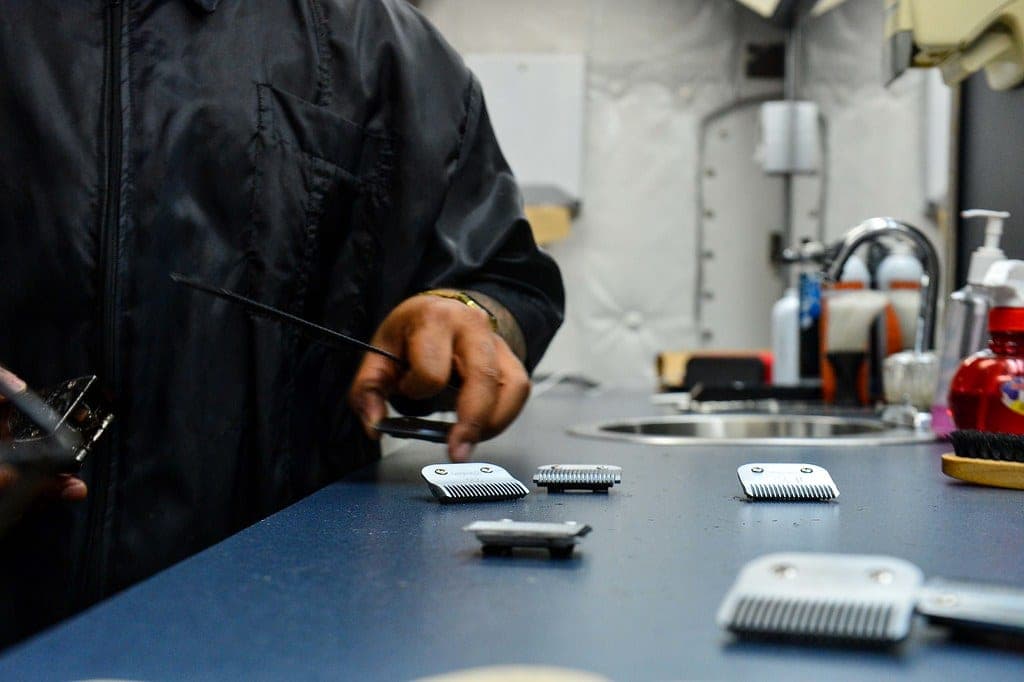
Close-up of clipper blade teeth

Detachable A5 blades

#10
1/16 in
#7FC
1/8 in
#5FC
1/4 in
#4FC
3/8 in
#3-3/4FC
1/2 in
#5/8HT
5/8 in
#3/4HT
3/4 in

Specs: Andis UltraEdge / CeramicEdge clipper blade chart

Clipper burn happens in the gap between noticing a blade is warm and being willing to stop. A spare blade in your main size closes that gap entirely: you swap and keep going, so there is never a reason to push on with a hot one. It is also the fix for a dull blade, which both drags and runs hotter. This is the single most effective purchase against this injury.

Prevents the injury9.5
Cut quality9.5
Durability9.0
Cross-brand fit9.5
Value7.5
Overall9.1 / 10

What it gets right

  • The blade range is the whole reason to own a detachable-blade clipper — any length, bought one at a time
  • Fits Andis, Oster A5 and Wahl KM bodies interchangeably
  • Finish-cut (FC) and skip-tooth variants of the same number let you choose bite versus smoothness

What it gets wrong

  • Each blade is a separate purchase and they add up fast
  • Blades dull and need sharpening or replacing — a running cost, not a one-off
  • Blade numbers are counter-intuitive: the bigger the number, the shorter the cut

Who should skip itSkip these if your clipper takes a 5-in-1 adjustable blade — they will not fit it.

Check price on Amazon

#ad How we earn · We never print a price we cannot verify
02

A clipper that stays cooler on dense coat

Andis UltraEdge AGC Super 2-Speed

Vent-free housing plus a lower speed setting - two design features that both reduce heat at the blade.

A detachable-blade animal clipper resting on a work surface

Corded detachable-blade clipper

Speeds
3,400 / 4,400 SPM
Motor
Rotary, corded
Blade system
Detachable A5 (UltraEdge / CeramicEdge / ShowEdge)
Cord
14 ft heavy-duty
Weight
17.6 oz
Housing
Vent-free, no cooling fan to clog

Specs: Andis — UltraEdge AGC Super 2-Speed product listing

Heat has two sources: friction at the blade and a clipper that cannot cool itself. A vent-free housing cannot clog with undercoat, which is what makes conventional clippers overheat on doodles, and the lower of its two speeds generates less friction for bulk removal. If you have had a blade get frighteningly hot on a dense coat, the machine is part of the answer.

Heat management9.0
Torque under load9.0
Blade system9.5
Noise6.5
Value8.5
Overall8.6 / 10

What it gets right

  • Two usable speeds rather than one compromise speed — 3,400 SPM for bulk removal, 4,400 for finish work
  • Takes the whole A5 detachable blade range, so one clipper covers every coat length you will ever need
  • The vent-free housing is the reason it survives doodle coats: there is no fan intake for undercoat to pack into
  • 14 ft cord means you are not fighting an extension lead around a grooming table

What it gets wrong

  • Corded, so you work around a cable with a dog that may not stand still
  • Ships with one blade; a doodle or double coat needs at least two more, which is a real added cost
  • Heavier in the hand than a cordless unit over a long session

Who should skip itSkip it if you own one short-coated small dog — this is more clipper than that coat will ever need.

Check price on Amazon

#ad How we earn · We never print a price we cannot verify

Read the full Andis UltraEdge AGC Super 2-Speed review

FAQ

Questions people actually ask

How hot is too hot for a blade?

Use your forearm rather than a number: if you cannot hold the blade flat against your inner forearm comfortably, it is too hot for your dog’s skin. Your palm is a poor sensor because it is tougher than the skin you are clipping.

Can clipper burn happen with a cordless trimmer?

Yes. The blade is smaller but the mechanism is identical, and trimmers are used in exactly the vulnerable places — sanitary areas, between toes, around the face. The same testing and oiling applies.

My dog has a red patch after a professional groom. Is that clipper burn?

It may be, and it may equally be irritation from a close sanitary clip or an underlying skin issue the coat was hiding. Tell the groomer either way — a good one wants to know — and see a vet if it blisters, weeps or lasts beyond a day.

Does a blade coolant spray prevent burns?

It helps as a rescue when a blade is already warm, but it does not lubricate, so used alone it leaves you with a cool dry blade that heats again quickly. Oil is the prevention; coolant is the interruption.

How this page was put together

We define the coat problem the tool has to solve, shortlist products currently sold, compare the manufacturers’ documented specifications against what that coat actually needs, and cross-check against published findings from named sources. We do not test these tools on our own dogs under controlled conditions, and we will not say we do. Where a figure comes from a manufacturer, we name them; where it comes from someone else’s testing, we cite them. We print no prices — a stale number is worse than none. Read the full method.

Sources

  1. 01Andis — UltraEdge AGC Super 2-Speed specification (vent-free housing)
  2. 02Ryan's Pet Supplies — Andis UltraEdge blade size chart (PDF)