Skip to content
Clip & Coat

Guides

Why Dog Clippers Get Hot (and What to Do)

The blade reaches skin-burning temperature long before the clipper feels warm in your hand. That gap is why this matters more than it sounds.

By Brijon M.
A clipper blade being oiled across the teeth

The short answer

The short answer

Clipper heat is friction heat and it concentrates in the blade, not the motor. Four things cause it: a dry blade, a dull blade, too fine a blade for the coat, and a clogged air intake on the clipper body. Oiling across the teeth every ten minutes of running time fixes the most common cause.

The blade is the part that touches the dog and the part that gets hot, and it reaches skin-burning temperature well before the clipper housing feels warm in your palm. On a dog you cannot see the skin under the coat, so there is no visual warning either — which is how contact burns happen to careful people.

Test the blade, not the clipper. Touch the blade flat against your own inner forearm every couple of minutes. If you cannot hold it there comfortably, it is too hot for your dog.

The four causes

CauseHow you can tellFix
Dry bladeHeats within a few minutes; cutting feels draggy from the startOil across the teeth every ten minutes of running, not once at the start
Dull bladePulls hair rather than cutting; leaves lines it did not used to leaveSharpen it. A5 steel blades sharpen cheaply and repeatedly
Blade too fine for the coatA #10 or #15 heating fast while a #4F stays cool on the same dogUse a longer blade for body work; reserve fine blades for small areas
Clogged intake on the clipperMachine itself gets hot and loses power on dense coatClear the vents; consider a vent-free clipper for dense coats

Oiling is the step everyone skips

Most people oil a blade when they fit it and then not again. That is not how blade oil works: it runs off and burns off within minutes of cutting. A couple of drops across the teeth (not into the body of the clipper) every ten minutes of running time is the actual maintenance interval, and it is the difference between a blade that stays usable for an hour and one that is too hot in five minutes.

Oil the teeth with the clipper running, wipe the excess, and carry on. Blade coolant sprays are a separate product and do a different job — they cool quickly but do not lubricate, so they are a mid-groom rescue rather than a substitute for oil.

Why fine blades heat faster

A fine blade has more teeth in contact with more hair, and a shorter cut length means more of the hair’s resistance is transmitted into the blade rather than being clipped off cleanly. That is why a #10 or a #15 heats dramatically faster than a #4F on exactly the same dog with exactly the same clipper. It is not a defect; it is the physics of the cut.

The practical consequence is that sanitary trims and close work should be done in short bursts with a cool-down or a blade swap, and body work should use the longest blade that gives you the length you want. See the blade size chart.

What to do when a blade is already hot

  1. 01

    Stop

    Take the blade off the dog immediately. Do not finish the pass.

  2. 02

    Swap, if you can

    Fit the second blade and keep working. This is what professionals do and it is the fastest route back to a finished groom.

  3. 03

    Or cool it properly

    Set the blade on a cool metal surface, or use a blade coolant spray. Three or four minutes, not thirty seconds. Then oil it before it goes back on.

  4. 04

    Check the dog's skin

    Look at the area you were working. Redness that does not fade in a few minutes, or any blistering, needs a vet rather than a judgment call.

  5. 05

    Work out which of the four causes it was

    If it heated within five minutes of being freshly oiled, suspect the blade is dull or too fine. If the machine itself is hot, look at the intake.

What to remember

  • The blade burns, not the motor — and it does so before your hand notices.
  • Oil across the teeth every ten minutes of running time.
  • Fine blades (#10, #15) heat much faster than body blades (#4F).
  • A dull blade both pulls and runs hot. Sharpen it rather than pushing on.
  • A second blade is the professional answer: swap, do not wait.
  • Vent-free clippers cannot clog with undercoat, which matters on doodles.

The picks in full

Every pick, in order

01

The actual fix: a second blade to swap to

Andis UltraEdge detachable blades

A spare blade in the same size, so a hot blade means a thirty-second swap rather than a stopped groom.
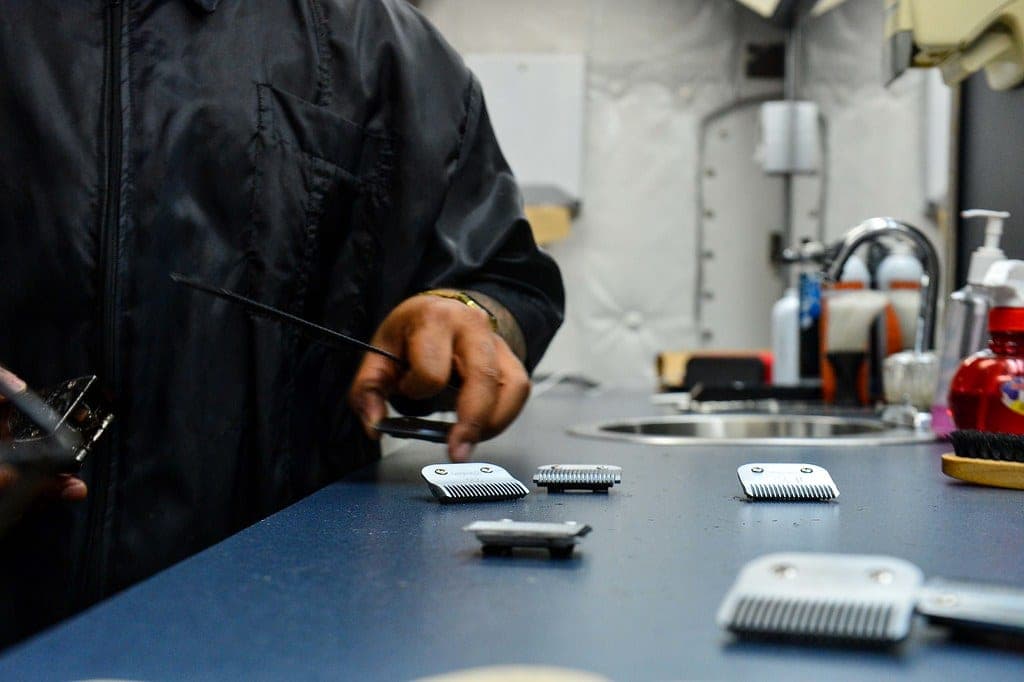
Close-up of clipper blade teeth

Detachable A5 blades

#10
1/16 in
#7FC
1/8 in
#5FC
1/4 in
#4FC
3/8 in
#3-3/4FC
1/2 in
#5/8HT
5/8 in
#3/4HT
3/4 in

Specs: Andis UltraEdge / CeramicEdge clipper blade chart

Professionals do not cool blades mid-groom; they swap them and keep working. A second blade in your main body size is the single most effective answer to heat, and because A5 steel blades are sharpenable they are a long-term purchase rather than a consumable. It also means a clogged or dulling blade never forces you to finish a groom badly.

Solves the problem9.5
Cut quality9.5
Durability9.0
Cross-brand fit9.5
Value7.5
Overall9.0 / 10

What it gets right

  • The blade range is the whole reason to own a detachable-blade clipper — any length, bought one at a time
  • Fits Andis, Oster A5 and Wahl KM bodies interchangeably
  • Finish-cut (FC) and skip-tooth variants of the same number let you choose bite versus smoothness

What it gets wrong

  • Each blade is a separate purchase and they add up fast
  • Blades dull and need sharpening or replacing — a running cost, not a one-off
  • Blade numbers are counter-intuitive: the bigger the number, the shorter the cut

Who should skip itSkip these if your clipper takes a 5-in-1 adjustable blade — they will not fit it.

Check price on Amazon

#ad How we earn · We never print a price we cannot verify

02

A clipper that does not clog in the first place

Andis UltraEdge AGC Super 2-Speed

A vent-free housing: there is no cooling-fan intake for undercoat to pack into.

A detachable-blade animal clipper resting on a work surface

Corded detachable-blade clipper

Speeds
3,400 / 4,400 SPM
Motor
Rotary, corded
Blade system
Detachable A5 (UltraEdge / CeramicEdge / ShowEdge)
Cord
14 ft heavy-duty
Weight
17.6 oz
Housing
Vent-free, no cooling fan to clog

Specs: Andis — UltraEdge AGC Super 2-Speed product listing

If your clipper runs hot on a dense coat specifically, the cause may be the machine rather than the blade. A conventional clipper draws cooling air through an intake, and on a doodle or a shedding coat that intake becomes a lint filter until airflow stops. Andis removed the fan entirely, which is a design answer to this exact failure rather than a marketing feature.

Heat management9.0
Torque under load9.0
Blade system9.5
Noise6.5
Value8.5
Overall8.6 / 10

What it gets right

  • Two usable speeds rather than one compromise speed — 3,400 SPM for bulk removal, 4,400 for finish work
  • Takes the whole A5 detachable blade range, so one clipper covers every coat length you will ever need
  • The vent-free housing is the reason it survives doodle coats: there is no fan intake for undercoat to pack into
  • 14 ft cord means you are not fighting an extension lead around a grooming table

What it gets wrong

  • Corded, so you work around a cable with a dog that may not stand still
  • Ships with one blade; a doodle or double coat needs at least two more, which is a real added cost
  • Heavier in the hand than a cordless unit over a long session

Who should skip itSkip it if you own one short-coated small dog — this is more clipper than that coat will ever need.

Check price on Amazon

#ad How we earn · We never print a price we cannot verify

Read the full Andis UltraEdge AGC Super 2-Speed review

FAQ

Questions people actually ask

How often should I really oil the blade?

Every ten minutes of running time, across the teeth, with the clipper running. If that feels excessive, that is the gap between how often oiling is needed and how often it is done — and it is the most common reason home clippers get hot.

Is clipper coolant spray a replacement for oil?

No. Coolant drops the temperature fast, which makes it a useful mid-groom rescue, but it does not lubricate. Oil after using it, or the blade heats again immediately.

My clipper itself is hot, not just the blade. Is that bad?

It usually means the cooling intake is packed with coat, which is common on dense and shedding coats. Switch off, clear the vents, and let it cool. If it happens every groom, the machine is a poor match for the coat — vent-free clippers exist for exactly this.

How do I know if my dog got burned?

Look for redness that does not fade within a few minutes, a patch the dog keeps returning to, or any blistering. Any of those is a vet question rather than a grooming one. Preventing clipper burn covers the warning signs in detail.

How this page was put together

We define the coat problem the tool has to solve, shortlist products currently sold, compare the manufacturers’ documented specifications against what that coat actually needs, and cross-check against published findings from named sources. We do not test these tools on our own dogs under controlled conditions, and we will not say we do. Where a figure comes from a manufacturer, we name them; where it comes from someone else’s testing, we cite them. We print no prices — a stale number is worse than none. Read the full method.

Sources

  1. 01Andis — UltraEdge AGC Super 2-Speed specification (vent-free housing)
  2. 02Hair Clippers Club — clippers for thick coats and matted hair