Scores are our own editorial assessment, not a product rating from reviews or testing. We do not print prices — every button goes to the current one on Amazon. #ad
Which coat are you dealing with?
The short answer
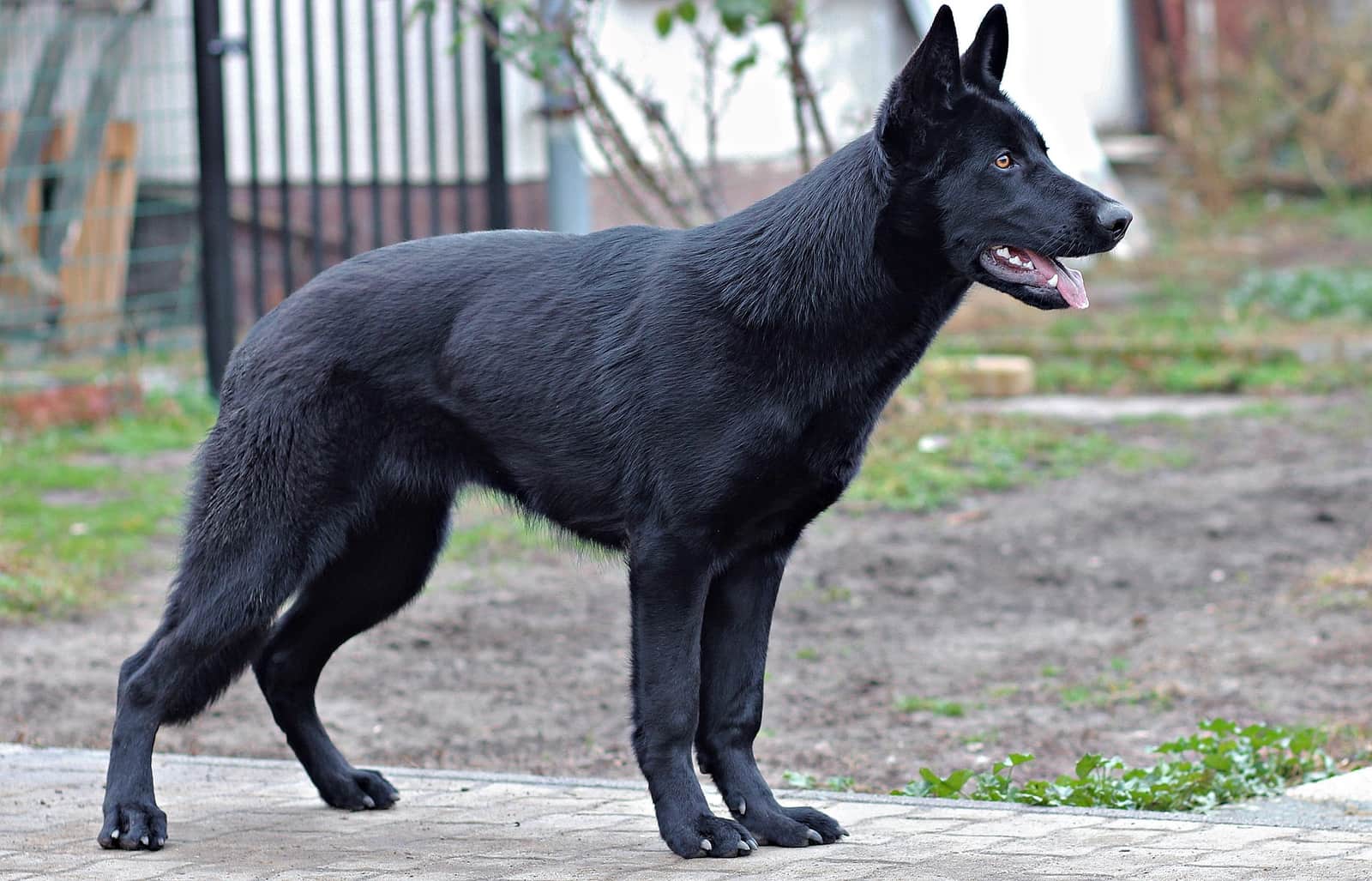
A German shepherd sheds moderately all year and blows its coat twice. Rake the body weekly, pay particular attention to the trousers and the ruff where undercoat packs solid, and never clip the body — clipping does not reduce shedding and damages the guard coat.
A German Shepherd has a double coat — harsh guard hairs over soft undercoat; sheds in sheets, never shave it. Everything below follows from that, and the full set of rules for this coat type, including what will damage it, is on grooming a double coat.
Shepherd coat is a dense double coat with a harsh outer layer. It is also noticeably uneven: short over the back and flanks, much denser in the ruff and the trousers on the hind legs, and longest on the tail. That unevenness is why a single tool rarely does the whole dog.
Long-coat shepherds are a recognized variation with noticeably longer guard hairs and more furnishing. They need the same approach with more attention to the longer areas, and bladed deshedding tools are a worse idea on them than on a standard coat.
Shedding is continuous rather than purely seasonal in most pet shepherds, with two heavier phases. No tool, diet or supplement stops it; the achievable goal is removing the hair before the dog drops it.
German Shepherd: Harsh guard hairs over soft undercoat; sheds in sheets, never shave it.
The breed-specific thing to watch
The trousers and the ruff go from dense to felted without much warning
These two areas carry far more undercoat than the rest of the dog, and they are the areas owners brush least because they are awkward to reach. Packed undercoat there turns into felt over a few weeks.
Work the trousers and the ruff deliberately every session rather than running the rake over the back and calling it done. If an area has already packed solid, a coarse dual-sided rake opens it; a pin rake will just slide over it.
The routine
Task
How often
Notes
Rake body, trousers and ruff
Weekly, every 2 days during a shed
Ten focused minutes beats half an hour of flannel
Slicker behind the ears
Weekly
The finest coat on the dog; it mats
Open any packed areas
As needed
Coarse side of a dual rake, trousers and ruff only
Bathe and blow out
2-3x a year
The event that ends a coat blow
Trim paw pads
Monthly
Clear the fur between the pads
Sanitary trim
As needed
Keeps the area clean on a long-coat shepherd
Nails
Every 2-3 weeks
Large nails; torque matters on a grinder
Ears and teeth
Weekly / daily if possible
Erect ears are well ventilated but still worth checking
Where it goes wrong on this breed
The trousers on the hind legs
The ruff around the neck and chest
Behind the ears
The tail, where guard hairs are longest and most easily damaged
Between the pads
Time and effort, honestly
Ten focused minutes a week year-round, rising to every second day during a coat blow. A bath and blow-out is 90 minutes to two hours, two or three times a year. No clipping at all.
The coat page is the one to read in full: grooming a double coat. From there the tool roundups cover each purchase in detail, and how to groom a dog at home walks a full session end to end. Other breeds with the same coat are listed on the breed index.
The picks in full
Every pick, in order
01
The weekly tool
FURminator dog grooming rake
Reaches the undercoat through a dense harsh guard coat without cutting anything.
Rotating-tine undercoat rake
Tines
Rotating, long
Works on
Thick and double coats, longer hair
Action
Lifts dead undercoat without cutting the guard coat
A shepherd's guard coat is dense enough to stop most tools reaching the undercoat where the dead hair actually is. Long rotating tines get through, and they rotate rather than drag, which matters across the weekly sessions a continuously shedding dog needs. No cutting edge means no risk even used often.
Reaches dense undercoat9.5
Guard-coat safety10.0
Suits weekly use9.5
Value9.0
Overall9.5 / 10
What it gets right
+Rotating tines slide through dense undercoat instead of ripping it, so the dog tolerates longer sessions
+Reaches deeper into a double coat than any slicker
+Does not cut, so you cannot thin the guard coat with it
What it gets wrong
−Slower than a bladed deshedder on short coats
−Tines can catch on a genuine mat and need working loose
−Does not finish — you still need a slicker and comb afterwards
Who should skip itSkip it on a short-coated dog — a bladed deshedder does that job far faster.
The densest areas on a shepherd pack solid, and that is a different problem from loose shedding. The coarse side cuts into packed undercoat and opens it; the 17-tooth side then thins what is left. Both sides cut, so keep it to the trousers, ruff and behind the ears rather than the open body coat.
Opens packed areas9.5
Guard-coat safety6.0
Trousers and ruff9.5
Value9.5
Overall8.6 / 10
What it gets right
+Two tools in one, and the two sides are genuinely for different jobs rather than marketing
+The 9-tooth side opens a real mat without you reaching for scissors
+Lightweight enough for a long coat-blow session without hand fatigue
What it gets wrong
−Both sides cut, so pressure control is on you
−Teeth are long enough to catch skin on a thin-coated dog
−Not a finishing tool
Who should skip itSkip it if your dog never mats — you only need the deshedding side, so buy that instead.
During a coat blow the volume defeats hand tools, and the trousers and ruff are exactly where a brush struggles most. Air at 2,800 FPM parts the guard coat and drives the dead undercoat out of those areas, which is why a dryer is the highest-impact purchase for a shepherd household.
Blows undercoat out10.0
Reaches trousers and ruff9.5
Noise5.0
Value8.5
Overall8.8 / 10
What it gets right
+Real force-dryer output, which is what blows a double coat open instead of merely warming it
+Enough air to push water out of a Samoyed or Pyrenees in one session
+The most airflow per dollar in this set
What it gets wrong
−Loud. All force dryers are, and this is not the quiet one
−Bulky to store between grooms
−No heating element, so your bathroom temperature becomes the dog's comfort
Who should skip itSkip it if you have a small, short-coated dog — a towel and ten minutes do the same job.
Ten focused minutes with a rake weekly, section by section: flanks, then trousers, then ruff, then behind the ears with a slicker. Every second day during a coat blow, plus a bath and blow-out at each end of it.
+−Will clipping reduce my shepherd's shedding?
No. The undercoat still releases, now as shorter pieces that embed in fabric more readily, and you lose the guard coat that protects against sun and heat. Shepherd coat frequently grows back poorly after clipping.
+−Can I use a FURminator on a long-coat shepherd?
Prefer a rake. A long-coat shepherd has guard hairs long enough that a bladed tool will cut them, and the damage shows for months.
+−Why is my shepherd shedding all year?
Indoor living and artificial light disrupt the seasonal cue, so most pet shepherds shed moderately and continuously with two heavier phases. The management is the same: rake weekly.
How this page was put together
We define the coat problem the tool has to solve, shortlist products currently sold, compare the manufacturers’ documented specifications against what that coat actually needs, and cross-check against published findings from named sources. We do not test these tools on our own dogs under controlled conditions, and we will not say we do. Where a figure comes from a manufacturer, we name them; where it comes from someone else’s testing, we cite them. We print no prices — a stale number is worse than none. Read the full method.