Scores are our own editorial assessment, not a product rating from reviews or testing. We do not print prices — every button goes to the current one on Amazon. #ad
Which coat are you dealing with?
The short answer
A bernedoodle needs line brushing to the skin two to three times a week and clipping every six to eight weeks. The complication is size: a standard bernedoodle is a two to three hour groom, so blade heat and the dog's patience are the limits, not the coat.
A Bernedoodle has a doodle coat — curly or wavy, grows without shedding, mats against the skin. Everything below follows from that, and the full set of rules for this coat type, including what will damage it, is on grooming a doodle coat.
Bernedoodle coat is usually wavy to curly and sheds little, so it mats the way any doodle coat does. What makes the breed different is volume: a standard bernedoodle carries a large amount of coat, and a tricolor pattern that shows a bad clip line clearly.
Many bernedoodles inherit a heavier, denser coat than a goldendoodle of similar size, which means more work per square inch as well as more square inches. Mini and tiny bernedoodles are a far more manageable proposition on the same schedule.
The tricolor markings are worth knowing about practically: a clipper line across a color boundary is much more visible than on a solid-colored dog, so blending with a thinner matters more here.
Bernedoodle: Curly or wavy, grows without shedding, mats against the skin.
The breed-specific thing to watch
Session length is the real risk on a standard bernedoodle
Two to three hours of clipping means blade heat, your own fatigue and the dog's patience all become limiting factors. That is how clipper burn happens on big doodles: not one careless moment but forty minutes of a blade that has been quietly getting hotter.
Keep two of your main blade in rotation so one cools while the other works, oil every ten minutes, and split the groom across two days if the dog starts to object. A half-finished calm dog is a better outcome than a finished frightened one.
The routine
Task
How often
Notes
Line brush to the skin
2-3x a week
Dense slicker; a large-size head saves time on this breed
Comb test
Every session
Behind ears, armpits, trousers, under the harness
Bathe
Every 6-8 weeks
After brushing out; expect a lot of water in this coat
Fluff dry
Every bath
The longest part of the groom on a standard
Clip
Every 6-8 weeks at a #5F
Shorter than a goldendoodle, deliberately
Blend clip lines
Every clip
Thinner across color boundaries
Nails
Every 2-3 weeks
Large nails; a torquey grinder or a sharp clipper
Paw pads and sanitary
Monthly
Small quiet clipper
Where it goes wrong on this breed
The trousers on the hind legs — dense, and rarely brushed properly
Behind the ears, as on every doodle
Under the collar and harness on a dog this size
The chest ruff, which holds a lot of coat
The tail, which on a bernedoodle is substantial
Time and effort, honestly
A standard bernedoodle full groom is two to three hours practiced, and longer the first time. Line brushing is 20 to 30 minutes a session because of the surface area. Minis are roughly half of both.
The coat page is the one to read in full: grooming a doodle coat. From there the tool roundups cover each purchase in detail, and how to groom a dog at home walks a full session end to end. Other breeds with the same coat are listed on the breed index.
The picks in full
Every pick, in order
01
The clipper for a standard bernedoodle
Wahl KM Inspire
Brushless, cool-running, and it does not slow down 90 minutes into a big dog.
Corded brushless detachable-blade clipper
Speeds
Two-speed
Motor
Brushless, corded
Blade system
Detachable A5
Running temperature
Stays cool through dense coat work
On a two to three hour groom, heat and sustained output matter more than peak power. A brushless motor holds its speed and runs cool across that session, which directly reduces the clipper-burn risk that long grooms on large doodles create. On a mini bernedoodle it is more clipper than you need.
Sustained output10.0
Heat over 2+ hours9.5
Gets through curl10.0
Value7.0
Overall9.1 / 10
What it gets right
+The brushless motor is the point: it pushes through matted coat and dense undercoat without bogging down
+Runs cool on long sessions, which is what actually causes clipper burn on a big dog
+Detachable A5 blades, so it shares the blade set with Andis and Oster clippers
What it gets wrong
−Priced like a professional tool because it is one
−Corded only
−Overkill for a single small dog on a monthly tidy-up
Who should skip itSkip it unless you are regularly working through dense or matted coat — a lighter clipper is easier to handle for everything else.
Brushing a dog this size to the skin three times a week is only realistic with a brush that covers ground and reaches skin in one pass. The large size of this slicker, combined with around 30% more pins than standard, is the difference between a 20 minute job and an hour.
Reaches the skin9.5
Coverage per stroke9.5
Comfort8.5
Value7.5
Overall9.0 / 10
What it gets right
+Pin density is the whole product: more pins means fewer passes through a curly coat
+The pins are long enough to reach skin on a doodle, which is where matting starts
+This is the brush that makes line brushing a doodle actually feasible
What it gets wrong
−Expensive for a brush, by a wide margin
−Dense pin bed is harder to clean out than a self-cleaning slicker
−Overkill on a short coat
Who should skip itSkip it if your dog has a short or smooth coat — you will never use the pin density you paid for.
#adHow we earn · We never print a price we cannot verify
03
Blending clip lines on a tricolor coat
Chris Christensen Classic Series shear set
A thinner is what makes a clip line across a color boundary disappear.
Four-shear grooming set
Contents
Straight, curved, thinner and chunker
Steel
440C Japanese steel
Case
Included
Tricolor markings make any step in the coat obvious, and a thinner used at an angle across the line breaks it up until it is invisible. The curved shear in the same set does the legs and the head. If you are only going to buy one thing from this set, buy a thinner.
Blends clip lines10.0
Face and leg shaping9.5
Edge life10.0
Value6.5
Overall8.9 / 10
What it gets right
+The four shears cover genuinely different jobs — this is not four versions of the same tool
+440C steel takes and holds a real edge, which is what separates a shear from scissors
+The thinner is what rescues a clipper line you cannot blend out
What it gets wrong
−A serious outlay for a first-time home groomer
−Four shears is more than most owners need in year one
−Japanese-steel edges are unforgiving if you drop them
Who should skip itSkip the full set if you clip rather than scissor — buy one curved shear and a thinner instead.
#adHow we earn · We never print a price we cannot verify
FAQ
Questions people actually ask
+−How often should you groom a bernedoodle?
Line brush to the skin two to three times a week and clip every six to eight weeks. A standard bernedoodle's size means the brushing takes 20 to 30 minutes a session.
+−What length should I clip a bernedoodle?
A #5F at 1/4 inch is the sensible standard length — shorter than a typical goldendoodle clip, because there is simply more coat to maintain. A #4F at 3/8 inch works if you brush daily.
+−Do bernedoodles shed?
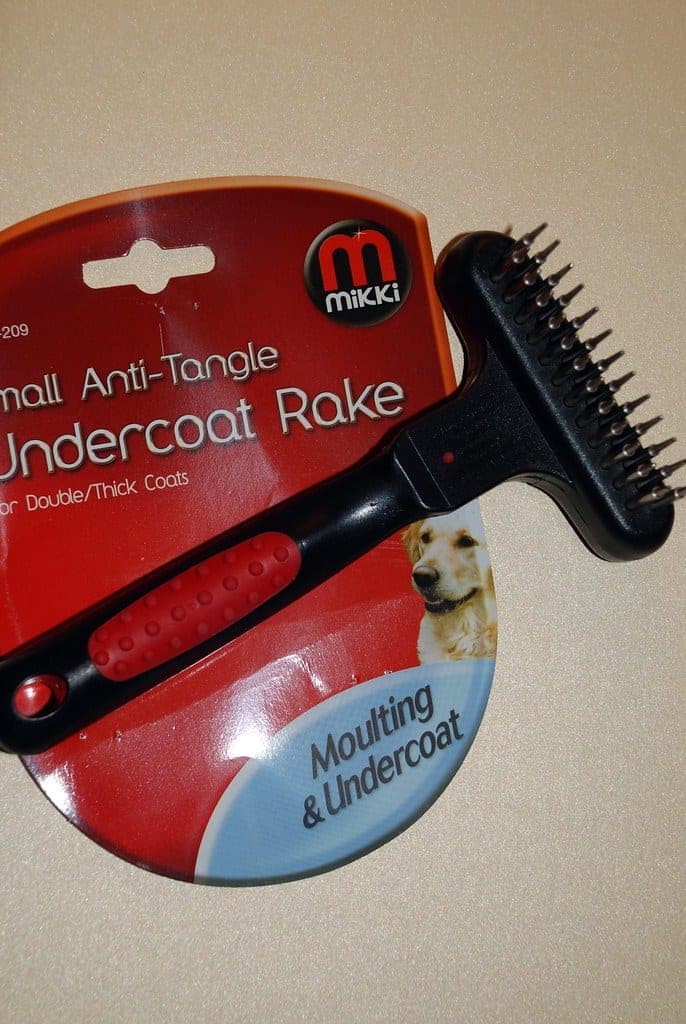
Most shed very little, which is why they mat. A bernedoodle that does shed noticeably may have inherited more of the Bernese double coat, in which case rake rather than brush the body.
+−How long does it take to groom a bernedoodle?
Two to three hours for a standard, including brushing, bathing, drying and clipping. Splitting it across two days is entirely reasonable.
How this page was put together
We define the coat problem the tool has to solve, shortlist products currently sold, compare the manufacturers’ documented specifications against what that coat actually needs, and cross-check against published findings from named sources. We do not test these tools on our own dogs under controlled conditions, and we will not say we do. Where a figure comes from a manufacturer, we name them; where it comes from someone else’s testing, we cite them. We print no prices — a stale number is worse than none. Read the full method.