Scores are our own editorial assessment, not a product rating from reviews or testing. We do not print prices — every button goes to the current one on Amazon. #ad
Which coat are you dealing with?
The short answer
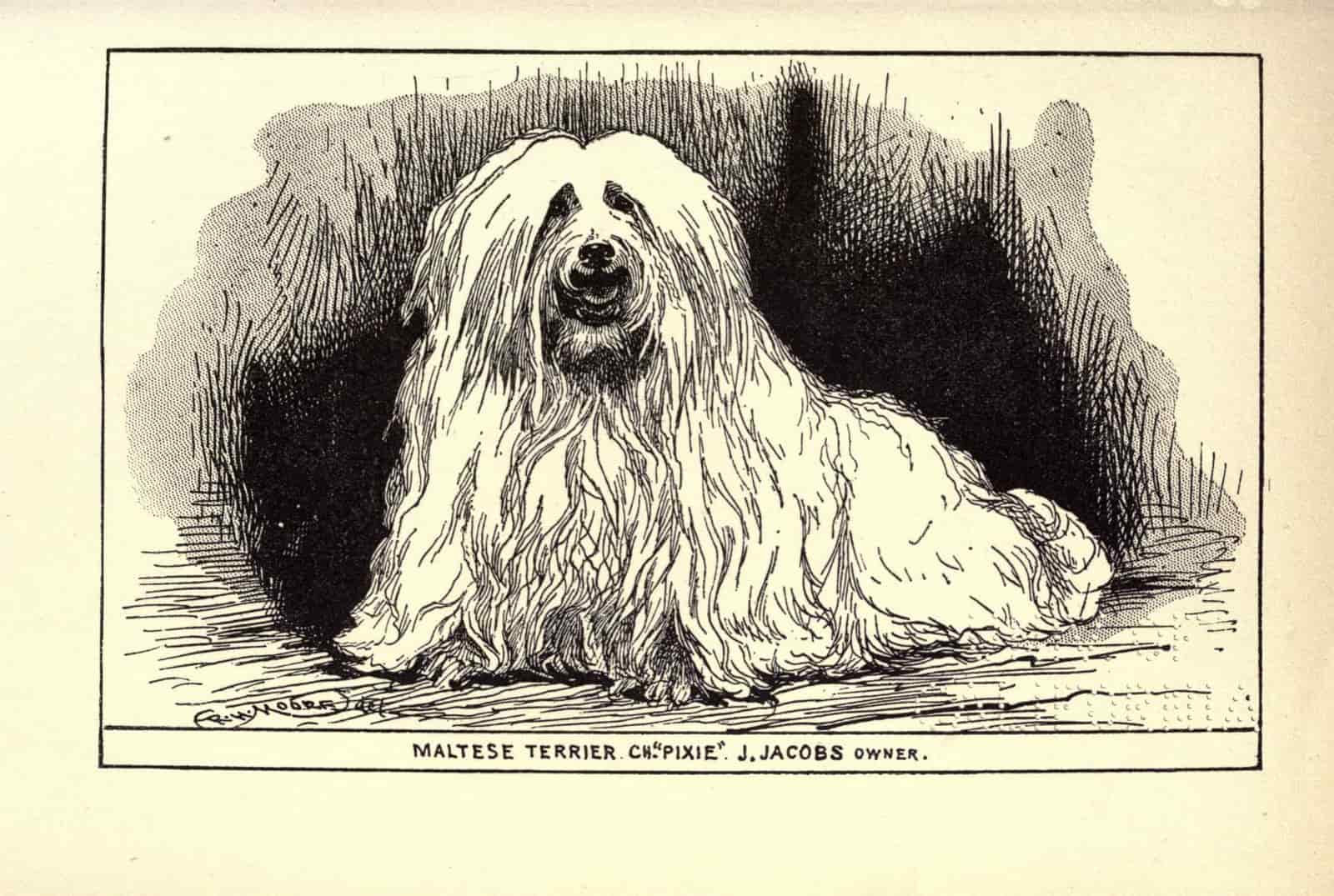
A Maltese has a long, fine, pure white single coat. It tangles rather than mats, breaks if brushed with a slicker, and shows every stain. Brush daily with a pin brush at length, keep the eye area clean and dry, and consider a pet clip.
A Maltese has a silky coat — long, fine, single-layered hair that tangles rather than mats. Everything below follows from that, and the full set of rules for this coat type, including what will damage it, is on grooming a silky coat.
Maltese coat is long, straight, silky and single-layered, with no undercoat and essentially no shedding. At show length it hangs to the floor. For a pet it is almost always better kept somewhere between one and three inches, or in a short clip.
The color is the complication nobody mentions until you own one. A white coat shows tear staining under the eyes, saliva staining around the mouth, and ground dirt on the legs and feet, and all three are hygiene jobs rather than coat jobs.
Like all fine single coats, it breaks under a slicker. A pin brush, a metal comb and a conditioner are the Maltese kit; a slicker is only appropriate once the coat is short.
Maltese: Long, fine, single-layered hair that tangles rather than mats.
The breed-specific thing to watch
Tear staining and the wet beard
The rust-colored marks under a Maltese's eyes are tear fluid sitting in white hair, and the area around the mouth stains the same way from saliva. Both are kept under control by keeping the hair short there and the skin clean and dry — not by stain removers.
A persistently wet beard or heavy tearing is worth a vet conversation. Blocked tear ducts, eyelashes growing inward and dental problems are all common causes and all treatable.
The routine
Task
How often
Notes
Brush
Daily at length, 2-3x a week when short
Pin brush; conditioner or detangler on long coat
Comb
Daily
Metal comb through to the skin
Clean eye area and beard
Daily
Damp cloth, then dry thoroughly
Face trim or topknot
Every 2-3 weeks
Ball-tipped shears, hair out of the eyes
Bathe
Every 2-3 weeks
Whitening dog shampoo if needed, plus conditioner
Dry while brushing
Every bath
Brush as it dries so it dries straight
Clip (pet cut)
Every 6-8 weeks
Small quiet clipper; shears for the face
Nails, pads, sanitary
Every 2-3 weeks / monthly
White foot hair stains; keep pads clear
Where it goes wrong on this breed
Under the eyes — tear staining
Around the mouth and beard — saliva staining and food
Behind the ears
Feet and legs, which pick up ground dirt on a white coat
The sanitary area, which must be kept short
Time and effort, honestly
Long coat: 10 to 15 minutes of brushing and combing daily plus daily face cleaning, and a 45 to 60 minute bath and dry fortnightly. Pet clip: minutes a day and a 40 minute clip every six to eight weeks.
The coat page is the one to read in full: grooming a silky coat. From there the tool roundups cover each purchase in detail, and how to groom a dog at home walks a full session end to end. Other breeds with the same coat are listed on the breed index.
The picks in full
Every pick, in order
01
The brush for a long white coat
Chris Christensen 27 mm oval pin brush
Long straight pins lay fine hair down rather than breaking it.
Maltese coat is among the finest of any breed, and breakage is what prevents it reaching length. A 27 mm straight-pin brush on a cushioned pad passes through the coat and lays it, which is a completely different action from a slicker gripping and dragging. Use it with a light conditioner.
Right for fine hair10.0
Breakage risk9.5
Handles tangles7.5
Value7.0
Overall8.9 / 10
What it gets right
+Long pins pass through a long silky coat without the drag a slicker creates
+The correct finishing tool on a Maltese, Yorkie or show-coat Shih Tzu
+Professional-grade pin seating — the pins stay put
What it gets wrong
−A pin brush will not remove undercoat and should not be sold as if it does
−Does nothing for a mat
−Expensive for a brush with one job
Who should skip itSkip it on a double or curly coat — the pins skate over the surface and do nothing useful.
#adHow we earn · We never print a price we cannot verify
02
Face and beard work
Kenchii Show Gear curved ball-tip shears
Keeping the eye and mouth hair short is most of Maltese grooming, and it is a shear job.
Curved grooming shears
Blade
Curved, stainless steel
Tips
Ball tips
Best for
Rounding legs, feet, faces and topknots
The daily work on a Maltese is the face: hair out of the eyes, beard kept short enough to stay dry. That is scissoring, close to a prominent eye, on a small dog that moves — which is exactly what a curved ball-tipped shear is for. The curve also rounds the head shape the breed is known for.
Safety near the eye10.0
Face and beard shaping9.5
Edge life9.0
Value8.0
Overall9.1 / 10
What it gets right
+The curve does the shaping for you on legs and heads — a straight shear fights the shape
+Ball tips are the single biggest safety upgrade you can make around a face or paw
+Holds an edge far longer than a budget shear
What it gets wrong
−A curved shear is the wrong tool for a straight line, so it is not your only shear
−Needs proper storage and oiling or the pivot loosens
−Costs several times a budget set
Who should skip itSkip it if you only ever tidy paw pads — a small straight shear is cheaper and better at that.
#adHow we earn · We never print a price we cannot verify
03
A pet clip
Wahl Arco SE
Light and quiet; a 7 lb dog's coat needs nothing more than that.
Cordless adjustable-blade clipper
Power
Cordless, rechargeable
Blade
Adjustable 5-in-1 blade
Weight
Light enough for detail work one-handed
Best use
Faces, feet, sanitary trims, small dogs
If you choose a pet clip — and for most Maltese households that is the right call — the clipper only needs to be small, quiet and controllable. The 5-in-1 blade covers every length a Maltese needs and there is no blade library to buy. Runtime is short and a Maltese is a short job.
Handling on a small dog9.5
Noise9.0
Length options6.5
Value8.0
Overall8.4 / 10
What it gets right
+Small and light in the hand, which is exactly what you want around a face or between toes
+Cordless and quiet — the two things that decide whether a dog stands still
+5-in-1 blade covers the usual tidy-up lengths without blade changes
What it gets wrong
−Not enough motor for a full dense-coat body clip
−Short battery runtime relative to a full-body groom
−Replacement 5-in-1 blades are not cheap
Who should skip itSkip it as your only clipper if you own a large double-coated dog — it will stall on the body.
A small, light, quiet cordless clipper with an adjustable 5-in-1 blade. The coat offers no resistance, so there is nothing to be gained from a powerful motor.
+−How do I stop tear staining on a Maltese?
Keep the hair under the eyes short, wipe the area daily with a damp cloth and dry it properly. Stain removers treat the symptom. Persistent heavy tearing is worth a vet check.
+−How often should a Maltese be groomed?
Daily brushing and face cleaning, a bath every two to three weeks, and a clip every six to eight weeks if you keep it short. The daily work is small and non-negotiable.
+−Can I use a slicker brush on a Maltese?
Not on a long coat — it breaks fine hair. Once the coat is in a short pet clip, a light slicker is fine.
How this page was put together
We define the coat problem the tool has to solve, shortlist products currently sold, compare the manufacturers’ documented specifications against what that coat actually needs, and cross-check against published findings from named sources. We do not test these tools on our own dogs under controlled conditions, and we will not say we do. Where a figure comes from a manufacturer, we name them; where it comes from someone else’s testing, we cite them. We print no prices — a stale number is worse than none. Read the full method.