Scores are our own editorial assessment, not a product rating from reviews or testing. We do not print prices — every button goes to the current one on Amazon. #ad
Which coat are you dealing with?
The short answer
A bichon frise has a dense, curly, non-shedding coat that mats readily. Brush to the skin two to three times a week, bathe and fluff dry every three to four weeks, and either scissor the traditional round outline or keep a shorter pet clip.
A Bichon Frise has a doodle coat — curly or wavy, grows without shedding, mats against the skin. Everything below follows from that, and the full set of rules for this coat type, including what will damage it, is on grooming a doodle coat.
Bichon coat is a double-layered curly coat: a soft dense undercoat with a coarser curly outer coat that gives it the characteristic springiness. It does not shed meaningfully, which means every loose hair stays in the coat and starts a mat — the doodle problem, in a breed that has had it for centuries.
The breed's traditional outline is a scissored sphere: the body coat is left long and shaped with shears rather than clipped to a length. That look requires a coat that is fully brushed out and fluff dried, because scissoring a coat that is not standing up evenly produces a lumpy finish.
The white coat shows tear staining, saliva marks and ground dirt. On a bichon those are routine hygiene jobs rather than signs that something is wrong.
Bichon Frise: Curly or wavy, grows without shedding, mats against the skin.
The breed-specific thing to watch
The round outline is only possible on a properly fluff-dried coat
Scissoring works by cutting a surface that is standing up evenly, and only a coat that is brushed to the skin and then dried under airflow with a slicker does that. Scissor a flat, curl-set coat and the result is lumpy and uneven however good your shears are.
If you do not want to fluff dry, take a shorter clipped pet cut instead. That is a perfectly good outcome and much better than a badly scissored long coat.
The routine
Task
How often
Notes
Brush to the skin
2-3x a week
Dense slicker, then a metal comb to verify
Comb test
Every session
Behind ears, armpits, legs
Bathe
Every 3-4 weeks
White coat; brush out fully first
Fluff dry
Every bath
Essential if you intend to scissor
Scissor the outline
Every 4-6 weeks
Curved shears; the round shape is scissored, not clipped
Or clip a pet cut
Every 6-8 weeks
A #4F or #5F all over, with a scissored head
Face, eyes, feet
Every 3-4 weeks
Hair out of the eyes; round the feet
Nails, pads, sanitary
Every 2-3 weeks / monthly
White foot fur stains and collects grit
Where it goes wrong on this breed
Behind and under the ears
The beard, which stains and holds water
Armpits and the groin
The feet and legs, where white coat shows dirt
The sanitary area
Time and effort, honestly
A full groom with the traditional scissored outline is two to three hours, most of it brushing, drying and scissoring. A clipped pet cut is around 90 minutes. Brushing between grooms is 15 minutes a session.
The coat page is the one to read in full: grooming a doodle coat. From there the tool roundups cover each purchase in detail, and how to groom a dog at home walks a full session end to end. Other breeds with the same coat are listed on the breed index.
The picks in full
Every pick, in order
01
Lifting a bichon coat for scissoring
Chris Christensen Big G slicker brush
Pin density reaches the skin and stands the coat up, which is what scissoring needs.
Two jobs in one tool on this breed: reaching the skin to prevent matting, and standing the coat up evenly so a shear can cut a true shape. A low-density slicker does neither, which is why owners get both mats and a lumpy outline from the same brushing routine.
Reaches the skin9.5
Lifts coat for scissoring10.0
Comfort8.5
Value7.5
Overall9.0 / 10
What it gets right
+Pin density is the whole product: more pins means fewer passes through a curly coat
+The pins are long enough to reach skin on a doodle, which is where matting starts
+This is the brush that makes line brushing a doodle actually feasible
What it gets wrong
−Expensive for a brush, by a wide margin
−Dense pin bed is harder to clean out than a self-cleaning slicker
−Overkill on a short coat
Who should skip itSkip it if your dog has a short or smooth coat — you will never use the pin density you paid for.
#adHow we earn · We never print a price we cannot verify
02
The breed's outline
Chris Christensen Classic Series shear set
A bichon is a scissored dog. Four shears for four jobs is the correct kit.
Four-shear grooming set
Contents
Straight, curved, thinner and chunker
Steel
440C Japanese steel
Case
Included
The round bichon outline is made with a curved shear, blended with a thinner, de-bulked with a chunker and finished on edges with a straight shear. If you intend to keep the traditional look rather than a clipped pet cut, this is the toolkit, and nothing smaller does the job properly.
Shaping ability10.0
Blending10.0
Edge life10.0
Value6.5
Overall9.1 / 10
What it gets right
+The four shears cover genuinely different jobs — this is not four versions of the same tool
+440C steel takes and holds a real edge, which is what separates a shear from scissors
+The thinner is what rescues a clipper line you cannot blend out
What it gets wrong
−A serious outlay for a first-time home groomer
−Four shears is more than most owners need in year one
−Japanese-steel edges are unforgiving if you drop them
Who should skip itSkip the full set if you clip rather than scissor — buy one curved shear and a thinner instead.
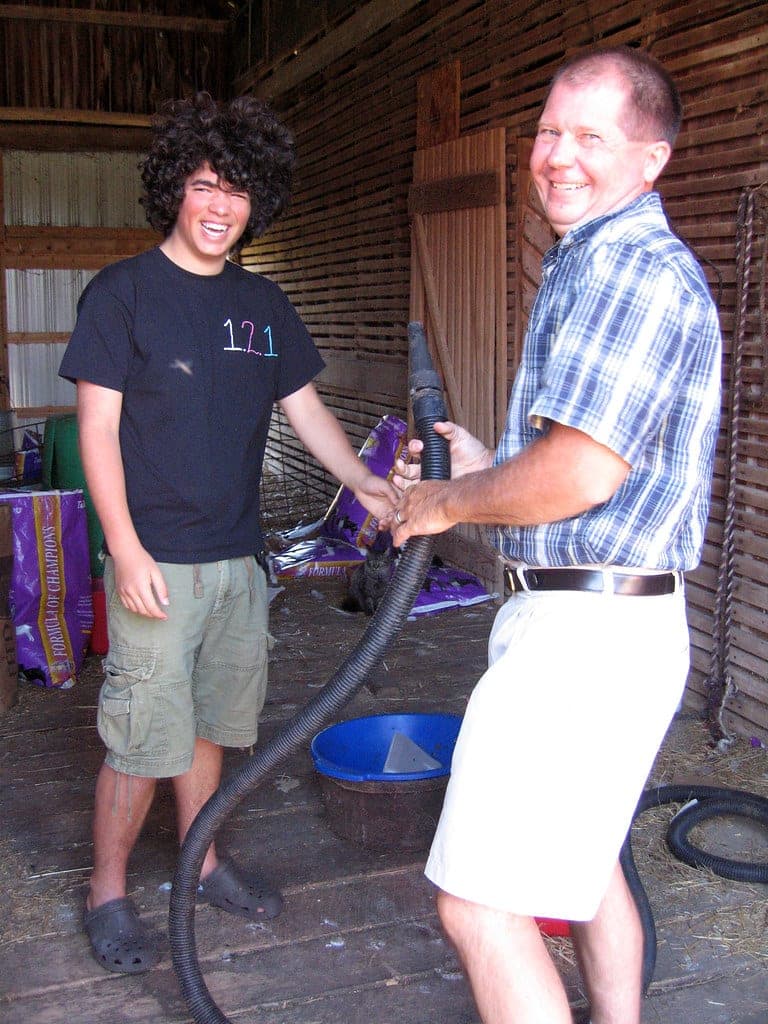
The fluff dry is what makes a bichon scissorable, and it needs controllable airflow rather than maximum airflow — this is a 12 to 18 lb dog. A single-motor unit with genuine variable speed covers it, and it does not dominate a cupboard.
Dries coat standing8.5
Control at low output9.0
Storage8.5
Value9.0
Overall8.7 / 10
What it gets right
+The sensible first force dryer: real airflow at a price that is not a professional outlay
+Variable speed lets you start low on a dog that has never met a force dryer
+Compact enough to store in a cupboard
What it gets wrong
−Single motor, so a soaked giant breed takes noticeably longer
−Hose and nozzle set is basic
−Still loud — quieter than a twin-motor, not quiet
Who should skip itSkip it if you are drying a Great Pyrenees weekly — buy the airflow, not the price.
#adHow we earn · We never print a price we cannot verify
FAQ
Questions people actually ask
+−Best clippers for a bichon frise?
If you are clipping a pet cut, a cordless 5-in-1 or a corded clipper with a #4F or #5F. If you are keeping the traditional outline, shears matter more than the clipper.
+−Do bichons need professional grooming?
The traditional scissored outline is genuinely difficult to produce at home. A clipped pet cut is well within reach of a home groomer, and plenty of bichon owners alternate: a groomer for the shape, home grooming in between.
+−How often should a bichon be bathed?
Every three to four weeks. The white coat gets visibly dirty and the bath plus fluff dry is also what makes the coat workable.
+−Does a bichon shed?
Very little, which is exactly why it mats. Loose hair stays in the coat until you brush it out.
How this page was put together
We define the coat problem the tool has to solve, shortlist products currently sold, compare the manufacturers’ documented specifications against what that coat actually needs, and cross-check against published findings from named sources. We do not test these tools on our own dogs under controlled conditions, and we will not say we do. Where a figure comes from a manufacturer, we name them; where it comes from someone else’s testing, we cite them. We print no prices — a stale number is worse than none. Read the full method.