Scores are our own editorial assessment, not a product rating from reviews or testing. We do not print prices — every button goes to the current one on Amazon. #ad
Which coat are you dealing with?
The short answer
A sheepadoodle has the densest coat of the common doodle crosses. Line brush to the skin at least three times a week, clip every six to eight weeks at a #5F or shorter, and expect a full groom to take two to three hours on a standard.
A Sheepadoodle has a doodle coat — curly or wavy, grows without shedding, mats against the skin. Everything below follows from that, and the full set of rules for this coat type, including what will damage it, is on grooming a doodle coat.
The old English sheepdog contributes volume and a dense, slightly harsher texture than a goldendoodle; the poodle contributes curl and the tendency not to shed. The combination is the heaviest brushing load of any common doodle cross, and the one where owners most often give up and go short.
Going short is not a failure. A sheepadoodle in a 1/4 inch clip, kept clean and brushed twice a week, is a comfortable dog. A sheepadoodle kept long by someone who brushes it on Sundays is a dog that will be shaved by a groomer within four months.
The black and white pattern is the practical complication: clip lines and uneven work show up clearly across the color boundaries, so blending with a thinner matters more than on a solid dog.
Sheepadoodle: Curly or wavy, grows without shedding, mats against the skin.
The breed-specific thing to watch
This is the doodle cross where owners most often underestimate the work
Dense plus curly plus non-shedding plus large is the worst combination for matting, and the surface of a sheepadoodle coat looks fine long after the layer at the skin has felted.
Decide honestly at the start how much brushing you will do, and choose the clip length to match. Three sessions a week supports a medium coat; once a week supports a short one.
The routine
Task
How often
Notes
Line brush to the skin
3x a week minimum
Large dense slicker; this is the non-negotiable task
Comb test
Every session
A metal comb to the skin, several places
Bathe
Every 6-8 weeks
Brush out completely first
Fluff dry
Every bath
Long job; do it in sections
Clip
Every 6-8 weeks at a #5F or #7F
Shorter than other doodles, for good reason
Blend clip lines
Every clip
Thinner, especially across the color boundaries
Face and eyes
Every 4 weeks
Coat grows over the eyes on this cross
Nails and pads
Every 2-3 weeks / monthly
Large feet, lots of fur between the pads
Where it goes wrong on this breed
The whole body, honestly — this coat mats more evenly than most
Behind the ears and under the ear leather
The beard and the hair over the eyes
Trousers and the tail
Anywhere a harness contacts
Time and effort, honestly
Two to three hours for a full groom on a standard, with the fluff dry taking the largest single share. Line brushing is 25 to 35 minutes a session on a standard — budget for it honestly before you commit to a long coat.
The coat page is the one to read in full: grooming a doodle coat. From there the tool roundups cover each purchase in detail, and how to groom a dog at home walks a full session end to end. Other breeds with the same coat are listed on the breed index.
The picks in full
Every pick, in order
01
The clipper that will not stall
Wahl KM Inspire
The densest doodle coat deserves the brushless motor, especially if it has matted.
Corded brushless detachable-blade clipper
Speeds
Two-speed
Motor
Brushless, corded
Blade system
Detachable A5
Running temperature
Stays cool through dense coat work
A sheepadoodle coat is the heaviest load in this category, and a brushless motor holding speed under it is the difference between cutting and dragging. The cool running matters across a two to three hour session on a large dog, where blade temperature is the real safety concern.
Power through dense curl10.0
Heat over a long groom9.5
Blade options10.0
Value7.0
Overall9.1 / 10
What it gets right
+The brushless motor is the point: it pushes through matted coat and dense undercoat without bogging down
+Runs cool on long sessions, which is what actually causes clipper burn on a big dog
+Detachable A5 blades, so it shares the blade set with Andis and Oster clippers
What it gets wrong
−Priced like a professional tool because it is one
−Corded only
−Overkill for a single small dog on a monthly tidy-up
Who should skip itSkip it unless you are regularly working through dense or matted coat — a lighter clipper is easier to handle for everything else.
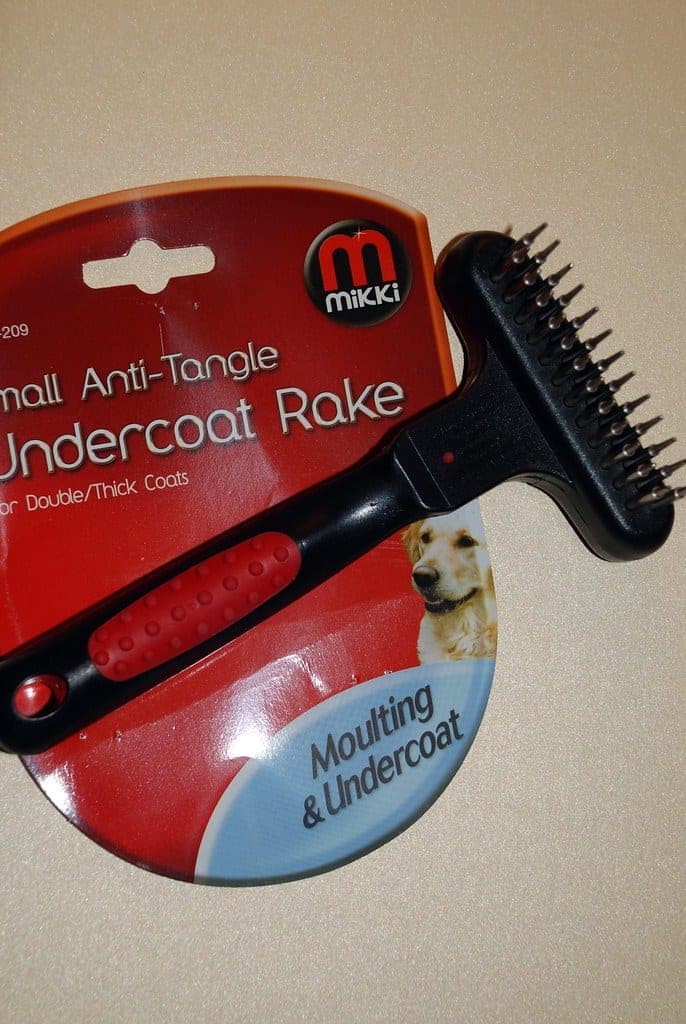
Three line-brushing sessions a week on a dog this size only happens if each session is 25 minutes rather than an hour, and that comes down to coverage per stroke and whether the pins reach skin. Both are what this brush is for.
Reaches the skin9.5
Coverage per stroke9.5
Comfort8.5
Value7.5
Overall9.0 / 10
What it gets right
+Pin density is the whole product: more pins means fewer passes through a curly coat
+The pins are long enough to reach skin on a doodle, which is where matting starts
+This is the brush that makes line brushing a doodle actually feasible
What it gets wrong
−Expensive for a brush, by a wide margin
−Dense pin bed is harder to clean out than a self-cleaning slicker
−Overkill on a short coat
Who should skip itSkip it if your dog has a short or smooth coat — you will never use the pin density you paid for.
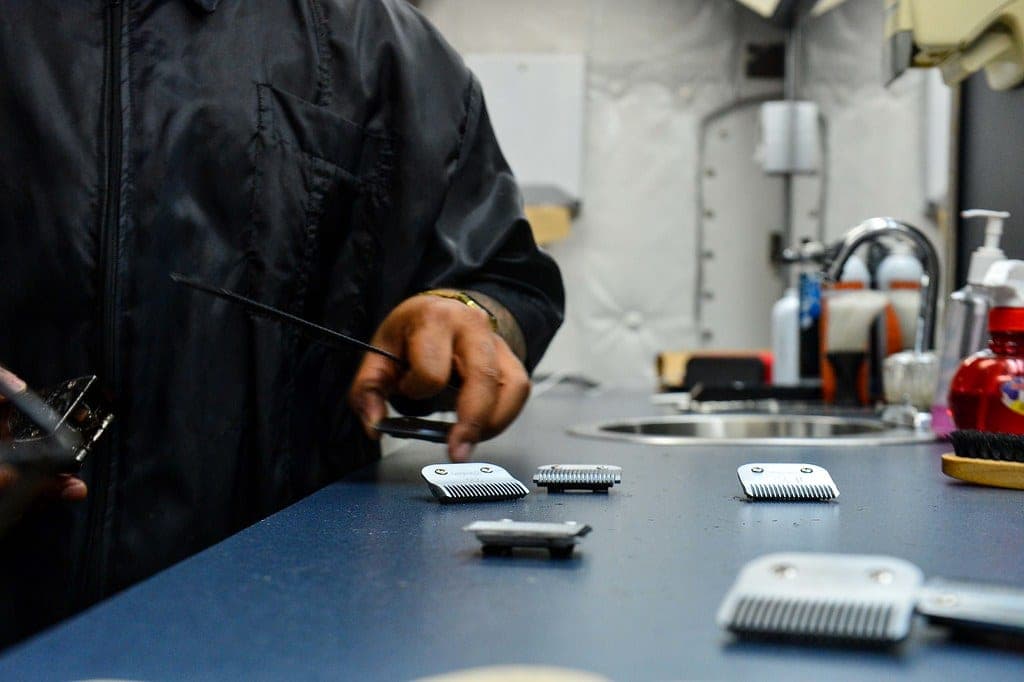
Blade choice is the honest lever here. A #5F leaves 1/4 inch and a #7F leaves 1/8 inch — both are tidy, neither is a shave, and both reduce the brushing load enormously compared with a long coat. The blades fit Andis, Oster A5 and Wahl KM bodies.
Length options10.0
Cross-brand fit10.0
Edge life8.5
Value8.5
Overall9.0 / 10
What it gets right
+The blade range is the whole reason to own a detachable-blade clipper — any length, bought one at a time
+Fits Andis, Oster A5 and Wahl KM bodies interchangeably
+Finish-cut (FC) and skip-tooth variants of the same number let you choose bite versus smoothness
What it gets wrong
−Each blade is a separate purchase and they add up fast
−Blades dull and need sharpening or replacing — a running cost, not a one-off
−Blade numbers are counter-intuitive: the bigger the number, the shorter the cut
Who should skip itSkip these if your clipper takes a 5-in-1 adjustable blade — they will not fit it.
#adHow we earn · We never print a price we cannot verify
FAQ
Questions people actually ask
+−Best dog clippers for a sheepadoodle?
A corded brushless or rotary two-speed with detachable blades. The coat is dense enough that a cordless 5-in-1 will struggle on anything but a short, well-maintained clip.
+−How often does a sheepadoodle need grooming?
Line brushing three times a week minimum, clipping every six to eight weeks. Honestly assess your brushing capacity and pick the clip length to match it.
+−What length is best for a sheepadoodle?
A #5F at 1/4 inch for most households, a #7F at 1/8 inch if you are brushing only once a week. Longer than 3/8 inch needs near-daily brushing on this coat.
+−Do sheepadoodles shed?
Most shed very little, which is precisely why they mat so readily. The hair that comes loose stays in the coat.
How this page was put together
We define the coat problem the tool has to solve, shortlist products currently sold, compare the manufacturers’ documented specifications against what that coat actually needs, and cross-check against published findings from named sources. We do not test these tools on our own dogs under controlled conditions, and we will not say we do. Where a figure comes from a manufacturer, we name them; where it comes from someone else’s testing, we cite them. We print no prices — a stale number is worse than none. Read the full method.