A steel-bodied force dryer that warms its own air without a heating element. On a thin-coated dog in a cold room it is the right machine; on a soaked Newfoundland it is the wrong one.
The Metro Air Force Commander is a steel-bodied two-speed dryer whose airstream is warmed by the motor rather than a heating element. That makes it unusually safe and genuinely pleasant on thin coats in a cold room. It is not the machine to buy if raw airflow is what you need.
Buy it if
You dry a short, thin or fine-coated dog in a room that gets cold, you want a machine that will still be working in ten years, and you would rather have comfortable air than the biggest number on the box.
Skip it if
You are drying a soaked double coat. Blowing water out of a Samoyed is an airflow problem, and this dryer is not built around airflow — a high-CFM unit will halve your drying time.
Category
High-velocity dryer with warmed airstream
Brand
Metro
Specifications
Spec
Value
Speeds
Two
Motor (AFTD-1 / -2 / -3)
1.17 / 1.7 / 4.0 peak HP
Airflow (AFTD-1 / -2 / -3)
86 / 82 / 113 CFM
Current (AFTD-1 / -2 / -3)
6.8 / 8.3 / 9.4 A
Airstream
Warmed by motor heat, not a heating element
Build
All-steel construction
Cord / hose
12 ft 3-conductor cord, 6 ft flexible hose
Attachments
Massager, air flare, blower nozzle
Warranty
5-year limited on unit and motor; 1 year parts, switches, cords
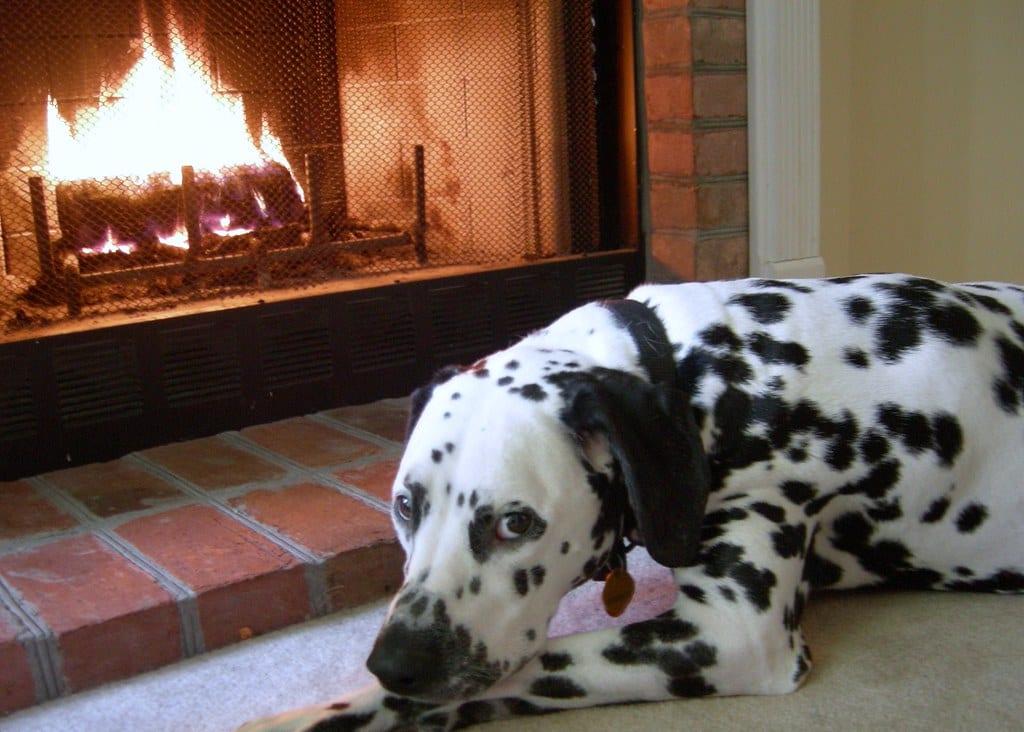
A thin-coated dog getting warm after a bath — the exact situation the Commander's motor-warmed airstream is built for
What it gets right
No heating element, and that is a real safety difference
Metro's Air Force dryers have no heating element at all. The air that comes out is warm because it has passed over a working motor, which is why the machine takes around half a minute to come up to temperature. The practical consequence is that there is no hot coil to fail, no setting that can scorch a coat, and no way to burn skin with heat the way a human hair dryer can. Dryer burn is a genuine and underreported injury in home grooming, and removing the heating element removes the whole mechanism. Metro also markets this as kinder to the coat, on the basis that element heat dries hair out, and that part is a manufacturer claim rather than something we have measured.
Warm air is worth more than it sounds on a thin coat
This is the thing a spec sheet cannot show you. A whippet, a greyhound, a short-coated senior or a small dog with no undercoat loses heat fast when wet, and a high-CFM dryer blowing ambient garage air at them in February is genuinely unpleasant for the dog. Most force dryers move cold air by design; the Commander does not. If your drying happens in an unheated utility room, a garage or a basement — which is where most people do it, because of the mess — warmth stops being a luxury and becomes the reason the dog will stand still at all.
All-steel construction and a five-year motor warranty
The Commander's body is steel rather than molded plastic, and Metro backs the unit and motor with a five-year limited warranty, with one year on parts, switches and cords. That warranty length is well above what most of this category offers and it tells you something about the expected service life. A steel-bodied dryer with a serviceable motor is a repairable object: a plastic-shelled unit that cracks at the hose port is usually a disposable one. Over ten years of monthly baths, that distinction is most of the real cost.
Two speeds, a 12 ft cord and a 6 ft hose as supplied
Metro publishes a 12 ft three-conductor cord and a 6 ft flexible hose on all three Commander variants, with a massager, an air flare and a blower nozzle in the box. The 12 ft cord is the useful number — it means the machine can sit on the floor well away from the bathing area while you work. Two speeds is the right minimum: full output for the body, half for the face and ears, where a full-power force dryer is both alarming and capable of pushing water into an ear canal.
It is a finishing dryer as much as a drying one
Warm, moderate-velocity air is what straightens and fluffs a coat as it dries, which is how a groomer gets a finish you cannot get with a towel and time. On a doodle or a bichon, directing warm air against the lie of the coat while brushing is the step that produces the shape; on a short coat it is what leaves a shine rather than a flat damp look. A machine optimized purely for CFM blasts water off and does this part less well.
What it gets wrong
The airflow numbers are modest, and the HP figures mislead
Look at Metro's own published table and the problem becomes obvious. The AFTD-1 is rated 1.17 peak HP and 86 CFM. The AFTD-2 steps up to 1.7 peak HP and 8.3 amps — and lists 82 CFM, less air than the cheaper model. Only the 4.0 peak HP AFTD-3 pulls ahead, at 113 CFM. Peak horsepower on a vacuum-type motor is a marketing figure that does not translate into air moved, and here the manufacturer's own numbers prove it. If you are shopping on airflow, read the CFM column and ignore the HP badge entirely — including on competing brands, where the same game is played.
You cannot turn the warmth off
The heat is a byproduct of the motor running, so it is not a setting. In July, in a warm room, drying a dog that is already overheated from a bath, you are adding warmth you do not want and cannot switch off. A dryer that moves ambient air lets you choose; this one does not. It is a real seasonal cost of the design, and on a brachycephalic dog or one with any heat sensitivity it matters more than it does on a whippet in January.
It is the wrong machine for a soaked double coat
Drying a Samoyed, a Great Pyrenees or a thick-coated shepherd is an airflow job: you are pushing standing water out of an undercoat, and the only thing that does it quickly is volume of air. At 86 CFM the entry Commander will do it eventually, and eventually can mean well over an hour of a dog standing on a table. Even the 113 CFM AFTD-3 is in the same bracket as mainstream single-motor force dryers rather than ahead of them. For that work, buy on CFM and accept cold air, or run the warm dryer as a finisher after a high-airflow unit has done the bulk.
Three variants share one name, and sellers are not always clear which is which
AFTD-1, AFTD-2 and AFTD-3 are all sold as the Air Force Commander, in several colors, and there is a separate variable-control version as well. Retail listings routinely show the family name and a price without making the motor variant obvious, and the CFM difference between the cheapest and the dearest is around a third. Before buying, confirm the exact model code on the listing — not the color, not the marketing name — because that is the only thing that tells you what you are getting.
Steel is durable and steel is heavy, and the hose is short
One retailer lists the Commander at 12 lbs in a 12 by 7 by 7 inch body, which is a machine you place rather than carry around a dog. The supplied hose is 6 ft, which is fine for a small dog on a table and short for walking around a large one standing on the floor — you end up moving the dryer mid-dry. A longer hose is an aftermarket purchase, and worth factoring in if you own a big dog. Noise is the other steel-bodied reality: this is a high-velocity motor in a metal housing, and Metro does not publish a decibel figure, so we will not quote one.
Warm air is not permission to point it at a face
No heating element removes the burn risk. It does not remove the pressure risk. A force dryer at full output aimed at a head can push water into an ear canal, dry a cornea out, and frighten a dog badly enough that it never stands for drying again.
Drop to the low speed near the head, keep the nozzle off the face entirely, and use a towel for the ears. The time you save on a head is measured in seconds; the time you lose to a dog that now refuses the dryer is measured in months.
You dry several dogs a session and want two motors on separate switches to set the output per dog.
How we assessed it
This assessment rests on the manufacturer’s documented specifications and on published findings from the named sources at the foot of the page, compared against what the coat types in question actually require. We did not test this unit on our own dogs under controlled conditions, and we will not claim to have done. Where a figure comes from a manufacturer we say so; where it comes from someone else’s testing we cite them. The score is our editorial assessment, not a product rating derived from reviews or measurements. Full method on how we review.
The product
Reviewed in full on this page
01
Reviewed in full on this page
Metro Air Force Commander
The Metro Air Force Commander is a steel-bodied two-speed dryer whose airstream is warmed by the motor rather than a heating element. That makes it unusually safe and genuinely pleasant on thin coats in a cold room. It is not the machine to buy if raw airflow is what you need.
High-velocity dryer with warmed airstream
Speeds
Two
Motor (AFTD-1 / -2 / -3)
1.17 / 1.7 / 4.0 peak HP
Airflow (AFTD-1 / -2 / -3)
86 / 82 / 113 CFM
Current (AFTD-1 / -2 / -3)
6.8 / 8.3 / 9.4 A
Airstream
Warmed by motor heat, not a heating element
Build
All-steel construction
Cord / hose
12 ft 3-conductor cord, 6 ft flexible hose
Attachments
Massager, air flare, blower nozzle
Warranty
5-year limited on unit and motor; 1 year parts, switches, cords
You dry a short, thin or fine-coated dog in a room that gets cold, you want a machine that will still be working in ten years, and you would rather have comfortable air than the biggest number on the box.
Airflow6.5
Comfort for the dog9.5
Build and service life9.5
Noise6.0
Value over ten years8.5
Overall8.0 / 10
What it gets right
+Warmth in the airstream is genuinely useful on a thin-coated dog in a cold room
+Steel-bodied and repairable rather than disposable
+A long-standing force-dryer design with decades of parts availability
What it gets wrong
−Warmth comes from motor heat, so you cannot turn it off in summer
−Less raw airflow than the 4 HP units at the same price
−Heavy
Who should skip itSkip it if you are drying a thick double coat in a warm room — you want air volume, not heat.
+−Does the Metro Air Force Commander have a heater?
No. There is no heating element. The air is warmed by passing over the motor, which is why the dryer takes roughly half a minute to reach working temperature and why the warmth cannot be switched off.
+−How much air does it actually move?
Metro's published table lists 86 CFM for the AFTD-1, 82 CFM for the AFTD-2 and 113 CFM for the AFTD-3. The peak horsepower figures do not track the airflow figures, so buy on CFM.
+−Which Commander model should I buy?
If airflow is your limit, the AFTD-3 at 113 CFM is the only one worth the step up. If warmth and build quality are what you are after and the dog is small or thin-coated, the AFTD-1 does the job for less. Confirm the model code on the listing, because the family name is shared.
+−Is it good enough for a husky or a Samoyed?
Not as the main dryer. A soaked double coat is an airflow problem, and these are not high-airflow machines. Use a high-CFM dryer to move the water, then the Commander to finish warm if you want the coat straightened.
+−How long is the warranty?
Metro states a five-year limited warranty on the dryer unit and motor, with one year on parts, switches and cords. Carbon brushes, filters, general maintenance, physical damage and water damage are excluded.
+−What comes with it?
A 12 ft three-conductor cord, a 6 ft flexible hose, and a massager, air flare and blower nozzle. Some retailer bundles substitute a groomer rake or a concentrator, so check the listing.
How this page was put together
We define the coat problem the tool has to solve, shortlist products currently sold, compare the manufacturers’ documented specifications against what that coat actually needs, and cross-check against published findings from named sources. We do not test these tools on our own dogs under controlled conditions, and we will not say we do. Where a figure comes from a manufacturer, we name them; where it comes from someone else’s testing, we cite them. We print no prices — a stale number is worse than none. Read the full method.