The short answer
The short answer
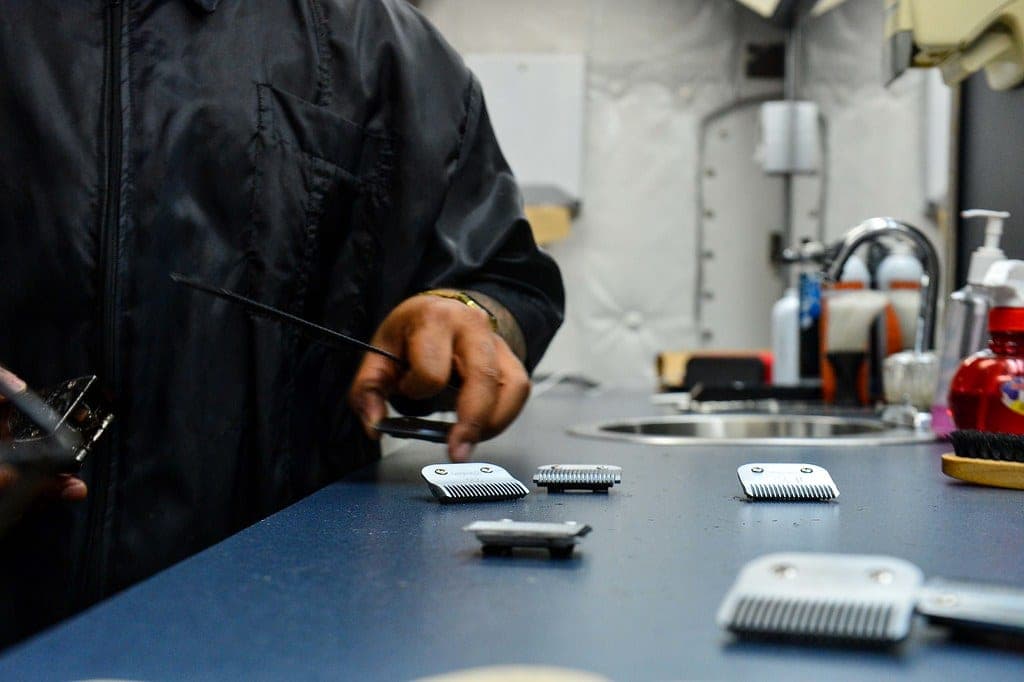
Steel blades cut cleanly at a fixed length and work on coats that defeat anything else, but each length is a separate purchase. Snap-on guard combs extend one blade to a dozen lengths for a fraction of the cost, and they skip and drag on curly or dense coat. Straight or wavy coat kept long: combs. Doodle, poodle or anything matted: blades.
How each one sets the length
A blade cuts where its teeth are. The number stamped on it is the length it leaves — and the numbering runs backwards, so a higher number leaves a shorter coat. A guard comb snaps over a short blade and holds the coat away from the cutting edge by a fixed distance, so the same blade can leave anything from a few millimeters to over an inch depending on which comb is on it.
That difference in mechanism is why they behave differently in dense coat. A blade’s teeth part the coat and cut it at the skin side; a comb has to gather the coat, hold it at a distance and then feed it to a blade sitting behind the spacer. Curly coat resists being gathered, mats refuse entirely, and the result is skipping and an uneven surface. The full numbering table is on the blade size chart.
What most owners should actually buy
A sensible home kit for a doodle is two or three steel blades and no combs: a #10 for sanitary areas and under mats, and a #4F or #5F for body work. That covers the real jobs properly. For a straight-coated or wavy dog kept at a longer length — or for a nervous beginner who wants to be unable to shave their dog by accident — one short blade plus a comb set is better value and lower risk.
The 5-in-1 adjustable blade found on many cordless clippers is a third answer: a lever steps the blade through several lengths in one unit. Convenient, and its range stops short of the very short lengths, and it is less robust than dedicated steel on dense coat. Picks for all of this are at clipper blades.
Guard combs and matted coat do not mix
A comb has to gather coat before the blade can cut it, and a mat cannot be gathered. Trying anyway means the comb rides over the mat, the clipper pulls, and the dog gets hurt before anything is cut. Matted coat is a short-blade job worked underneath the mat — see clipping matted hair — and if you cannot see the skin under it, it is a professional’s job rather than a first-timer’s.
The decision
Pick steel blades if
- →Your dog has a doodle, poodle or otherwise dense curly coat
- →There is matting to clear, now or likely
- →You want a clean finish with no tracking or skipping
- →You will keep the clipper for years and want sharpenable steel
Pick guard combs if
- →The coat is straight or wavy and kept at a longer length
- →You want several lengths without buying several blades
- →You are new to this and want a tool that cannot shave the dog by mistake
- →You already own a short blade for the combs to sit on
How this page was put together
We define the coat problem the tool has to solve, shortlist products currently sold, compare the manufacturers’ documented specifications against what that coat actually needs, and cross-check against published findings from named sources. We do not test these tools on our own dogs under controlled conditions, and we will not say we do. Where a figure comes from a manufacturer, we name them; where it comes from someone else’s testing, we cite them. We print no prices — a stale number is worse than none. Read the full method.