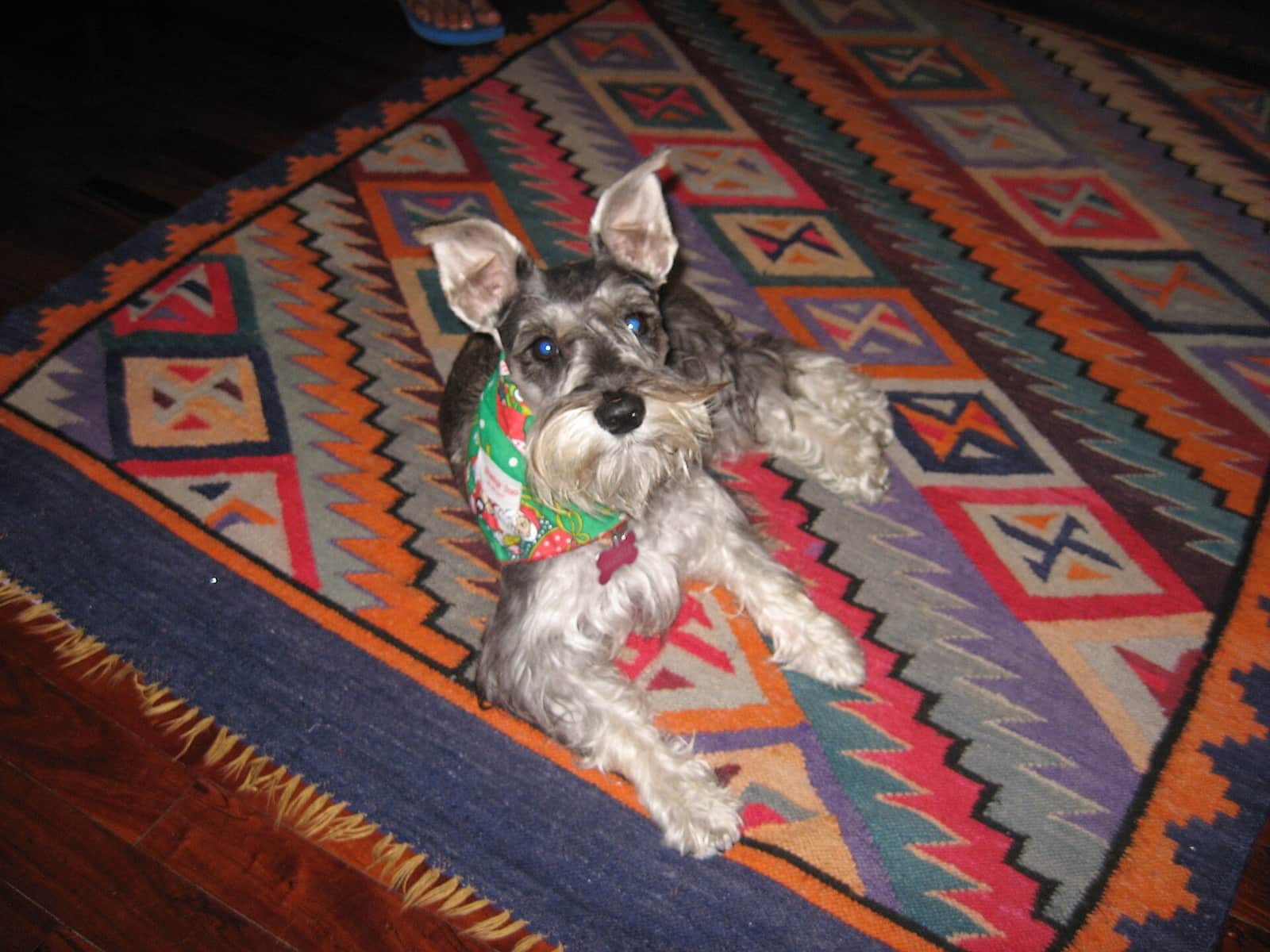
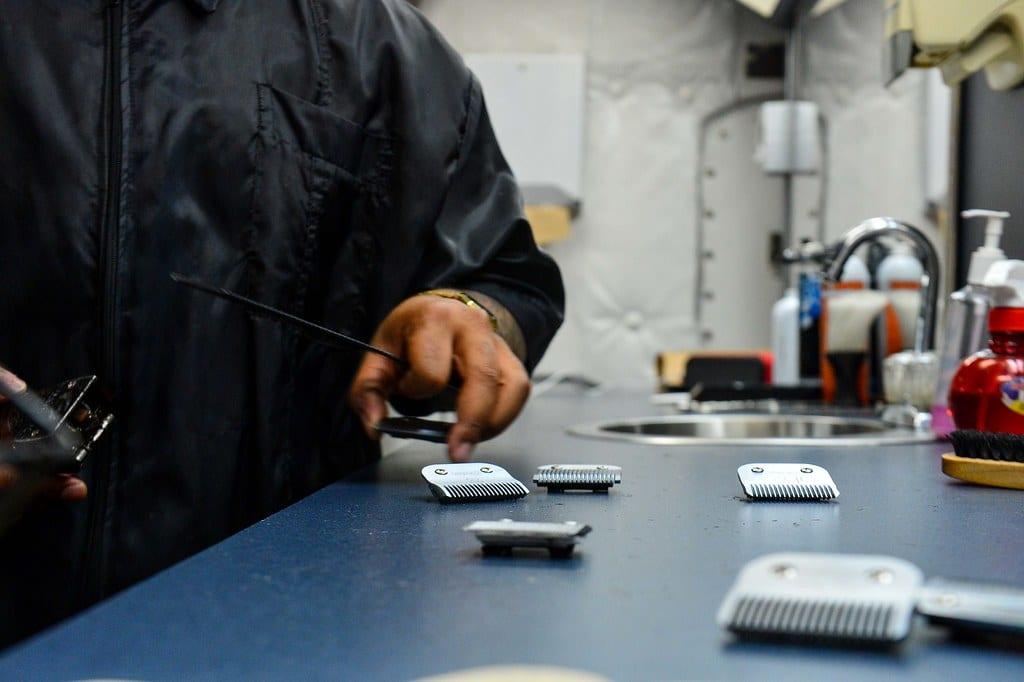
A schnauzer is three grooming jobs on one dog: a harsh jacket, soft furnishings on the legs, and a beard and eyebrows you can ruin in two seconds. One clipper will not do all three well.
A Solingen-made stripping knife, sold in right- and left-handed versions. The tool that keeps a salt-and-pepper jacket harsh and dark instead of soft and grey.
Scores are our own editorial assessment, not a product rating from reviews or testing. We do not print prices — every button goes to the current one on Amazon. #ad
The short answer
The short answer
Buy the Andis UltraEdge AGC Super 2-Speed with a #10 and a #7FC blade. A schnauzer jacket is harsh and dense enough to stall a pet-store clipper, and this one holds blade speed in it. Add a cordless 5-in-1 for the beard, brows and legs.
This page is for you if
You have a miniature, standard or giant schnauzer, you are clipping the jacket yourself, and you want the machine and the blade numbers rather than a list of brands.
You are on the wrong page if
You want to keep the jacket harsh and dark. That is hand stripping, not clipping — read the stripping comparison and the knives instead.
A schnauzer is three coats on one dog
Almost every mistake made on a schnauzer at home comes from treating it as one haircut. It is not. The jacket — back, sides, neck, top of the tail — is a wire coat: harsh, bristly guard hairs over a softer undercoat, growing dense and tight. The furnishings — legs, chest, skirt, beard, eyebrows — are soft and fine, closer to a silky coat in how they behave. And the face is a shape rather than a length: the beard and brows are what make the dog look like a schnauzer at all.
Those three areas want three different tools. The jacket wants torque and a short blade. The furnishings want a small machine on a long setting, or scissors. The face wants almost nothing — a comb, shears, and the discipline to stop. A single clipper with a single blade will do one of the three jobs acceptably and the other two badly, and badly is where the dog ends up looking like a shaved terrier.
What a schnauzer clipper actually needs
Three specifications do the work here, and most of what is printed on a box is noise.
What to look for
Why a schnauzer specifically
What to ignore
Two speeds, rotary or brushless
Slow for bulk removal through the jacket, fast for the finish pass so the outline is clean
Five-speed machines — you will use two
Detachable A5 blades
The pattern is graded; a fixed blade gives you one length and no pattern
Kits sold with a single blade and ten plastic combs
Vent-free or filtered housing
Wire clippings are short and bristly and pack into an air intake fast
Cooling claims with no filter you can clean
A second, small cordless unit
Beard, brows, legs and feet are detail work a full-size clipper cannot steer
Buying a bigger clipper to do small work
Weight under about 18 oz
A schnauzer jacket takes 20 to 40 minutes with the clipper in your hand throughout
Salon five-speeds built for eight dogs a day
Criteria follow the clipper specifications and professional-groomer sources cited below; the schnauzer-specific reasoning is this site's own.
The jacket tool: a corded two-speed with a detachable A5 blade. The furnishings get a different machine entirely.
Blade numbers for the schnauzer pattern
This is the part no clipper box tells you, and it is the part that decides whether the dog looks right. The pattern runs short on the jacket and progressively longer as you move down the dog.
Area
Blade or setting
Direction
Jacket (back, sides, neck)
#7FC (1/8 in) or #5FC (1/4 in)
With the grain, nose to tail
Belly and sanitary area
#10 (1/16 in)
With the grain, light pressure
Chest and skirt blend
#5FC (1/4 in) or a 1/4 in comb
With the grain, feathering into the leg
Leg furnishings
5-in-1 on a long setting, or shears
Comb out, then scissor to shape
Beard and eyebrows
No clipper. Comb forward, shears only
Trim the tips, nothing more
Head and cheeks
#10 on the cheeks, stopping at the brow line
With the grain, away from the eye
Blade cut lengths are the published Andis UltraEdge figures (source below). The area-by-area pattern is this site's own, following the standard schnauzer outline.
If you want the complete length table rather than just the schnauzer rows, it lives on the blade size chart. The short version: a lower number leaves more coat, and the F or FC suffix means a finishing blade, which leaves a smoother surface on a coat that shows every mark.
The beard and eyebrows are not a clipper job
A schnauzer’s brows and beard are the only parts of the dog a stranger will notice, and they take weeks to grow back. Comb them forward, trim the tips with shears, and never put a running clipper near them. The same applies to the inner corner of the eye — work away from it, and if the dog is moving, stop. The eye-area procedure covers it properly.
Why your schnauzer’s jacket is going pale
If you have clipped the same dog for two or three years and the crisp salt-and-pepper has turned into a soft, uniform grey, nothing has gone wrong with your technique. That is what clipping does to a wire coat. The colour and the harshness live in the tips of the guard hairs; a clipper cuts those tips off and leaves the soft, pale undercoat as the top layer. Repeat it and the undercoat takes over.
You have two honest options. Accept it — a clipped schnauzer is a perfectly comfortable, low-maintenance dog, and most pet schnauzers are clipped. Or strip the jacket, which pulls the dead hair out at the root so the next coat grows back harsh and correctly coloured. The side-by-side comparison lays out what each route costs you in time.
How often, and what it replaces
What to remember
→Jacket: every 6 to 8 weeks once clipped. Longer than that and the coat mats against the skin.
→Beard and brows: comb daily, trim the tips every 2 to 3 weeks. The beard collects food and water.
→Nails: every 3 to 4 weeks — a schnauzer is not heavy enough to wear them down on pavement.
→Buy two blades with the clipper, not one. A #10 and a #7FC is the working pair.
→Do the jacket first while the dog is fresh, the face second, the feet last.
→A clipper plus two blades is roughly three salon visits. A schnauzer needs six to eight a year.
Against a groomer, a schnauzer is one of the strongest cases for doing it at home, simply because the visit frequency is high and the pattern is repeatable once you have it. The cost breakdown runs the arithmetic, and the breed routine page has the full session order if you have not done one yet.
The picks in full
Every pick, in order
01
Best overall for the jacket
Andis UltraEdge AGC Super 2-Speed
3,400 and 4,400 SPM through a vent-free housing. A wire jacket exposes a weak motor faster than any other coat, and this one does not slow down in it.
The schnauzer jacket is harsh, dense and grows tight against the skin between grooms, and that combination loads a blade far harder than a soft coat of the same length. This clipper holds blade speed under that load, which is why it finishes a jacket cleanly instead of leaving chew marks. The vent-free housing matters on a wire coat specifically: there is no air intake for short, bristly clippings to pack into, so you are not stopping every ten minutes to clear the machine.
Torque in a wire jacket9.5
Heat management9.0
Blade range9.5
Detail work6.0
Value8.5
Overall9.0 / 10
What it gets right
+Two usable speeds rather than one compromise speed — 3,400 SPM for bulk removal, 4,400 for finish work
+Takes the whole A5 detachable blade range, so one clipper covers every coat length you will ever need
+The vent-free housing is the reason it survives doodle coats: there is no fan intake for undercoat to pack into
+14 ft cord means you are not fighting an extension lead around a grooming table
What it gets wrong
−Corded, so you work around a cable with a dog that may not stand still
−Ships with one blade; a doodle or double coat needs at least two more, which is a real added cost
−Heavier in the hand than a cordless unit over a long session
Who should skip itSkip it if you own one short-coated small dog — this is more clipper than that coat will ever need.
Schnauzers are an alert, opinionated breed, and a lot of the fight at home is about noise and buzz rather than the haircut itself. A brushless motor runs noticeably smoother, and Wahl publishes a 10,000-hour motor life, so the quieter machine is not the shorter-lived one. The four combs from an eighth to a half inch cover a schnauzer jacket length without buying separate blades, which makes this the better first clipper if you are not ready to build a blade collection.
Torque in a wire jacket8.5
Noise and vibration9.0
Kit completeness9.0
Detail work6.5
Value8.5
Overall8.7 / 10
What it gets right
+The brushless motor is the point: it pushes through matted coat and dense undercoat without bogging down
+Runs cool on long sessions, which is what actually causes clipper burn on a big dog
+Detachable A5 blades, so it shares the blade set with Andis and Oster clippers
What it gets wrong
−Priced like a professional tool because it is one
−Corded only
−Overkill for a single small dog on a monthly tidy-up
Who should skip itSkip it unless you are regularly working through dense or matted coat — a lighter clipper is easier to handle for everything else.
A cordless 5-in-1 adjustable blade with five lengths from one head. The small, quiet machine you reach for once the jacket is done.
Cordless adjustable-blade clipper
Power
Lithium-ion, cordless (corded operation while charging)
Blade
Adjustable 5-in-1 blade
Cut lengths
Five settings from one blade, no blade swaps
Noise
Quieter than a rotary corded clipper
The furnishings on a schnauzer are the opposite problem to the jacket: soft, fine, and sitting a few millimetres from the eyes and the mouth. A full-size corded clipper is the wrong shape for that work, and the adjustable blade lets you step the length down in small increments rather than committing to a blade number. It is also what makes leg furnishings survivable, because you can take a leg down gradually instead of discovering that a #7FC has removed the whole thing.
Control on furnishings9.0
Noise and vibration9.0
Length flexibility9.0
Power for the jacket6.0
Value8.5
Overall8.6 / 10
What it gets right
+The 5-in-1 blade is the honest advantage: five cut lengths without buying or changing a blade
+Cordless, so you can turn the dog instead of walking the cable around it
+Quiet enough that a sound-sensitive dog will usually tolerate it
+Runs plugged in when the battery dies mid-groom
What it gets wrong
−The 5-in-1 blade does not have the bite of a dedicated skip-tooth blade on a matted coat
−Battery runtime is finite — a full standard poodle is more than one charge of careful work
−You cannot fit the wider A5 blade range to it
Who should skip itSkip it if your dog is matted — a 5-in-1 blade will drag through felted coat rather than cut it.
The schnauzer outline is a deliberately graded thing: short on the jacket, longer on the chest and skirt, untouched on the beard and brows. You cannot grade anything with a single blade, which is why the blade purchase matters more here than on a dog carried at one length all over. A #10 for the belly and sanitary work plus a #7FC or #5FC for the jacket is the working minimum, and because A5 is a shared standard the blades outlive whichever clipper body you buy.
Range of lengths9.5
Cut quality on wire9.0
Cross-brand fit9.5
Durability8.5
Value8.5
Overall9.0 / 10
What it gets right
+The blade range is the whole reason to own a detachable-blade clipper — any length, bought one at a time
+Fits Andis, Oster A5 and Wahl KM bodies interchangeably
+Finish-cut (FC) and skip-tooth variants of the same number let you choose bite versus smoothness
What it gets wrong
−Each blade is a separate purchase and they add up fast
−Blades dull and need sharpening or replacing — a running cost, not a one-off
−Blade numbers are counter-intuitive: the bigger the number, the shorter the cut
Who should skip itSkip these if your clipper takes a 5-in-1 adjustable blade — they will not fit it.
#adHow we earn · We never print a price we cannot verify
05
Best if you want to keep the coat colour
Mars Professional Original stripping knife
A Solingen-made stripping knife, sold in right- and left-handed versions. The tool that keeps a salt-and-pepper jacket harsh and dark instead of soft and grey.
Hand-stripping knife
Made in
Solingen, Germany
Blade
High-quality steel, hardwood handle
Handedness
Right- and left-handed versions sold separately
Use
Hand stripping and removing dead undercoat before clipping
This is the honest alternative to everything above it. Clipping a wire coat cuts the hard, pigmented tips off the guard hairs and leaves the soft undercoat as the surface, so a clipped schnauzer jacket gets paler and woollier with every groom. Hand stripping pulls the dead hair out at the root instead, and the new coat comes back crisp and correctly coloured. It is slower and it is a skill, but if coat quality is what you care about, no clipper on this page substitutes for it.
Coat quality preserved9.5
Colour preserved9.5
Speed4.0
Learning curve5.0
Value8.5
Overall8.0 / 10
What it gets right
+The correct tool for a wire coat: it pulls dead hair rather than cutting it, so the new coat comes back hard and colored
+German-made steel; these outlast their owners
+Also the fastest way to clear dead undercoat ahead of a clip on a terrier
What it gets wrong
−Hand stripping is a learned skill and a slow one — expect hours, not minutes
−Used wrong it cuts rather than strips, which defeats the whole purpose
−Handedness matters, and buying the wrong one is useless
Who should skip itSkip it entirely if your dog has a soft or curly coat — stripping is for wire coats only.
#adHow we earn · We never print a price we cannot verify
FAQ
Questions people actually ask
+−What blade do you use on a schnauzer?
A #7FC (1/8 in) or #5FC (1/4 in) on the jacket, a #10 (1/16 in) on the belly and sanitary area, and no clipper at all on the beard and eyebrows. If you only buy two blades, buy the #10 and the #7FC — that pair covers a complete schnauzer pattern.
+−Can you clip a schnauzer instead of hand stripping?
Yes, and most pet schnauzers are clipped. The trade-off is coat quality: clipping removes the harsh pigmented tips, so the jacket gets softer and paler over a few years. It does not harm the dog. If you want the jacket to stay crisp and dark, that is hand stripping — see the comparison.
+−Do I need a professional clipper for a miniature schnauzer?
A mini is a small dog with a disproportionately tough coat, so the answer is closer to yes than its size suggests. A weak clipper stalls in the jacket, and a stalled blade pulls hair instead of cutting it. A two-speed detachable-blade machine is the sensible floor; a trimmer-sized unit on its own is not enough for the jacket.
+−How do you trim schnauzer eyebrows without ruining them?
Comb the brows forward over the muzzle, decide where the tip should end, and trim that line with shears held parallel to the muzzle — not pointing at the eye. Cut less than you think: brows read as the dog’s expression and they take a long time to grow back.
How this page was put together
We define the coat problem the tool has to solve, shortlist products currently sold, compare the manufacturers’ documented specifications against what that coat actually needs, and cross-check against published findings from named sources. We do not test these tools on our own dogs under controlled conditions, and we will not say we do. Where a figure comes from a manufacturer, we name them; where it comes from someone else’s testing, we cite them. We print no prices — a stale number is worse than none. Read the full method.